



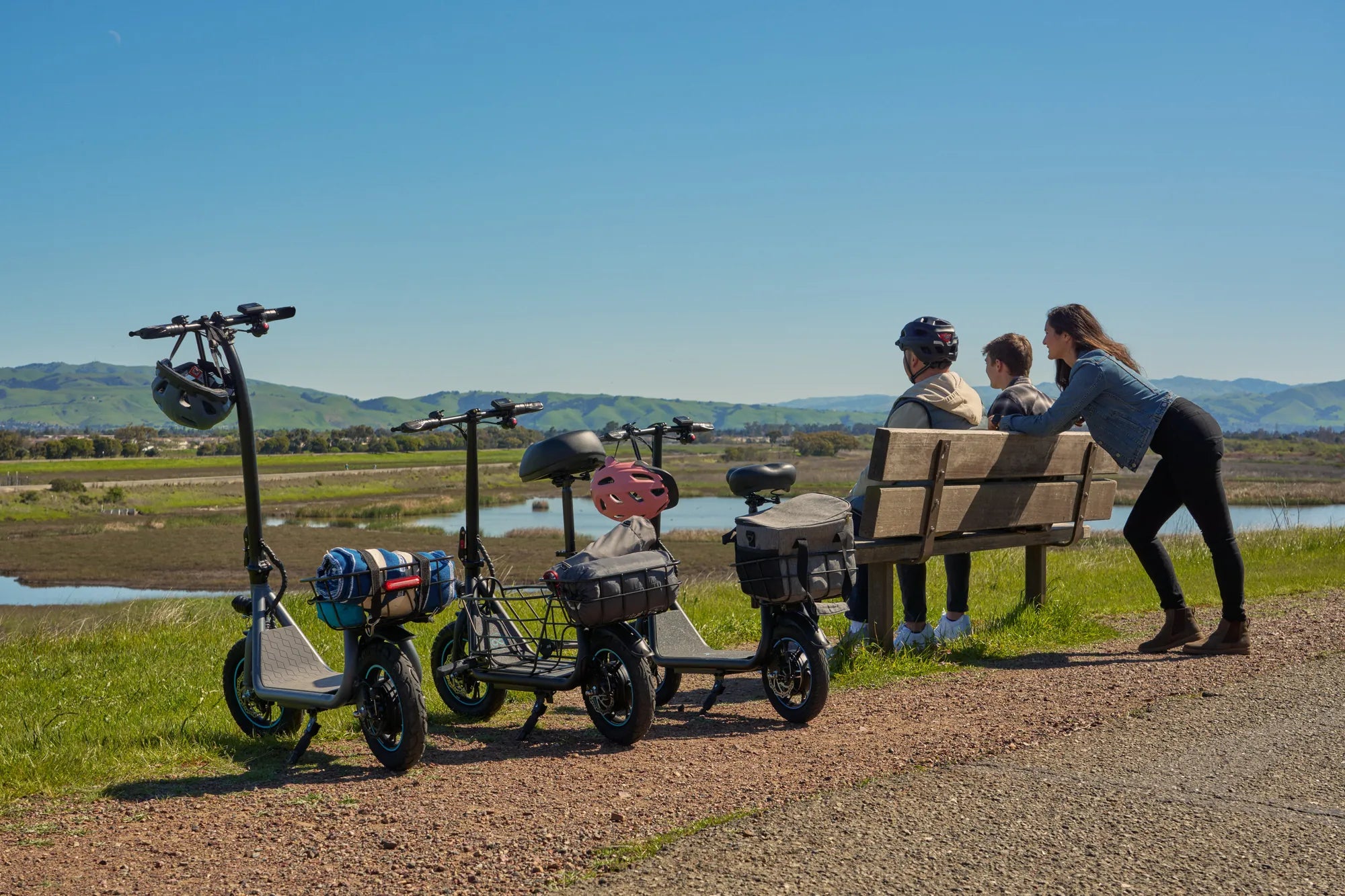
Introduction: Redefining Urban Mobility with Seated Electric Scooters
Forget traffic jams, crowded buses, and expensive parking. The modern urban commute is being redefined by a single, versatile vehicle: the battery powered electric scooter with seat. This innovative category merges the compact agility of a traditional kick scooter with the enduring comfort of a bicycle, creating what many are calling the ultimate urban commuting solution.
These seated e-scooters directly address the primary pain points of urban travel. They eliminate rider fatigue on longer journeys, offer enhanced stability, and provide a practical carrying solution for work essentials. Leading this charge is Gyroor, a brand trusted by over 100,000 riders, which has engineered its lineup around core principles of safety, reliability, and rider-centric design.
This guide will provide a data-driven, objective analysis of seated electric scooters. We will dissect their benefits, critical technical features, and real-world applications to help you determine if this is the right mobility upgrade for your daily life.
Why Choose a Seated Electric Scooter? Key Benefits for the Modern Commuter
The fundamental advantage of a battery powered electric scooter with seat is comfort over distance. While standing scooters suffice for short "last-mile" trips, commutes exceeding 2-3 miles can become physically taxing. A proper seat transforms the experience, allowing for relaxed, extended rides without leg strain or fatigue.
This comfort directly enhances safety and stability. A seated position lowers the rider's center of gravity and provides a more secure, planted stance. This is crucial when navigating uneven pavement, making turns, or coming to a controlled stop. The stability also makes it easier to manage a backpack or briefcase.
Furthermore, seated models broaden the appeal of electric scooters. They are an excellent option for those with mobility concerns that make balancing on a standing scooter difficult, or for riders who simply prefer a more casual, scooter-like posture. This inclusivity makes sustainable micro-mobility accessible to a wider demographic.
Finally, the design often incorporates greater utility. Many seated models feature integrated rear racks or larger decks, offering practical storage for groceries, work bags, or other cargo. This turns the scooter from a mere transport device into a genuine tool for daily errands and commuting.
Critical Features to Evaluate: Beyond Just a Seat
Choosing the right model requires looking past the seat to the underlying engineering. Performance, safety, and durability are dictated by a set of core specifications that determine real-world usability.
Motor Power & Hill Climbing Ability
Motor wattage is the primary indicator of performance. A 350W motor is adequate for flat terrain, but for a seated scooter carrying an adult rider plus potential cargo, a 500W or higher motor is recommended. This extra power ensures consistent acceleration and, crucially, the ability to maintain speed on inclines.
Hill climbing grade, often expressed as a percentage (e.g., 15%), is a key metric. A scooter with a robust motor and efficient power delivery can handle moderate hills without slowing to a crawl, which is essential for varied urban topography. Underpowered scooters strain on hills, draining the battery rapidly and creating potential safety issues in traffic.
Battery Range & Charging: Planning Your Commute
Advertised range (e.g., 25 miles) is typically a best-case scenario. Real-world range is affected by rider weight, terrain, speed, and temperature. For conservative commute planning, calculate using 70-80% of the stated range. If your round-trip commute is 15 miles, seek a scooter with a 20+ mile advertised range.
Battery quality is non-negotiable. Reputable brands like Gyroor use UL-certified battery packs, which have undergone rigorous independent testing for fire and electrical safety. These batteries are also rated for 500+ charge cycles, ensuring long-term value. Charging time is another factor; most models require 4-8 hours for a full charge.
Build Quality, Weight Limit, and Portability
The frame material, typically aluminum alloy, must be robust yet lightweight. Pay close attention to the maximum load capacity. A sturdy seated scooter should support at least 220 lbs (100 kg) to accommodate most riders and their belongings. Exceeding this limit stresses components and compromises safety.
Portability is defined by weight and foldability. While seated scooters are heavier than standing ones (often 40-60 lbs), a good folding mechanism is vital for mixed-mode transport (e.g., taking it on a train) or compact storage in an apartment or under an office desk. Check the folded dimensions to ensure it fits your space.
Safety and Durability: Brakes, Lights, and Water Resistance
Effective braking is paramount. Disc brakes (mechanical or hydraulic) offer strong, consistent stopping power in various conditions. A combination of front and rear brakes is ideal. Electronic (regenerative) brakes can supplement but should not be the sole braking system.
Visibility is a critical safety feature. The scooter must have a bright front headlight and a rear brake light. Additional reflectors and side lighting further enhance safety at night. For all-weather commuting, an IP rating is essential. An IPX5 rating, like those on Gyroor scooters, means the unit is protected against water jets, making it safe to ride in light rain and through puddles.
Gyroor's Approach: Engineering Comfort and Confidence
Gyroor has built its reputation by focusing on the pillars that matter most for daily transportation: safety, reliability, and rider support. Their approach to seated electric scooters exemplifies this philosophy, translating technical specifications into tangible user benefits.
The commitment to UL-certified batteries is a cornerstone. This isn't just a spec sheet item; it's a direct investment in rider safety and product longevity. It mitigates the risk of battery failure, ensures consistent performance over hundreds of charges, and provides peace of mind when charging at home or in the office.
Similarly, the IPX5 water-resistant rating is engineered for real-world conditions. It acknowledges that commuters encounter unexpected weather. This design resilience means the scooter is a dependable tool, not a fair-weather toy, reducing downtime and maintenance issues caused by moisture.
This confidence is backed by a robust 1-year warranty and accessible customer support. For a commuting vehicle, reliability is key. Knowing that components and workmanship are protected, and that US-based support is available, reduces the perceived risk of ownership and ensures help is available if needed, keeping your commute on schedule.
Seated E-Scooter vs. E-Bike: Choosing Your Urban Workhorse
Both seated e-scooters and e-bikes are excellent urban vehicles, but they cater to slightly different needs and preferences. Understanding their distinctions is crucial for making the right investment.
E-bikes offer a more traditional bicycle feel with pedal-assist, providing exercise and often longer potential ranges. However, they are typically heavier, bulkier, more expensive, and may be subject to different local regulations. Seated e-scooters prioritize compactness, simplicity, and a more direct, throttle-controlled ride.
The following table provides a clear, data-driven comparison:
| Feature | Seated Electric Scooter | Electric Bike (E-Bike) |
|---|---|---|
| Primary Use Case | Compact, point-to-point urban commuting & errands. | Longer-distance commutes, recreational rides, fitness. |
| Typical Price Point | Mid-range ($600 - $1,200). | Higher ($1,000 - $3,000+). |
| Physical Footprint | Generally more compact, especially when folded. | Larger, similar to a traditional bicycle. |
| Average Weight | 40-65 lbs. | 45-70 lbs. |
| Operation | Primarily throttle-based; some have pedal-assist modes. | Primarily pedal-assist (requires pedaling); some have throttles. |
| Storage & Portability | Easier to fold and carry/store in tight spaces. | More challenging; often requires a bike rack or dedicated space. |
| Regulatory Landscape | Often classified with standing e-scooters (varies by locale). | Often has specific classifications (Class 1, 2, 3) with defined rules. |
Your choice hinges on priority. If compact storage, simplicity, lower cost, and easy folding are top concerns, a seated e-scooter is superior. If you seek exercise, plan for very long ranges, or prefer a bicycle riding posture, an e-bike may be better.
Practical Guide: Integrating a Seated E-Scooter into Your Daily Life
Owning the vehicle is the first step; integrating it seamlessly into your routine is the next. Proper use and maintenance ensure safety, longevity, and a consistently enjoyable commute.
Route Planning and Riding Etiquette
Plan your route before you ride. Prioritize bike lanes, shared-use paths, and quieter residential streets. Use mapping apps with cycling or scooter settings. Be acutely aware of urban obstacles like potholes, rail tracks, and sudden curbs, which require slowing down and navigating carefully.
Ride defensively and predictably. Use hand signals for turns, obey traffic signals, and never assume drivers see you. Maintain a safe speed, especially in pedestrian-heavy areas. Your seated position offers stability, but it does not make you invulnerable. Always yield to pedestrians.
Maintenance Essentials for Longevity
Simple, regular checks prevent major issues. Weekly, inspect tire pressure (maintaining the PSI specified in the manual), test brake function, and ensure all lights work. Wipe down the scooter to remove dirt and debris, especially from the braking surfaces and folding mechanisms.
Battery care is critical. Avoid letting the battery fully deplete regularly. Store the scooter in a cool, dry place, and avoid charging it immediately after a long, hot ride. Following these practices, along with using the official charger, will maximize the lifespan of your UL-certified battery pack.
Understanding Local Regulations
Laws governing electric scooters vary significantly by city, state, and country. It is your responsibility to know them. Common regulations include: age restrictions (often 16+), mandatory helmet use, speed limits (frequently capped at 15-20 mph), and rules about where you can ride (bike lanes vs. sidewalks, which are often prohibited).
Check with your local department of transportation or city website for the most current ordinances. Riding in compliance not only keeps you safe from fines but also promotes the positive integration of micro-mobility into the urban landscape.
Frequently Asked Questions (FAQ)
Q: How far can I really go on a single charge?
A: Real-world range is typically 70-80% of the advertised maximum. Factors like rider weight, hills, frequent stops/starts, wind, and speed significantly impact range. For a reliable commute, choose a scooter whose real-world estimated range exceeds your round-trip distance by a comfortable margin.
Q: Is a seated e-scooter safe in the rain?
A: Models with a good IP rating like IPX5 (standard on Gyroor scooters) are protected against water splashes and jets from any direction, making them safe for use in light rain. However, always exercise increased caution: reduce speed, avoid deep puddles, and allow for longer braking distances due to reduced tire traction on wet surfaces.
Q: Can I carry a passenger on a seated scooter?
A: No. Electric scooters are designed and engineered for a single rider. The maximum load capacity accounts for one person and their cargo. Carrying a passenger dangerously overloads the scooter, compromising structural integrity, braking performance, stability, and handling. It will also void the manufacturer's warranty.
Q: What is the advantage of a UL-certified battery?
A: A UL certification means the battery pack has passed independent, rigorous safety tests conducted by Underwriters Laboratories. These tests evaluate risks like electrical short circuits, fire hazards, and mechanical integrity. For a device you charge indoors and ride close to your body, this certification is a critical benchmark for safety and quality, reducing the risk of dangerous battery failures.
Q: Do I need a driver's license or insurance to ride one?
A: Requirements vary by jurisdiction. In many areas in the US, a driver's license is not required for lower-speed electric scooters, but you must be a certain age (often 16+). Insurance is rarely mandatory but checking your homeowner's or renter's policy for coverage is wise. Always verify the specific laws in your city and state.
Conclusion: Your Ticket to a Smarter, More Enjoyable Commute
The battery powered electric scooter with seat has evolved from a novel gadget into a legitimate, efficient, and deeply practical urban commuting solution. It successfully bridges the gap between the convenience of micro-mobility and the comfort required for daily use, tackling traffic, parking costs, and carbon emissions in one elegant package.
The key to a positive experience lies in informed selection. Prioritize models from reputable brands that invest in foundational safety features—UL-certified batteries, robust braking systems, proper lighting, and durable, water-resistant construction. These are not optional extras but essential components for a reliable vehicle.
By choosing wisely and riding responsibly, you transform your daily travel from a stressful chore into an enjoyable, empowering part of your day. You gain time, save money, and contribute to a cleaner urban environment. The ultimate commuting solution isn't a distant fantasy; it's a seat, a motor, and a reliable battery away.
Ready to redefine your ride? Explore engineering built for confidence and comfort. Browse the full Gyroor collection at gyroorboard.com to find the seated electric scooter that matches your commute and unlocks a new era of urban freedom.
Performance Electric Scooters: The Future of Urban Mobility
Electric Street Scooters for Adults: The Future of Urban Mobility