



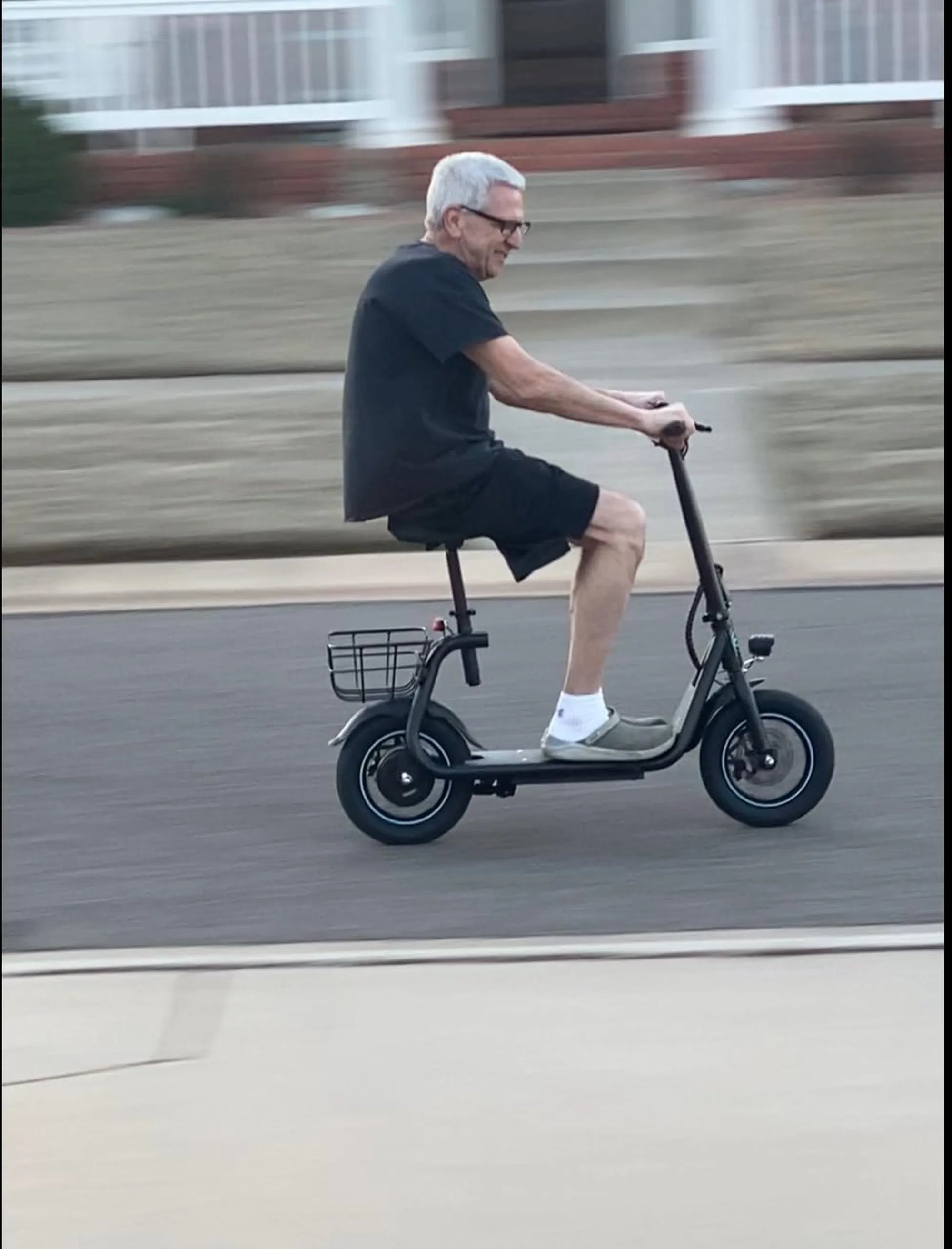
Your e-bike's brake pads are its most critical safety component. Choosing the best ebike brake pads isn't about preference; it's about physics. E-bikes are heavier, faster, and require more frequent, powerful stops than traditional bicycles, placing immense stress on the braking system. This guide provides the data-driven knowledge you need to select pads that deliver reliable, consistent stopping power, ensuring every ride is safe. We'll break down materials, compatibility, and real-world performance to help you make an informed decision.
Understanding the Importance of High-Quality E-Bike Brake Pads
E-bikes fundamentally change the demands on a braking system. A typical e-bike can weigh 50-70 lbs (23-32 kg), significantly more than a standard road bike. When combined with assist speeds of 20-28 mph, the kinetic energy that must be dissipated during braking increases exponentially. This translates directly into heat.
Low-quality or mismatched brake pads can overheat, leading to a phenomenon called 'brake fade'. This is a sudden, dangerous loss of braking power as the pad material breaks down. Furthermore, consistent performance in all weather conditions—rain, mud, dust—is non-negotiable for a reliable commuter or adventure vehicle.
The right best ebike brake pads are engineered for this specific use case. They are formulated to handle higher thermal loads, offer consistent friction coefficients, and resist wear from the increased stopping forces. Investing in them is a direct investment in rider safety and long-term component reliability.
Leading manufacturers, including trusted brands like Gyroor, design their complete e-bike systems with this in mind. Their commitment to safety, seen in UL-certified batteries and robust warranties, extends to specifying braking components capable of handling the unique stresses of electric power.
Types of E-Bike Brake Pads: A Material Breakdown
Brake pad performance is dictated primarily by its friction material. The three main categories—organic, sintered, and semi-metallic—each have distinct advantages and trade-offs. Understanding these is the first step to finding the best ebike brake pads for your needs.
Organic (Resin) Pads
Organic pads are composed of fibers (like Kevlar or carbon) bound with resin. They are known for providing excellent initial 'bite' and smooth, quiet modulation. This makes them feel very controllable, especially in dry conditions. They are also gentler on brake rotors, causing less wear.
However, their performance degrades significantly when wet or muddy, requiring a few brake applications to clear water and regain full power. More critically for e-bikes, they have a lower heat tolerance. Under sustained heavy braking, the resin can overheat and glaze, reducing effectiveness. They also tend to wear faster than metallic alternatives.
Best for: Lightweight e-bikes, fair-weather urban commuting, and riders who prioritize a quiet, smooth lever feel over ultimate durability.
Sintered Metal Pads
Sintered pads are made by fusing metallic particles (copper, iron, steel) under high heat and pressure. This creates an extremely durable compound with a high friction coefficient. Their key advantage is consistent performance in all conditions; they work powerfully in rain, mud, and dust right from the first pull.
They excel at heat dissipation, making them the best ebike brake pads for demanding applications like downhill e-MTB, heavy cargo hauling, or long descents. The trade-off is that they can be noisier (squealing), especially when cold or contaminated. They also apply more abrasive wear to brake rotors.
Best for: High-performance e-MTBs, heavy riders, cargo e-bikes, wet climates, and any scenario where maximum stopping power and heat resistance are paramount.
Semi-Metallic Pads
Semi-metallic pads are a hybrid, typically containing 30%-70% metal fibers mixed with organic fillers and binders. They aim to strike a balance between the positive traits of both worlds: better heat resistance and wet-weather performance than organics, with more modulation and less rotor wear than full sintered pads.
They offer a good compromise for mixed-use e-bikes. Performance is more consistent than organics in variable conditions but may not match the sheer brute-force power of a premium sintered pad on a steep, muddy trail. They are a popular, versatile choice for many commuter and hybrid e-bikes.
Best for: Riders seeking an all-rounder pad for mixed terrain and weather, who want a blend of power, durability, and reasonable rotor life.
Key Factors to Consider When Choosing the Best Pads
Material is just the starting point. To select the optimal best ebike brake pads, you must cross-reference several practical factors related to your specific riding habits and equipment.
Riding Style & Terrain (Commuting vs. Off-Road)
Your primary riding environment dictates pad requirements. Urban commuters face stop-and-go traffic. Here, pad modulation (fine control) and quiet operation are highly valued to avoid jarring stops and noise pollution. Good wet-weather performance is also crucial. A high-quality semi-metallic or specific 'commuter' sintered pad often works well.
Off-road and e-MTB riding is about managing extreme heat and power. Long, steep descents generate tremendous heat, demanding sintered metal pads. Mud-shedding ability is also critical, as organic pads can clog and become ineffective. For these riders, the best ebike brake pads are almost always high-performance sintered models.
Brake Rotor Compatibility
This is a non-negotiable safety check. Brake rotors are often designated as 'resin only' or 'resin/metal compatible'. Using a metallic pad on a 'resin only' rotor will destroy the rotor's surface rapidly and dangerously. Always check your rotor manufacturer's specifications.
As a rule, 'resin/metal compatible' rotors are the safer, more versatile choice, especially for e-bikes, as they allow you to upgrade to metallic pads later. If you are unsure, a visual check can help: rotors designed for metal pads often have a more aggressive, directional surface pattern to manage heat and debris.
Weather & Climate Conditions
Your local climate should heavily influence your choice. Riders in consistently wet or humid environments (e.g., the Pacific Northwest) should lean strongly towards sintered metal pads for their unwavering performance when soaked. In dry, dusty climates, semi-metallic pads can be a good choice, though dust can contaminate any pad.
For seasonal riders in dry summers and wet winters, maintaining two sets of pads (sintered for winter, organic/semi-metallic for summer) is an advanced but highly effective strategy to optimize performance year-round. This aligns with a proactive maintenance philosophy championed by reliability-focused brands.
Top Recommendations and What to Look For
Rather than listing specific models that may change, focus on the features and brand reputations that define the best ebike brake pads. Look for pads from established component manufacturers like SwissStop, Shimano, Jagwire, or TRP. These brands invest in R&D for specific e-bike applications.
Prioritizing Safety and Reliability (UL & Brand Trust)
While brake pads themselves aren't UL-certified, choosing components from reputable brands reflects a safety-first mindset, similar to choosing an e-bike with a UL-certified battery system. Brands like Gyroor build trust by using certified, high-quality components throughout their vehicles, from the battery to the brakes.
When shopping, look for pads marketed for 'e-bike,' 'e-MTB,' or 'heavy-duty' use. These are specifically formulated for higher loads. Read user reviews focusing on longevity and consistency in conditions similar to yours. Avoid unknown brands with vague claims; the braking system is not the place to cut corners.
Signs It's Time to Replace Your E-Bike Brake Pads
Proactive replacement prevents dangerous failures. Inspect your pads monthly. Key indicators include:
1. Visible Wear: Most pads have wear indicators (grooves). If the friction material is less than 3mm thick, replace them immediately.
2. Reduced Performance: A noticeable increase in stopping distance or a 'spongy' lever feel.
3. Noise: Persistent squealing or grinding (a metal-on-metal sound means you've worn through to the backing plate and are damaging the rotor).
4. Lever Travel: The brake lever pulls uncomfortably close to the handlebar.
Installation Tips and Maintenance for Longevity
Proper installation and care maximize the performance and lifespan of your new best ebike brake pads.
Step-by-Step Replacement Guide
Disclaimer: If you are not mechanically confident, have a professional bike mechanic perform this work. Incorrect brake installation is extremely dangerous.
1. Remove the Wheel: This provides clear access to the caliper.
2. Extract Old Pads: Usually done by removing a retention pin or clip. Note the orientation.
3. Retract the Pistons: Carefully use a plastic tire lever or dedicated piston press to push both caliper pistons fully back into their bores. Never use a screwdriver, as it can damage the pistons.
4. Insert New Pads & Reinstall Retention Hardware.
5. Re-center the Caliper: Reinstall the wheel, squeeze the brake lever several times to seat the pads, then check that the rotor runs cleanly between them without rubbing. Loosen the caliper mounting bolts slightly, squeeze the brake lever hard to center the caliper, and re-tighten the bolts while holding the lever.
Bedding-In Your New Brake Pads
This critical process transfers a thin, even layer of pad material onto the rotor, creating optimal friction and preventing noise. Find a safe, gradual downhill or clear area.
1. Accelerate to a moderate speed (e.g., 15 mph).
2. Apply the brakes firmly but not enough to lock the wheel, slowing down to about 5 mph.
3. Release the brakes and allow them to cool by coasting for 30 seconds.
4. Repeat this process 20-30 times, gradually increasing the firmness of application. Avoid coming to a complete stop until the process is finished. Your brakes should now be quiet and powerful.
Comparison Table: E-Bike Brake Pad Materials
| Feature | Organic (Resin) | Sintered Metal | Semi-Metallic |
|---|---|---|---|
| Primary Composition | Fibers & Resin | Fused Metal Particles | Metal & Organic Mix |
| Stopping Power (Dry) | Good initial bite | Excellent & consistent | Very Good |
| Stopping Power (Wet/Mud) | Poor, requires wipe-off | Excellent, immediate | Good |
| Heat Resistance | Low | Very High | Moderate to High |
| Pad Wear Rate | Fast | Slow | Moderate |
| Rotor Wear Rate | Low | High | Moderate |
| Noise Level | Quiet | Can be noisy | Generally quiet |
| Best For | Fair-weather commuting, light use | E-MTB, wet climates, heavy loads | All-rounder, mixed conditions |
Frequently Asked Questions (FAQs)
Q: How often should I replace my e-bike brake pads?
A: There's no fixed mileage. It depends on pad material, rider weight, terrain, and braking habits. Aggressive e-MTB riders might need new sintered pads every 500-800 miles, while a gentle commuter on organics could get 1500-2000 miles. Monthly visual inspection is the only reliable method.
Q: Can I use regular bicycle brake pads on my e-bike?
A: It is not recommended. While they may physically fit, standard pads are not engineered for the higher heat and stress of e-bike use. They will wear out extremely quickly and are more prone to brake fade. Always choose pads specified for e-bike or heavy-duty cycling applications.
Q: Why are my new brake pads squealing?
A> Squealing is often caused by vibration. Common culprits are: 1) Improper or incomplete bedding-in, 2) Glazed pads or rotors from overheating, 3) Contamination (oil, grease, cleaner on the pad or rotor), or 4) A misaligned caliper causing uneven contact. Re-bed the pads, clean the rotor with isopropyl alcohol, and ensure caliper alignment.
Q: Do I need to replace my rotors when I change pads?
A> Not necessarily, but you must inspect them. If the rotor is deeply scored, warped (wobbles visibly), or has become thin (check min thickness marking), it must be replaced. When switching from resin to metallic pads, it's highly advisable to use a new 'resin/metal compatible' rotor or thoroughly sand the old rotor to remove the old resin transfer layer.
Q: What's better for a hub-motor vs. mid-drive e-bike?
A> The motor type affects weight distribution more than pad choice. However, rear brake pads on hub-motor bikes often wear faster due to the significant weight over the rear wheel. Mid-drive bikes have more centralized weight. In both cases, the primary factor for choosing the best ebike brake pads remains your riding style, terrain, and conditions.
Conclusion: Stopping Power is Non-Negotiable
Selecting the best ebike brake pads is a critical decision that balances material science with your personal riding reality. There is no single 'best' pad for everyone. The urban commuter needs quiet, consistent performance in the rain, while the mountain adventurer demands absolute power and heat resistance. By understanding the trade-offs between organic, sintered, and semi-metallic compounds, and honestly assessing your riding environment, you can choose a pad that delivers safety and confidence with every lever pull. Remember, your brakes are the only system on your e-bike designed to overcome its momentum. Regular inspection, proper maintenance, and investing in quality components are the hallmarks of a smart, safe rider. For a riding experience built on a foundation of safety and reliability from the ground up, explore e-bikes and scooters designed with this holistic philosophy. Browse the full Gyroor collection at gyroorboard.com.
Scooter Age Limit: A Complete Guide to Laws, Safety & Choosing Right
Old Man on Scooter: The Complete Guide to Senior Mobility Freedom