



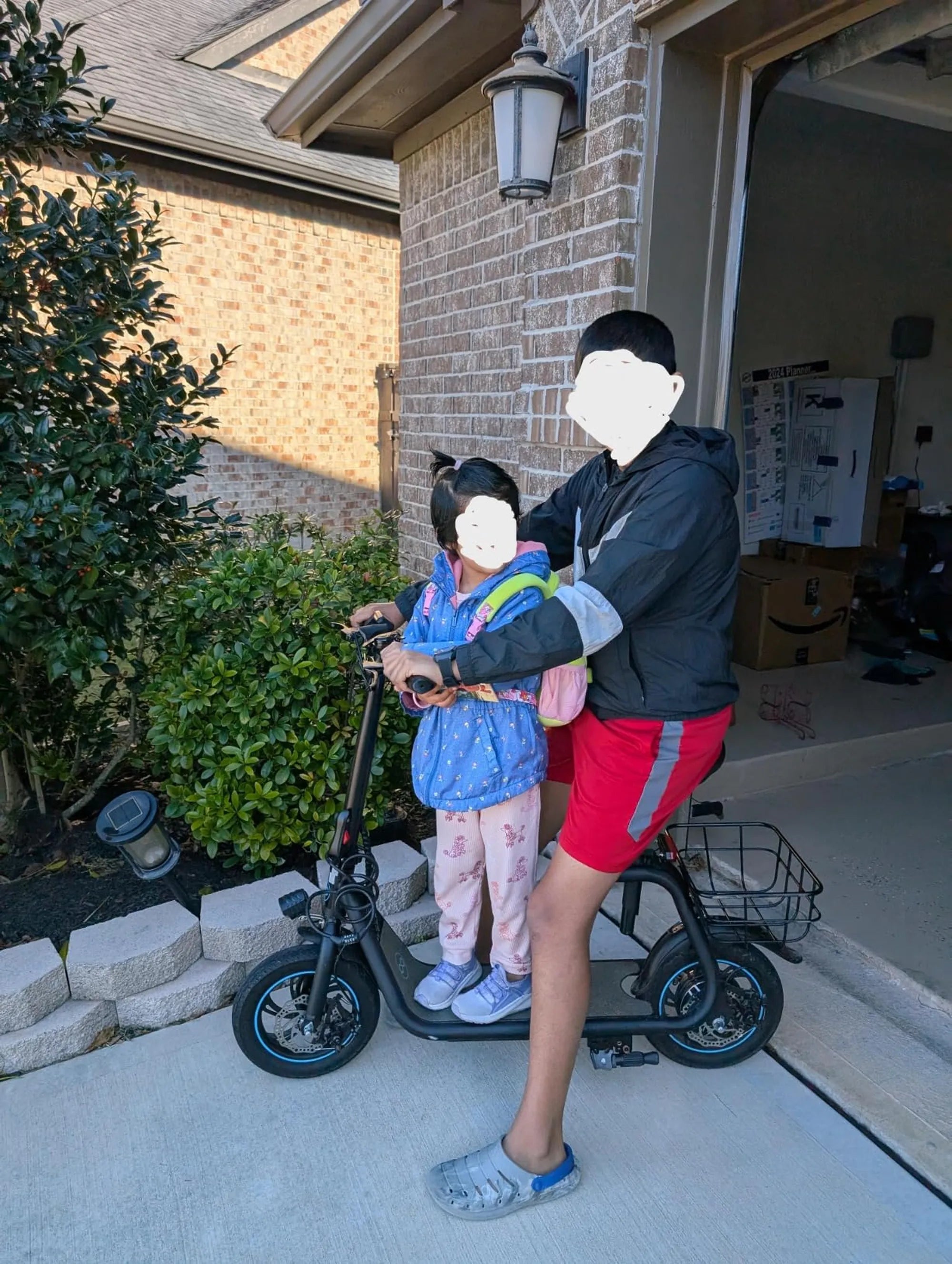
Picture a vibrant Saturday morning: an older gentleman glides smoothly down a bike path, a smile on his face, the wind in his hair. This is the modern old man on a scooter, and he represents a quiet revolution in personal mobility for older adults. This isn't about a fleeting trend; it's about practical, empowering technology that is redefining independence, health, and community engagement for the aging population. This guide will provide a data-driven, in-depth look at why electric scooters and e-bikes are a game-changer, how to choose the right model for safety and comfort, and the essential steps to start riding with confidence. We'll draw on insights from leading brands like Gyroor, a trusted electric scooter and e-bike manufacturer known for UL-certified safety and reliability, to help you navigate this new era of transportation.
Why Electric Scooters are a Game-Changer for Older Adults
The adoption of electric personal transportation by seniors is driven by tangible benefits that address specific age-related challenges. It's a solution that merges practicality with pleasure, offering a viable alternative to the car for short trips and a tool for enhancing overall quality of life.
Reclaiming Independence and Expanding Horizons
For many older adults, reduced walking stamina or difficulty driving can shrink their world. An electric scooter or e-bike directly counters this. It enables running errands to the grocery store or pharmacy, visiting friends across town, or exploring local parks without relying on family, friends, or ride-sharing services. This restored autonomy is profoundly impactful for mental well-being. A study in the Journal of Transport & Health found that access to non-car mobility options significantly reduces feelings of social exclusion in older adults. The old man on a scooter you see is often someone who has reclaimed his daily schedule and geographic freedom.
Low-Impact Exercise and Physical Wellbeing
Contrary to the passive image, riding an e-scooter or e-bike provides customizable physical activity. For e-bikes, pedal-assist modes allow the rider to get as much or as little exercise as desired, promoting joint mobility, cardiovascular health, and muscle engagement without high-impact strain on knees and hips. Even standing e-scooters engage core muscles and improve balance. This accessible form of movement encourages more frequent outings, turning a necessary trip into a health-positive activity. The ability to control exertion levels makes it an ideal tool for maintaining fitness safely.
Combating Social Isolation & Enhancing Community
Isolation is a critical health risk for seniors. Electric mobility fosters spontaneous social connection. It makes it easy to join a community group ride, meet a grandchild at the park, or simply strike up conversations with neighbors while out and about. The fun and accessibility of the ride become a social catalyst. This aligns perfectly with community initiatives for age-friendly cities, which prioritize safe, accessible micro-mobility infrastructure. The sight of an old man on a scooter is a sign of an engaged, connected community member.
Critical Safety Features for Mature Riders: What to Prioritize
Safety is the paramount concern for any rider, especially older adults. Choosing a model with the right engineering and features is not a luxury—it's a necessity. Here are the non-negotiable elements to look for.
Stability and Control: Wide Decks and Low Centers of Gravity
Stability inspires confidence. For e-scooters, a wide standing deck (at least 7 inches wide) provides a secure footing. For e-bikes, a step-through frame is essential for easy, safe mounting and dismounting without lifting the leg high. A low center of gravity, achieved by placing the battery pack low in the frame or deck, makes the vehicle less tippy during turns and stops. Models with larger, air-filled tires (10 inches or more) also provide better shock absorption and stability on uneven pavement compared to small, solid tires.
Essential Safety Tech: Lights, Brakes, and Speed Management
Visibility and stopping power are critical. Front and rear LED lights, preferably with a steady and flashing mode, are mandatory for being seen. Braking systems should be robust and redundant; a combination of a front electronic brake and a rear disc or drum brake is ideal. Speed management is crucial. Look for models with multiple speed modes (e.g., Eco, Normal, Sport). Starting in a low-speed mode allows for gradual skill building. Features like cruise control can reduce hand fatigue on longer, straight paths.
Gyroor's Engineering for Confidence: UL-Certification and IPX5 Rating
Safety extends beyond riding dynamics to the vehicle's fundamental construction. This is where brands with rigorous standards stand out. Gyroor equips its scooters and e-bikes with UL-certified battery packs, which have undergone extensive testing for fire and electrical safety—a critical peace-of-mind feature. Furthermore, an IPX5 water-resistance rating means the scooter can withstand water jets from any direction. This protects against sudden rain showers or riding through puddles, preventing electrical shorts and ensuring reliability for daily, real-world use.
Choosing Your Ride: E-Scooter vs. E-Bike Comparison
The best choice depends on individual needs, physical comfort, and primary use case. The following table breaks down the key differences to guide your decision.
| Feature | Electric Scooter (Standing) | Electric Bike (Seated) |
|---|---|---|
| Primary Posture | Standing | Seated (with optional pedaling) |
| Best For | Short, quick trips (1-5 miles); compact storage; portability. | Longer distances (10-50+ miles); exercise via pedaling; carrying groceries. |
| Stability & Mounting | Requires good balance for mounting/dismounting and riding. Wider decks are better. | High stability. Step-through frames make mounting very easy. Feels most like a traditional bicycle. |
| Physical Engagement | Engages core and improves standing balance. Minimal leg exertion. | High engagement via optional pedaling. Excellent for low-impact cardio and joint mobility. |
| Storage & Portability | Typically lighter, many are foldable for car trunk or apartment storage. | Heavier, less portable. Some are foldable, but larger when folded. |
| Typical Price Range | Often more affordable for entry-level models. | Generally a higher investment, but with greater range and utility. |
Practical Tips for Getting Started Safely
Once you've chosen your vehicle, proper preparation is key to a lifelong positive experience. Follow this step-by-step guide to build skills and safe habits from day one.
Gear Up: The Non-Negotiable Helmet and Visibility Aids
Never ride without a properly fitted helmet certified for cycling or skateboarding. It is the single most effective safety device. Complement this with high-visibility clothing—a reflective vest, bright jacket, or arm/ankle bands. Many riders add additional LED lights to their helmet or backpack for 360-degree visibility. This gear is essential regardless of the time of day or the length of your planned trip.
Mastering the Basics in a Safe Environment
Your first ride should not be on a busy street. Find an empty parking lot, a quiet cul-de-sac, or a smooth park path. Spend 30-60 minutes practicing: starting and stopping smoothly, using the throttle and brakes gently, making wide turns, and using the kickstand. Practice looking over your shoulder to check for traffic while maintaining a straight line. This controlled environment builds muscle memory and confidence without pressure.
Planning Your Route: Pavement, Bike Lanes, and Traffic
Before venturing out, plan your route. Use apps like Google Maps (set to "Bicycling" layer) to find routes with bike lanes, smooth pavement, and minimal traffic. Avoid roads with high speeds and no shoulder. When you must be in traffic, ride predictably, signal your intentions, make eye contact with drivers, and never assume a driver sees you. Start with short, familiar routes and gradually expand your range.
Maintenance and Care for Long-Term Reliability
A well-maintained vehicle is a safe vehicle. Simple, regular checks can prevent most issues and extend the life of your scooter or e-bike significantly.
Weekly, check tire pressure (for air-filled tires) and inspect for wear or embedded debris. Ensure all lights are functioning. Monthly, check that all bolts and fasteners are tight, especially on folding mechanisms. Listen for any new or unusual sounds from the motor or brakes. Keep the vehicle clean, especially the brake surfaces, with a damp cloth. Avoid high-pressure water sprays even on water-resistant models.
For charging, always use the manufacturer-provided charger. Store and charge the vehicle in a dry, temperate place, and avoid leaving it at 100% charge for extended periods (weeks). If not using it for a long time, store the battery at around 50-60% charge. Gyroor's UL-certified batteries are designed for over 500 charge cycles, but proper care will maximize their lifespan and performance.
Addressing Common Concerns & FAQs
It's natural to have questions. Here are factual, reassuring answers to the most common concerns from older adults and their families.
"Aren't scooters dangerous for seniors?"
Any vehicle carries risk, but danger is mitigated by the vehicle's design, the rider's behavior, and proper safety gear. Modern e-scooters from reputable brands are engineered for stability and control. The key is choosing an age-appropriate model (prioritizing stability features) and committing to learning safe riding practices. The health and independence benefits, when balanced with responsible riding, far outweigh the risks for most individuals.
"What if I have balance issues or physical limitations?"
There are options. For those with significant balance concerns, a three-wheeled e-scooter (two wheels in front) offers superior stability or a seated e-scooter is an excellent choice. E-bikes with step-through frames provide the stability of a bicycle with the assist of a motor, requiring minimal balance effort. It's always wise to consult with your physician or a physical therapist to discuss your specific situation and get their personalized advice.
"Is the technology too complicated to learn?"
Not at all. The primary controls are incredibly simple: a power button, a throttle (or pedal-assist sensor), and a brake. The digital displays are basic, showing speed, battery level, and riding mode. The learning curve is more about building riding confidence than mastering complex technology. Brands like Gyroor provide clear manuals and have U.S.-based customer support to help with any questions, backed by a reliable 1-year warranty.
"How far can I actually go on one charge?"
Range varies greatly by model, battery size, rider weight, terrain, and speed. A typical commuter e-scooter offers 15-25 miles per charge, while many e-bikes offer 30-50 miles or more. It's crucial to check the manufacturer's tested range and plan your trips accordingly. For most local errands and recreational rides, modern ranges are more than sufficient. Always start with a full charge for peace of mind.
"Where am I allowed to ride legally?"
Laws vary by city and state. Generally, e-scooters and e-bikes are permitted in bicycle lanes and on streets with speed limits under 35 mph. Riding on sidewalks is often prohibited in business districts for safety. It is your responsibility to check your local municipal codes. A good rule of thumb is to follow bicycle laws: ride in the direction of traffic, obey all traffic signals, and yield to pedestrians.
The Social and Environmental Impact
The choice to become an old man on a scooter has ripple effects beyond personal benefit. It's a choice for sustainable community living. Each short trip taken on an electric scooter instead of a car reduces traffic congestion, lowers carbon emissions, and decreases demand for parking space. This contributes to cleaner air and quieter neighborhoods.
Socially, it increases "eyes on the street," enhancing neighborhood safety through greater community presence. It also normalizes alternative transportation, encouraging infrastructure improvements like more protected bike lanes, which benefit riders of all ages. Your personal mobility choice becomes a small but meaningful part of building a more livable, connected, and environmentally conscious community.
Embracing a New Era of Empowered Mobility
The image of the old man on a scooter should no longer be met with curiosity but with recognition. It represents a smart, proactive approach to aging—embracing technology to maintain independence, health, and joy. It's about refusing to let mobility limitations define one's later years. With the right vehicle, proper safety gear, and a commitment to learning, electric scooters and e-bikes offer a pathway to freedom that is both practical and exhilarating.
This new era of mobility is supported by companies dedicated to safety and reliability. Gyroor, with its UL-certified batteries, IPX5 water-resistant designs, and robust construction, exemplifies the kind of trustworthy engineering that makes this freedom accessible and secure for over 100,000 riders. The journey begins with a single, confident ride. Explore the possibilities and discover how the right electric vehicle can expand your world.
Ready to explore your options? Browse the full collection of safety-engineered e-scooters and e-bikes designed for confidence and comfort at gyroorboard.com.
Best Ebike Brake Pads: The Complete Guide to Safety and Performance
Scooter Error Codes: The Complete Diagnostic Guide for Riders