



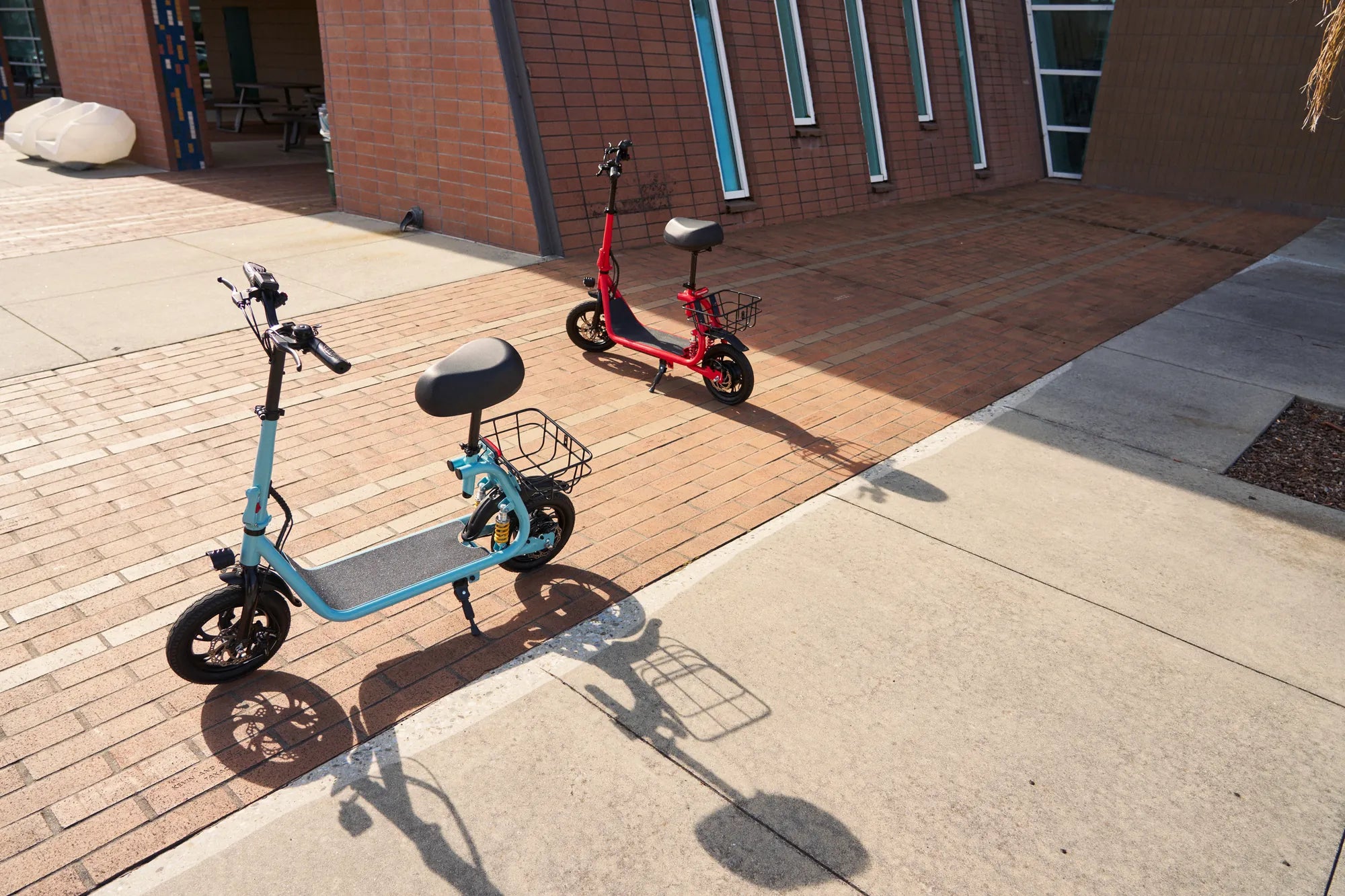
Introduction: Navigating Europe's Evolving Urban Landscape
European city streets are transforming. The quest for sustainable, efficient personal transport has propelled electric scooters from novelty to necessity. By 2025, this evolution will be defined by stricter safety regulations, advanced technology, and a mature understanding of what makes a scooter truly fit for purpose.
This guide cuts through the marketing hype to deliver a data-driven analysis for your next purchase. We will explore the mandatory certifications, decode real-world performance, and navigate the complex patchwork of European laws. The goal is simple: to help you select a scooter that is not only powerful and fun but also safe, durable, and legally compliant for the long term.
Choosing the right model requires looking beyond basic specifications. It demands an assessment of build quality for variable climates, battery safety standards, and the brand's commitment to post-purchase support. The best electric scooters for Europe in 2025 will be those engineered for this specific environment.
Future mobility is here, and it is personal, electric, and intelligent. Let this guide be your roadmap to finding a reliable partner for your urban journeys.
Key Factors to Consider Before Buying Your 2025 E-Scooter
Selecting an electric scooter in 2025 requires a strategic approach focused on longevity and safety. The market is maturing, and so should your criteria. Performance metrics like speed and range are just the starting point; the underlying engineering and compliance standards are what will protect your investment.
European riders face unique challenges, from historic cobblestone streets to frequent rain and a complex regulatory environment. Your scooter must be built to handle these conditions day after day. This section breaks down the non-negotiable factors that separate a quality vehicle from a temporary gadget.
We will move past advertised claims and focus on verifiable data and standards. Understanding these pillars will empower you to make an informed decision that prioritizes your safety and aligns with the legal framework of your city or country.
Safety & Certification Standards (The 2025 Mandate)
Battery safety is the paramount concern for 2025. The UL 2272 certification for the electrical drive train system, including the battery, is transitioning from a premium feature to an industry expectation. This rigorous standard tests for overcharge, short circuit, and thermal stability, significantly reducing fire risk.
Forward-thinking brands are adopting even more comprehensive standards. For instance, Gyroor utilizes UL-certified battery packs in its models, which are tested for over 500 charge cycles while maintaining safety integrity. This commitment to certified components is a clear indicator of a manufacturer prioritizing rider safety over cost-cutting.
Look for certifications stamped directly on the scooter or clearly listed in the technical specifications. In the absence of such credentials, treat the product with extreme caution. Your safety depends on the integrity of the battery and electrical system, especially when charging at home.
Real-World Range vs. Advertised Range
Manufacturer range figures are typically derived under ideal laboratory conditions: a light rider on flat, smooth terrain at a steady, low speed. Real-world riding in Europe rarely matches this scenario. Hills, stop-start traffic, colder temperatures, and rider weight can reduce actual range by 30-50%.
To estimate true range, apply a practical discount to the advertised figure. A scooter claiming 40 km may reliably deliver 25-28 km for an average rider in an urban setting. For a more accurate estimate, consider the battery's watt-hour (Wh) rating. A higher Wh number generally indicates more energy capacity, which is a better predictor of range than voltage or amp-hours alone.
Your riding style has the greatest impact. Using a higher performance mode, frequent acceleration, and riding into headwills will drain the battery faster. For reliable daily commuting, choose a scooter whose *realistic* range exceeds your round-trip distance by at least 25% to account for battery degradation over time and unforeseen detours.
Build Quality & Durability for European Climates
European weather demands robust construction. An IP (Ingress Protection) rating is crucial. An IPX5 rating, indicating protection against water jets from any direction, should be considered a practical minimum for handling rainy commutes. This ensures the scooter's core electronics are shielded from moisture.
The frame and components must withstand constant vibration from uneven surfaces. Aircraft-grade aluminum alloys offer a strong yet lightweight solution. Furthermore, a reliable suspension system—whether spring-based or hydraulic—is essential for comfort and control on cobblestones, tram tracks, and imperfect bike lanes.
Durability also hinges on component quality. Look for name-brand mechanical or hydraulic disc brakes for consistent stopping power in wet conditions. Pneumatic (air-filled) tires provide better shock absorption and traction than solid tires, though they require periodic pressure checks. A scooter built with these materials is designed for longevity.
Navigating the Patchwork of European E-Scooter Laws
The regulatory landscape for e-scooters in Europe remains a mosaic of national and local rules. While harmonization is a goal, for 2025, riders must be vigilant about their specific location. Common themes exist, but key differences will dictate which scooter you can legally ride and where.
Most EU countries enforce a maximum speed limit of 25 km/h for scooters used on public roads and cycle paths. Some, like Germany, allow higher speeds only on private land. Motor power is often capped (e.g., 500W continuous output), and minimum age requirements typically range from 14 to 16 years. Helmet laws vary significantly, from mandatory for all to required only for younger riders.
It is imperative to check the latest regulations from your national transport authority before purchasing. Riding a non-compliant scooter can result in fines, confiscation, and invalidated insurance. The best electric scooters for Europe in 2025 will be those engineered to meet or easily adapt to these prevalent legal thresholds across major markets.
Top Electric Scooter Categories for European Riders in 2025
The market has segmented into distinct categories tailored to different rider needs and urban environments. Understanding these categories will help you match a scooter's capabilities to your primary use case, whether it's a daily multi-modal commute or weekend exploration beyond the city center.
Each category represents a trade-off between portability, performance, comfort, and price. There is no single "best" scooter, only the best scooter for your specific requirements and local infrastructure. The following breakdown provides a clear framework for your decision.
The Urban Commuter Champion
This category is defined by practicality and efficiency. The ideal urban commuter is relatively lightweight (under 15 kg) and features a fast, reliable folding mechanism for easy carrying onto trains, trams, or into offices. Real-world range should comfortably cover a 10-15 km round trip with reserve.
Key features include integrated safety elements like bright front and rear lights, reflective side panels, and electronic or mechanical brake lights. Turn signals are becoming an increasingly valuable feature for navigating busy city traffic safely. A deck with sufficient grip and a clear, intuitive display are also important for daily use.
Portability does not mean sacrificing durability. A commuter scooter must still have a solid IP rating for rain resistance and adequate suspension to take the edge off rough pavement. Models in this category prioritize a balanced blend of function, form, and foldability.
The Long-Distance / Performance Explorer
For riders with longer commutes or a desire for more dynamic weekend rides, the performance explorer category delivers. These scooters prioritize extended range (50 km+ real-world) and higher power, often from dual motors, to tackle steep hills with ease. They are built for comfort over longer periods.
You can expect larger, often pneumatic tires (9-10 inches), dual suspension systems, and wider decks for stable footing. The increased capability comes with added weight, typically between 20-30 kg, making them less ideal for frequent carrying. They are designed to be ridden, not carried.
Features often include more advanced displays with detailed ride metrics, multiple speed modes, and enhanced braking systems like hydraulic disc brakes. This category is for the rider who views the scooter as a primary vehicle for substantial point-to-point travel, not just last-mile connectivity.
The Premium All-Terrain (AT) Machine
The all-terrain scooter is a specialist vehicle for riders who regularly venture onto unpaved paths, forest trails, or gravelly parkways. These are the most robust and powerful scooters available, engineered to handle significant bumps and variable traction with confidence.
Defining features include large pneumatic off-road tires with deep treads, extensive suspension travel (often front and rear), high ground clearance, and very powerful dual-motor setups. The frames are incredibly sturdy to handle the stresses of off-road use, resulting in the highest weights in the market.
This capability commands a premium price. AT scooters are less about urban efficiency and more about adventure and extreme versatility. They are ideal for users living in areas with mixed terrain or for those who specifically seek recreational riding beyond smooth asphalt.
Why Trust Matters: The Gyroor Advantage for European Riders
In a market flooded with options, a brand's reputation for engineering integrity and customer support is a critical differentiator. Trust is built on transparent safety standards, durable construction, and a warranty that is actually honored. This is where established brands with a track record in micro-mobility provide tangible value.
With over 100,000 riders across North America and Europe and a 4.5/5 average rating, Gyroor exemplifies this principle. Their approach focuses on foundational safety and reliability, which directly translates to lower long-term cost of ownership and greater peace of mind for the rider. Let's examine the pillars of this advantage.
Engineering for Safety and Longevity
The core of a trustworthy scooter is its battery and electrical system. Gyroor's use of UL-certified battery packs represents a significant commitment. This certification applies to the entire pack assembly—not just the cells—ensuring safe integration, management, and thermal controls. This drastically mitigates the risk of battery-related incidents.
Furthering durability, an IPX5 water-resistant design protects the scooter's critical electronics from the inevitable rain and road spray of European climates. This engineering choice prevents corrosion and electrical shorts, directly extending the operational lifespan of the vehicle. It’s a feature that pays for itself over years of use.
This focus on certified safety and environmental protection is a proactive engineering philosophy. It builds a scooter designed to last through multiple seasons of use, maintaining performance and safety long after cheaper, uncertified alternatives have failed or become hazardous.
The Value of Comprehensive Warranty & Local Support
A warranty is only as good as the service behind it. A comprehensive 1-year warranty that covers the frame, battery, motor, and controller demonstrates a brand's confidence in its product. It transforms the scooter from a disposable item into a protected investment.
The presence of accessible customer service and support channels within Europe is equally vital. It means faster response times for inquiries, easier processing of warranty claims, and better availability of genuine replacement parts. This local support network reduces potential downtime from weeks to days.
This combination of a strong warranty and responsive support provides a safety net for the consumer. It ensures that any issues arising from manufacturing defects are resolved efficiently, protecting the rider's investment and ensuring their mobility solution remains reliable.
The Future is Here: 2025 E-Scooter Technology Trends to Watch
The electric scooter is becoming an increasingly connected and intelligent device. The technology evolving for the 2025 model year and beyond focuses on enhancing safety, convenience, and the overall user experience through digital integration and hardware innovation.
These trends are moving from high-end exclusivity to broader market availability. Understanding them helps you identify which features offer real value and which might be gimmicks. The future of micro-mobility is not just about going faster, but about going smarter and safer.
Smarter Connectivity & Integrated Safety
Advanced mobile app integration is becoming standard. Beyond basic speed and battery monitoring, apps now offer features like GPS tracking and geo-fencing for anti-theft security. If the scooter is moved without authorization, the owner receives an alert on their phone.
These apps also enable detailed ride diagnostics, allowing riders to track routes, efficiency, and performance metrics. Crucially, they facilitate over-the-air (OTA) firmware updates. Manufacturers can push updates to improve motor control algorithms, battery management, or brake responsiveness long after purchase, effectively upgrading the scooter's performance.
Integrated safety is extending to hardware, with automatic brake lights, adaptive headlights that adjust brightness based on ambient light, and even turn signals that can be activated via handlebar buttons or remotely through a connected smartwatch or helmet.
Battery & Charging Innovations
Battery technology continues to evolve. While major breakthroughs in energy density are incremental, manufacturers are improving pack design and management systems to enhance safety and longevity. We are also seeing a rise in models offering swappable battery systems.
Swappable batteries allow riders to carry a spare, instantly doubling their potential range for long trips, or to replace an aging battery pack without replacing the entire scooter. This modular approach can extend the product's life significantly and is a compelling feature for high-mileage users.
Charging speeds are also increasing. Fast-charging technologies that can replenish 50-80% of the battery in one hour are moving down from premium to mid-range models. This reduces downtime and increases the scooter's utility for riders who may need to make multiple trips in a single day.
Comparison Table: 2025 Scooter Categories at a Glance
| Category | Primary Use Case | Key Features | Typical Weight | Ideal For |
|---|---|---|---|---|
| Urban Commuter | Daily city travel, multi-modal transit | Lightweight, fast-folding, IPX5+, 25-40 km range, integrated lights | 10-15 kg | Apartment dwellers, train/bus commuters, short-distance errands |
| Performance Explorer | Longer commutes, weekend recreation | Extended range (50km+), dual motors, superior suspension, hydraulic brakes | 20-30 kg | Suburban commuters, enthusiasts, riders in hilly cities |
| All-Terrain (AT) | Off-road paths, mixed-surface adventures | Off-road tires, long-travel suspension, high ground clearance, extreme power | 30-40 kg+ | Adventure riders, those with unpaved commutes, recreational trail use |
Frequently Asked Questions (FAQs) for European E-Scooter Buyers
1. Do I need a license or insurance to ride an e-scooter in Europe?
Requirements vary significantly. In most EU countries, a specific driver's license is not required for low-power scooters (max 25 km/h), but a minimum age (often 14-16) applies. Insurance is mandatory in some countries (e.g., Germany requires liability insurance). In the UK, privately-owned e-scooters are currently only legal on private land. Always check your national and local regulations, as they are subject to change.
2. Can I take my e-scooter on public transport?
Policies are set by individual transport operators. Generally, a folded e-scooter is permitted on buses, trams, and trains during off-peak hours, provided it does not obstruct aisles. The scooter's battery must be intact and not leaking. It is best to check the specific rules of your local transit authority, as some may ban them during rush hour or require them to be in a carry bag.
3. How do I maintain my e-scooter for optimal performance and safety?
Regular maintenance is crucial. Check tire pressure weekly if using pneumatics. Test brakes before every ride. Keep the scooter clean, especially the braking surfaces. Avoid leaving the battery fully depleted or at 100% charge for extended periods; aim for 30-80% for storage. Regularly inspect for loose bolts or parts. Install any available firmware updates via the manufacturer's app to ensure optimal performance.
4. What is the true cost of ownership beyond the purchase price?
Factor in essential accessories: a high-quality helmet (€50-€200), a robust lock (€50-€100), and possibly waterproof gear. Maintenance costs include replacement inner tubes/tires, brake pads, and eventually a battery (after 2-4 years depending on use). Consider potential repair costs for components not covered under warranty. A scooter from a reputable brand with a good warranty often has a lower total cost of ownership due to greater reliability.
5. Are electric scooters safe in the rain?
A scooter with a sufficient IP rating (IPX5 or higher) is designed to be water-resistant and can be safely ridden in light to moderate rain. However, you should avoid deep puddles, submersion, and torrential downpours. Riding in wet conditions requires extra caution: reduce speed, increase following distance, and brake earlier and more gently, as traction is reduced. Always dry the scooter off after a wet ride.
Conclusion: Choosing Your Partner for Future Mobility
The search for the best electric scooters for Europe in 2025 culminates in a simple, powerful idea: prioritize certified safety and proven durability over transient specs. Your scooter is an investment in your daily freedom, and that investment must be protected by robust engineering, clear compliance, and dependable support.
The urban landscape of tomorrow demands vehicles that are not only efficient but also resilient and intelligent. By focusing on the factors outlined in this guide—from UL certifications and real-world range to local laws and brand reputation—you equip yourself to make a choice that will serve you reliably for years.
Future mobility is built on trust. It's about knowing your vehicle's battery is safe, its construction can handle the elements, and its manufacturer stands behind the product. This is the foundation of a truly sustainable and enjoyable personal transport experience.
Ready to explore a range of electric scooters engineered with these principles in mind? Browse the full Gyroor collection, featuring UL-certified batteries, IPX5 water-resistant designs, and a comprehensive 1-year warranty, at gyroorboard.com.
Electric Scooters Open Now: The Future of Urban Mobility
Fast Electric Scooters Under $1000: Affordable Speed and Performance