



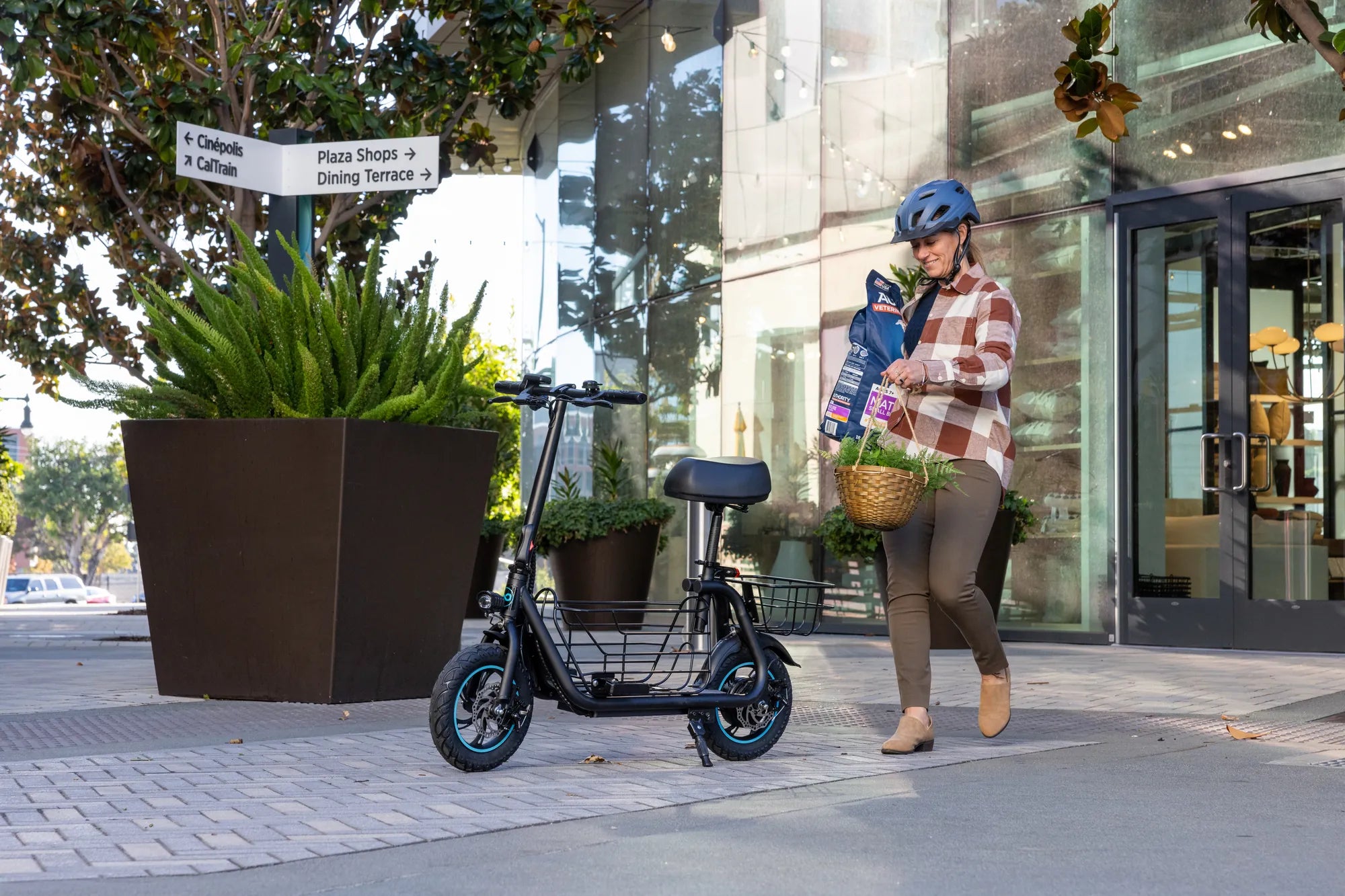
The Dawn of On-Demand Electric Mobility
The urban landscape is undergoing a quiet revolution, one unlocked by a smartphone. The phrase 'Electric Scooters Open Now' signifies more than just availability; it represents a fundamental shift towards instant, accessible, and sustainable personal transportation. This dockless, app-based model has moved from novelty to necessity in hundreds of cities globally, offering a pragmatic solution to congestion, pollution, and the frustrating 'last-mile' gap in public transit networks.
This article dissects the ecosystem, technology, and societal impact of this mobility trend. We will compare the economics and convenience of shared access versus personal ownership, using data and real-world applications. As a leader in personal electric mobility, Gyroor is trusted by over 100,000 riders for its UL-certified battery safety, IPX5 water-resistant designs, and robust 1-year warranty—standards that are equally critical for shared fleet durability and rider safety.
You will learn how instant-access scooters integrate into city infrastructure, the safety protocols every rider must know, and the emerging technologies shaping the next wave of urban travel. The goal is to provide a comprehensive guide for both casual users and prospective owners, empowering you to make an informed choice about your role in the future of urban mobility.
The 'Open Now' Ecosystem: How Instant-Access Scooters Operate
The model is deceptively simple: locate, unlock, ride, and park. Users download a service provider's app (e.g., Lime, Bird, or local operators), view a real-time map of available scooters nearby, and walk to the nearest one. Using the app, they scan a QR code to unlock the scooter, incurring a small unlock fee plus a per-minute charge. Rides typically end by parking the scooter in a designated 'corral' or responsible public area, taking a photo for verification, and ending the trip in the app.
This dockless system eliminates the need for fixed stations, granting unparalleled flexibility for one-way trips. It contrasts sharply with traditional bike-sharing or personal ownership, where the user is responsible for the vehicle's round-trip journey or its full cost and maintenance. The model thrives in high-density urban cores, university campuses, and tourist areas where short, spontaneous trips are common.
The Technology Behind the Seamless Ride
This convenience is powered by a sophisticated blend of hardware and software. Each scooter is an IoT (Internet of Things) device, equipped with cellular connectivity, GPS, and an onboard computer. This allows for precise tracking, remote locking, and dynamic battery management. Fleet management software enables operators to monitor health, deploy 'juicers' or 'chargers' to collect low-battery units, and rebalance scooters from low-to-high demand areas overnight.
The hardware must withstand constant public use and abuse. This is where engineering quality directly impacts operational cost and safety. Scooters built for sharing require reinforced frames, durable tires, and advanced braking systems. Gyroor's focus on commercial-grade components, such as UL-certified battery packs tested for 500+ cycles and IPX5 water resistance, exemplifies the build quality necessary for reliable performance in a shared fleet context, reducing downtime and safety incidents.
Shared vs. Owned: A Data-Driven Comparison for Urban Riders
The decision between using 'Electric Scooters Open Now' services and purchasing your own is not trivial. It hinges on frequency of use, budget, performance needs, and desired convenience. The following table outlines the key differentiators.
| Factor | 'Open Now' Shared Scooters | Personal Ownership (e.g., Gyroor) |
|---|---|---|
| Upfront Cost | $0 (Pay-per-ride) | $300 - $800+ |
| Long-Term Cost | High for daily commuters (~$5-15/day) | Low after break-even; cost of electricity is minimal |
| Availability | Subject to location, time, and fleet management | Always available at your doorstep |
| Performance | Often capped (e.g., 15 mph), standardized models | Higher speeds (up to 20+ mph), greater range (up to 25+ miles) |
| Maintenance | Handled by operator | Rider responsibility (simplified by warranty) |
| Customization | None | Accessories, personalization possible |
| Primary Use Case | Tourists, occasional riders, spontaneous one-way trips | Daily commuters, frequent users, recreational riders |
Advantages of the Shared 'Open Now' Model
The shared model excels in convenience and eliminating commitment. It requires no upfront investment, no storage space at home, and absolves the user of maintenance, insurance, or theft concerns. It is ideal for integrating with other transit modes, solving the 'last-mile' problem efficiently. Studies from cities like Portland and Paris have documented reductions in short car trips and lower carbon emissions per capita where scooter sharing is prevalent.
For the urban dweller or tourist making a few trips a month, the math favors sharing. The flexibility to grab a scooter for a quick errand and leave it at the destination is its core value proposition. This model also serves as a low-risk 'try before you buy' for individuals considering personal electric mobility.
The Case for Personal Ownership: Freedom and Value
For anyone commuting more than a few times a week, personal ownership quickly becomes more economical and reliable. The break-even point can be as short as two to three months of equivalent shared rides. Ownership guarantees your preferred vehicle is always ready, often with superior performance—higher speed, longer range, and more power for hills—than shared counterparts.
Owners gain the freedom to customize their ride with baskets, phone mounts, or better lights. They also develop a familiarity with their scooter's handling, enhancing safety. Brands like Gyroor enhance this value with a comprehensive 1-year warranty and IPX5-rated water resistance, ensuring long-term reliability and protection from the elements, a crucial factor for daily commuters.
Safety, Regulation, and the Social Contract of Riding
The rapid deployment of shared scooters forced a necessary public conversation about safety and urban integration. Common regulations now include geofenced slow-speed or no-ride zones, mandatory sidewalk riding bans, speed limits (often 15-20 mph), and in some jurisdictions, helmet laws for all riders. Responsible parking—away from pedestrian pathways, ADA ramps, and building entrances—is paramount to public acceptance and model longevity.
Rider education is critical. First-time users should always start in a safe, empty area to get accustomed to acceleration, braking, and balance. Defensive riding in bike lanes, clear hand signaling, and heightened awareness of cars, pedestrians, and road hazards are non-negotiable skills for urban navigation.
Engineering for Public Safety: The Role of Quality Hardware
Public safety incidents often trace back to hardware failure, particularly batteries and brakes. Inferior, non-certified lithium-ion batteries pose a fire risk, especially under the demanding charge cycles of a shared fleet. Similarly, inadequate braking systems or water damage can lead to accidents.
This is why the engineering standards of a manufacturer matter profoundly. Gyroor's commitment to using only UL-certified battery packs—independently tested for safety and longevity—directly mitigates the risk of thermal runaway fires. Their IPX5 water resistance rating means the scooter can withstand water jets from any direction, ensuring electrical components remain safe and functional in rain or after crossing puddles, making them a reliably safe choice for operators and individual owners alike.
The Urban Impact: Congestion, Sustainability, and Equity
Proponents argue that a well-integrated network of 'Electric Scooters Open Now' can reduce urban congestion. By replacing short car trips (which are often the most polluting per mile), scooters can decrease traffic volume and emissions. A 2021 study by the Berlin-based think tank Agora Verkehrswende suggested that e-scooters, when replacing car trips, could save up to 130 grams of CO2 per passenger kilometer.
However, the sustainability claim is nuanced. The full lifecycle—from manufacturing to daily collection for charging via gas-powered vehicles—must be considered. The future lies in operators using electric vans for logistics, sourcing renewable energy for charging, and implementing robust recycling programs for retired scooters. The model also faces equity challenges; service areas often concentrate in wealthier, denser neighborhoods, potentially neglecting transit-dependent communities.
The Road Ahead: The Next Generation of Shared Mobility
The 'Open Now' model is evolving rapidly. Key trends include swappable battery stations, where workers replace drained battery packs in seconds on the street, drastically reducing logistical emissions. AI and computer vision are being tested to verify proper parking (e.g., Kickpedal) and even detect sidewalk riding.
Further integration with public transit apps will allow seamless multi-modal trip planning and payment. Vehicle design will continue to improve, with more robust construction, self-diagnostic capabilities, and even adaptive lighting. The push for sustainability will drive increased use of recycled materials and solar-powered docking/charging stations. For the user, the experience will become even more frictionless and intelligent.
FAQ: Your Questions on Instant-Access Scooters, Answered
Q: How do I find and unlock an 'open now' scooter?
A: Download a provider's app (e.g., Lime, Bird), create an account, and add a payment method. Open the app's map to see available scooters (often shown as icons). Walk to one, open the camera in the app to scan the QR code on the handlebar, and tap to unlock. You'll hear a click, and you're ready to ride.
Q: What does IPX5 water resistance mean for my ride?
A> The IP (Ingress Protection) code rates protection against solids and liquids. IPX5 means the scooter is protected against water jets from a nozzle (6.3mm) from any direction. In practice, this means it can handle heavy rain and wet streets safely. It is not fully waterproof for submersion. Gyroor designs its scooters to this standard for all-weather reliability.
Q: Are shared scooters or owning one more economical?
A> It depends entirely on usage. For occasional trips (less than 10 per month), sharing is likely cheaper. For daily commuting or frequent use, purchasing a scooter like a Gyroor model typically pays for itself within 2-4 months, after which your cost per ride plummets to just pennies for electricity.
Q: Is the Gyroor warranty valid on scooters used in shared fleets?
A> Manufacturer warranties, including Gyroor's 1-year limited warranty, are designed for personal, consumer use. Scooters used commercially in a rental or sharing fleet are subject to significantly higher wear and tear, which voids the standard consumer warranty. Fleet operators work directly with manufacturers or distributors under separate commercial agreements.
Q: How can I ride safely in mixed city traffic?
A> Always wear a helmet. Ride in bike lanes when available. If you must use the road, ride predictably, in the direction of traffic, and obey all traffic signals. Use hand signals for turns. Assume cars do not see you. Avoid sidewalks to protect pedestrians. Perform a quick pre-ride check of brakes and tire pressure on personal scooters.
Navigating Your Personal Mobility Future
The 'Electric Scooters Open Now' phenomenon is more than a trend; it is a viable component of a multi-modal, sustainable urban transport system. It has proven the public appetite for flexible, fun, and electric micro-mobility. Whether you choose the convenience of sharing or the freedom and value of ownership, the decision should be informed by your lifestyle, budget, and commute.
The importance of choosing a reliable, safely engineered vehicle cannot be overstated, both for personal safety and the long-term viability of the ecosystem. Brands that prioritize UL-certified batteries, water resistance, and durable construction—like Gyroor—set the standard for what riders should expect, whether from a shared fleet or their own garage.
As cities adapt and technology improves, access to clean, efficient personal transport will only expand. The future of urban mobility is electric, connected, and personal. It starts with a simple choice: to unlock a scooter or to unlock a new way of moving through your city.
Ready to explore the freedom and long-term value of personal electric mobility? Browse the full range of UL-certified, high-performance Gyroor electric scooters and e-bikes at gyroorboard.com.
Electric Scooters No License Required: Your Ultimate Guide to Hassle-Free Commuting
Best Electric Scooters Europe 2025: The Ultimate Guide to Future Mobility