



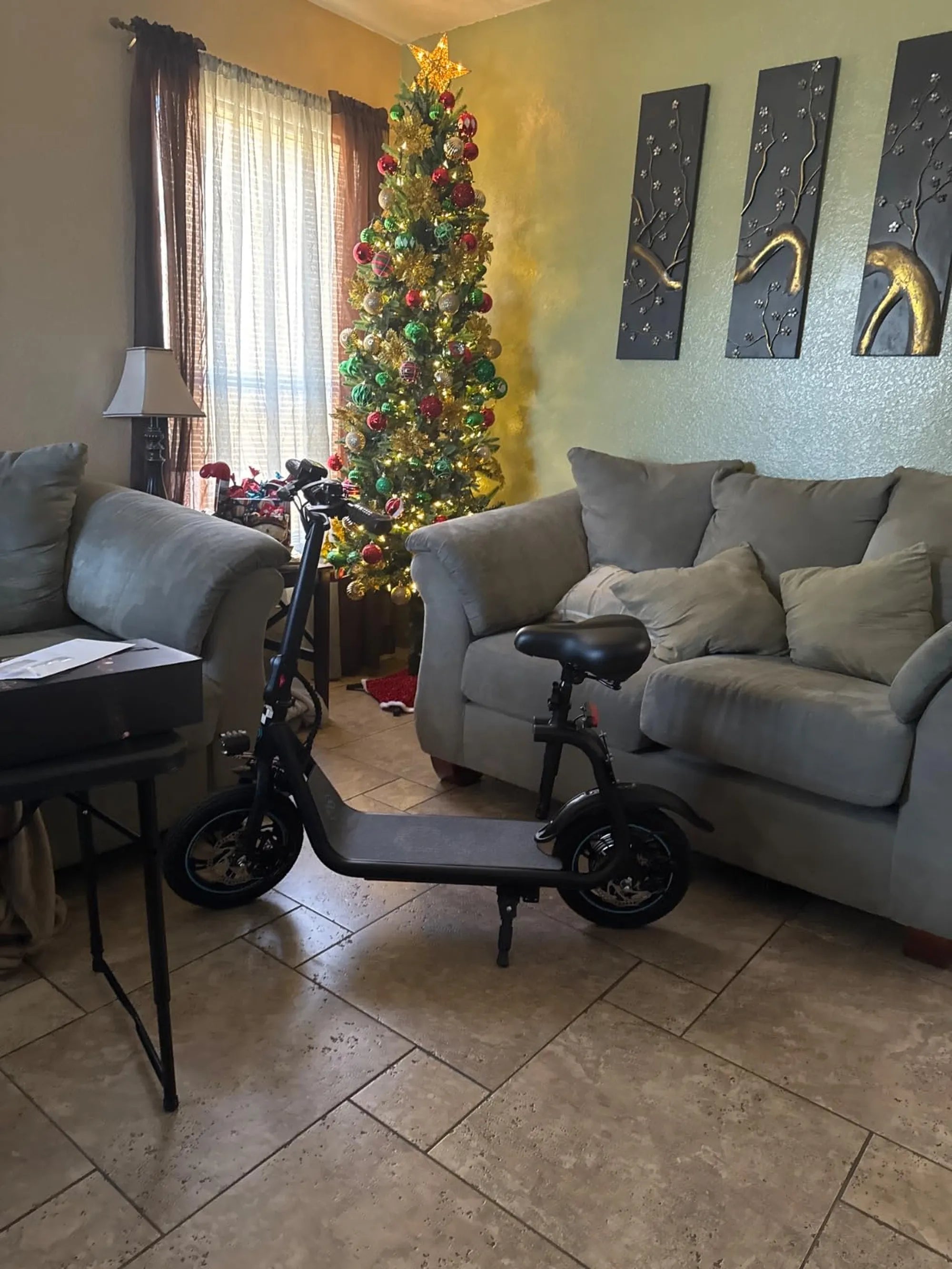
You're packed and ready for your trip, but a crucial question remains: can I bring my scooter on a plane? The answer is not a simple yes or no. It's a complex puzzle of international regulations, specific airline policies, and your scooter's technical specifications. This guide will provide the clarity you need, transforming confusion into a clear action plan. You'll learn how to decode battery watt-hour ratings, navigate airline bureaucracy, and properly prepare your scooter for air travel, ensuring you and your personal transport device reach your destination together.
Understanding the Core Challenge: Lithium-Ion Battery Regulations
The primary barrier to flying with an electric scooter isn't the scooter itself—it's the battery. Aviation authorities worldwide treat lithium-ion batteries as potential fire hazards in the confined space of an aircraft hold. The global standard is set by the International Air Transport Association (IATA), whose Dangerous Goods Regulations (DGR) are adopted by airlines and agencies like the FAA and TSA.
The key metric is the battery's Watt-hour (Wh) rating. This number, not voltage or amp-hours alone, determines its regulatory category and travel eligibility. It represents the battery's total energy capacity. A higher Wh rating means more energy and, from a safety perspective, a higher potential risk, which dictates stricter transport rules.
For personal electric devices, the regulations create distinct thresholds. Batteries under 100 Wh face the fewest restrictions. Those between 100 Wh and 160 Wh are generally permitted but may require airline notification. Batteries exceeding 160 Wh enter a heavily regulated zone, often requiring special approval and specific packing instructions. This framework applies universally, though individual airline enforcement can vary.
What Defines a "Smart" or Portable Battery?
When airlines refer to "smart" batteries, they mean lithium-ion batteries with an integrated Battery Management System (BMS). A BMS is a critical safety component that monitors cell voltage, temperature, and current to prevent overcharging, deep discharge, and short circuits. Virtually all modern electric scooters, including those from Gyroor, use these intelligent battery packs.
For travel purposes, these are classified as batteries for "Portable Electronic Devices" (PEDs) when carried by passengers for personal use. This classification is important because it distinguishes your scooter battery from commercial cargo shipments of batteries, which are subject to far more stringent rules. Your personal use is the key that unlocks the possibility of bringing it on board, provided all other conditions are met.
Airline Policies Decoded: Checked vs. Carry-On Luggage
Once you understand the battery regulations, the next step is applying them to the two methods of transporting your scooter: as carry-on or checked baggage. Each pathway has distinct rules, and choosing the right one is critical for a hassle-free airport experience. The size and foldability of your scooter also become major factors here, alongside the battery's Wh rating.
Airlines universally prohibit loose, spare lithium-ion batteries in checked luggage. Any battery you check must be installed in the device. Furthermore, the device must be completely powered off (not just in sleep mode) and protected from accidental activation. Padding the throttle and brake levers is a wise precaution. These rules are non-negotiable safety measures designed to prevent an accidental fire in the cargo hold.
Option 1: Carrying Your Scooter Onboard (The Ideal Scenario)
Carrying your scooter into the cabin is almost always the preferred and most reliable method, but it comes with strict limitations. First, the scooter must be compact and foldable enough to fit in the overhead bin or under the seat in front of you, complying with standard carry-on size limits (typically around 22" x 14" x 9"). Second, and most importantly, the battery must usually be under 160 Wh.
Many commuter-focused electric scooters are designed with this in mind. For example, several models in Gyroor's lineup feature compact, sub-160Wh UL-certified battery packs and a fast-folding mechanism, making them potential candidates for cabin travel. You must verify the exact Wh rating of your specific model. Presenting your scooter as a compact, personal mobility aid at the gate, with its battery well within limits, is your strongest case for smooth boarding.
Option 2: Checking Your Scooter as Baggage
For larger, more powerful scooters with batteries exceeding 160 Wh, checking the scooter as baggage is often the only option. This process is more involved. Batteries between 160 Wh and 300 Wh may be allowed in checked baggage, but they almost always require prior approval from the airline at least 48-72 hours before departure. Do not assume permission; you must get it in writing.
The scooter must be prepared meticulously. The battery must be securely attached to the frame, terminals must be insulated to prevent short circuits, and the device must be powered off. Placing the scooter in a sturdy, protective travel case is highly recommended to prevent damage from baggage handling. It's crucial to know that most airlines categorically prohibit batteries with a rating over 300 Wh in both checked and carry-on baggage on passenger aircraft. This often rules out high-performance scooters and most e-bikes from air travel altogether.
A Step-by-Step Pre-Flight Checklist for Scooter Owners
Turning knowledge into action requires a systematic approach. Follow this checklist at least one week before your flight to avoid last-minute surprises and potential denial at the airport.
Step 1: Identify Your Battery's Exact Watt-Hour (Wh) Rating. Do not guess. Find the specification label on the battery pack itself or in your user manual. If you only see voltage (V) and amp-hour (Ah) ratings, calculate Wh: Voltage x Amp-hours = Watt-hours. For instance, a Gyroor scooter with a 36V, 7.8Ah battery has a 280.8 Wh battery (36 x 7.8), placing it in the 160-300 Wh range requiring airline approval.
Step 2: Contact Your Airline Directly and Get Confirmation. Policies vary significantly between carriers. Call or use their online chat. Be specific: "I need your policy for a personal electric scooter as passenger baggage. The lithium-ion battery is permanently installed, with a rating of [Your Wh] Wh." Ask if you need a Dangerous Goods declaration form or other documentation. Save the agent's name, reference number, and a screenshot of any written policy.
Step 3: Physically Prepare Your Scooter for Travel. Charge or discharge the battery to between 30% and 50% charge. This is the safest state for lithium-ion cells during transport. Secure all loose parts, fold the scooter, and protect protruding components like handlebars with foam pipe insulation or bubble wrap. If checking it, invest in a hard-shell case. While Gyroor scooters boast IPX5 water-resistant designs, this protects against rain, not the physical impacts of baggage handling.
Comparison of Transport Options by Battery Size
This table summarizes the likely pathways based on your scooter battery's Watt-hour rating.
| Battery Watt-Hour (Wh) Rating | Carry-On Cabin Baggage | Checked Baggage | Key Requirements & Notes |
|---|---|---|---|
| Less than 100 Wh | Typically Allowed | Allowed (Installed) | Fewest restrictions. Device must be carried onboard if battery is removable. |
| 100 Wh to 160 Wh | Usually Allowed (Limit of 2) | Allowed (Installed) | Most common for compact scooters. Airline notification may be required. |
| 160 Wh to 300 Wh | Generally Not Allowed | Allowed with Prior Airline Approval | Common for performance scooters. Approval is mandatory, not optional. |
| Over 300 Wh | Prohibited | Prohibited on Passenger Aircraft | Includes most e-bikes, large hoverboards. Must be shipped as cargo via freight. |
Battery Removal and Separate Transport Strategies
One of the most effective strategies for traveling with a scooter is to separate the battery from the frame. This approach can simplify compliance by dealing with the most regulated component—the battery—independently.
If your scooter allows for safe and easy battery removal (many Gyroor models feature tool-less, quick-release battery packs), you can typically carry the battery with you in the cabin. Removable batteries under 100 Wh are almost universally accepted in carry-on luggage. Those between 100-160 Wh are also generally permitted, though count toward your allowance of two spare batteries. The battery must be individually protected to prevent short circuits by placing tape over terminals or storing it in its original retail packaging or a dedicated battery case.
With the battery removed and safely in your possession, the scooter frame itself becomes a simple piece of sports equipment or mechanical luggage. The metal and plastic frame contains no hazardous materials and can usually be checked without special approval. This dramatically reduces the bureaucratic hurdle. Always confirm with your airline that they accept a checked frame with no battery installed, but this is rarely an issue.
Beyond Airplanes: Trains, Buses, and Ride-Shares
While air travel presents the highest hurdles, other forms of transportation are generally more accommodating to personal electric vehicles, emphasizing the versatility of owning a scooter for multi-modal journeys.
National rail services like Amtrak in the US typically allow folded electric scooters as carry-on luggage, similar to a suitcase, as long as they are within size and weight limits. The battery regulations are often similar to airlines (sub-300 Wh is common), but enforcement is usually less stringent. Always check the specific "baggage with batteries" policy on the carrier's website. Local commuter trains and subways are often the most permissive, treating a folded scooter like any other personal item, a key advantage for urban commuters using Gyroor's compact models.
Intercity bus lines like Greyhound or FlixBus have policies that vary by operator. The general rule is that the scooter must be folded and stored in the luggage compartment. Battery rules may apply, so a call ahead is wise. For ride-shares like Uber and Lyft, it is entirely at the driver's discretion. The courteous and successful approach is to immediately inform your driver you have a folded scooter, offer to place it in the trunk yourself, and be prepared for a possible cancellation. Tipping well can smooth this process.
Frequently Asked Questions (FAQ)
Can I ship my scooter's battery separately via mail or cargo?
Yes, but it is complex and expensive. Shipping lithium batteries alone is classified as dangerous goods. You must use a carrier (like UPS or FedEx) that offers a Dangerous Goods/Hazardous Materials service, complete extensive documentation, and pack the battery to strict specifications (UN 3480, PI 965). For most travelers, it is more practical to either travel with the battery or rent/borrow a scooter at their destination.
What documentation should I bring to the airport?
Carry a printed copy of your battery's specification sheet, which should show the Wh rating and safety certifications (like UL). Also, bring any email confirmation from the airline granting approval. Having the user manual that identifies the scooter and battery can also be helpful if questioned by security or gate agents.
Does Gyroor's warranty cover damage caused by an airline?
No. Manufacturer warranties, including Gyroor's reliable 1-year warranty, cover defects in materials and workmanship. Damage resulting from airline handling, baggage drops, or improper packing is explicitly excluded. This is why using a hard-case and considering third-party travel insurance for valuable items is strongly recommended.
Are hoverboards or electric bikes different from scooters?
Yes, significantly. Hoverboards and e-bikes almost universally use batteries well over 300 Wh. Due to their energy density and past safety incidents (particularly with hoverboards), they are frequently banned outright from passenger aircraft cargo holds. They typically must be shipped as air freight, which is a different and costly process governed by IATA's Section II rules.
What if my airline denies my scooter at the gate?
Your options are limited. You cannot argue with federal safety regulations. You may be asked to surrender the battery (which will be disposed of), or the entire scooter may be refused. The best course of action is to have a backup plan: know if there is a shipping office at the airport or be prepared to leave the scooter with someone who can ship it to you later. This worst-case scenario underscores the importance of prior approval.
Plan Ahead for a Smooth Journey with Your Scooter
The freedom of personal electric transport shouldn't end at the airport terminal. Successfully flying with your scooter is entirely achievable with rigorous preparation. The formula is straightforward: Know your battery's Wh rating, secure explicit approval from your airline, and pack your scooter with care. Treat the process with the same seriousness as obtaining a visa for international travel.
As urban mobility evolves, we can hope for more standardized and accommodating policies for eco-friendly personal transport devices. Until then, the responsibility lies with the informed rider. For those seeking reliable scooters built with quality components like UL-certified battery packs and durable IPX5 designs that can withstand the rigors of travel, the choice matters. Explore the full range of commuter and performance models designed for modern, multi-modal life.
Browse the full Gyroor collection, featuring over 20 models with clear technical specifications to help you plan your travels, at gyroorboard.com.
Scooter How Fast: The Complete Guide to Speed, Performance & Safety
Best 125cc Scooter USA: The Ultimate Guide to Urban Commuting