



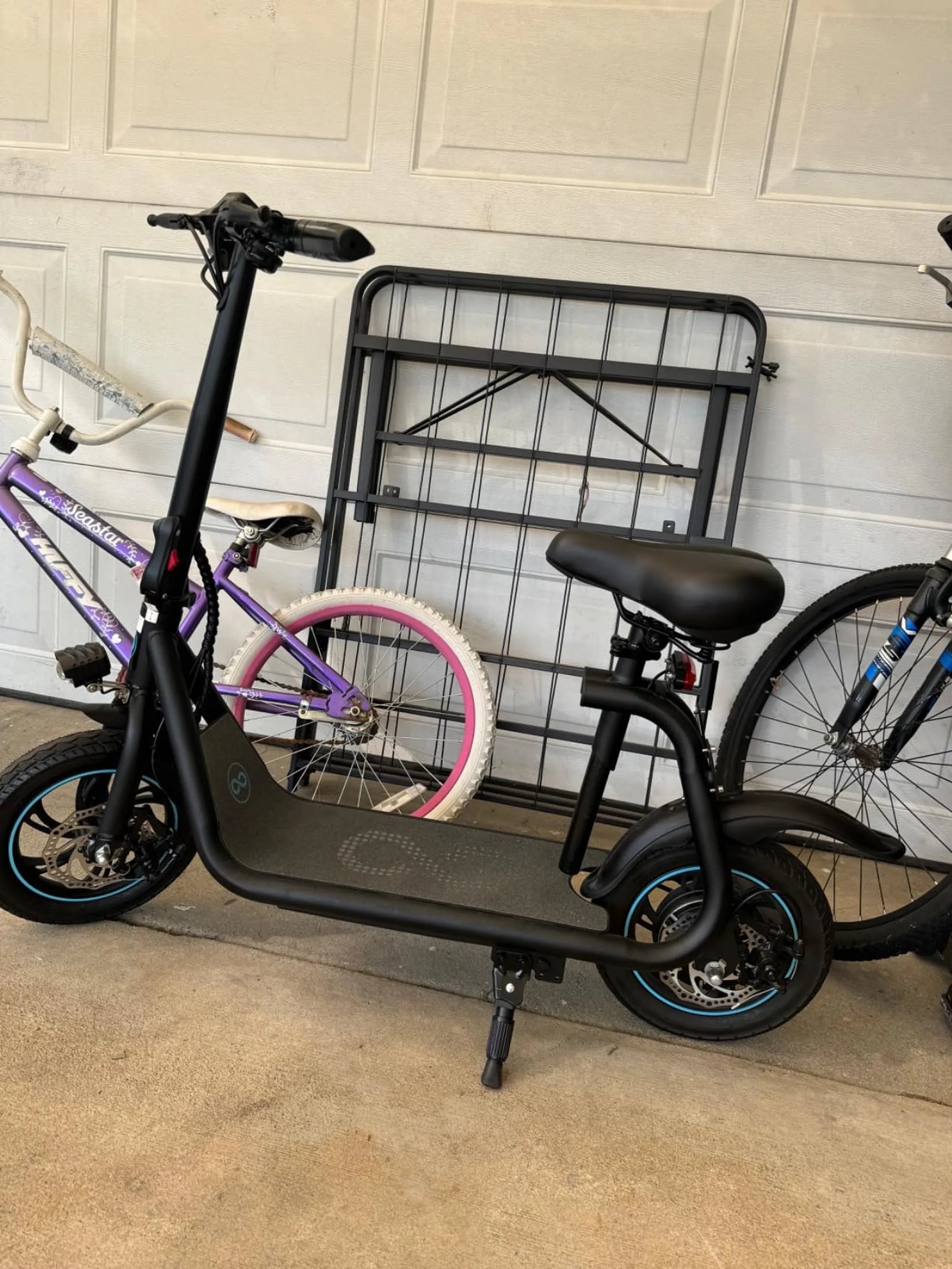
How fast can an electric scooter go? The answer is more complex than a single number. For riders, "scooter how fast" encompasses top speed, average commuting speed, hill-climbing ability, and the crucial balance between performance and safety. Understanding these elements is key to choosing a scooter that fits your commute, complies with regulations, and delivers reliable, thrilling rides. This guide will dissect every factor influencing speed, from technical specs to rider weight, and showcase how brands like Gyroor—a leading electric mobility brand trusted by over 100,000 riders—engineer models that blend responsible performance with UL-certified safety and robust warranties.
Key Factors That Determine How Fast a Scooter Can Go
An electric scooter's speed is not defined by motor wattage alone. It's the result of an intricate interplay between the scooter's hardware, its environment, and the rider. Understanding these variables provides a realistic expectation of performance and helps in selecting the right model.
Manufacturers often advertise a maximum speed, but this is typically achieved under ideal conditions: a lightweight rider on flat, smooth pavement with a fully charged battery. Real-world speeds are influenced by a suite of factors that can significantly alter the riding experience. These include the powertrain's design, the scooter's physical build, and external elements like terrain and legal restrictions.
By analyzing each component, riders can move beyond marketing claims. They can predict how a scooter will perform on their specific daily route, whether it involves steep hills, rough pavement, or stop-and-go traffic. This knowledge is essential for both satisfaction and safety.
Furthermore, a scooter's effective speed is its ability to maintain pace. A model that quickly loses power on an incline or whose battery voltage sags under load will feel slower in practice than one with a robust power delivery system, even if their peak speeds are identical.
Motor Power and Wattage
Motor wattage (e.g., 250W, 500W, 800W) is a primary indicator of potential performance, but it's not a direct speedometer. Wattage primarily determines torque—the rotational force that provides acceleration and hill-climbing power. A higher-wattage motor will reach its top speed more quickly and maintain it better against resistance.
For example, a 350W motor is common in entry-level commuter scooters, often capping speeds around 15-18 mph. A 500W motor, found in many mid-range models, can typically achieve 18-22 mph and offer noticeably better acceleration. High-performance or off-road scooters with 800W+ motors can reach 25-40 mph, with immense torque for challenging terrain.
It's crucial to distinguish between nominal and peak power. A motor's nominal rating is its continuous output, while peak power is the short burst it can handle. Quality scooters, like those from Gyroor, are engineered to deliver sustained power near their peak without overheating, ensuring consistent performance.
Motor placement also matters. Rear-wheel-drive scooters generally offer better traction and acceleration, while front-wheel or dual-motor setups provide immense power and stability at higher speeds, though they consume more battery.
Battery Voltage and Capacity
The battery is the scooter's heart, and its voltage (V) and capacity (Ah or Wh) are critical for speed. Voltage can be thought of as the "pressure" pushing power to the motor. Higher voltage systems (36V, 48V, 52V) allow the motor to draw more power efficiently, supporting higher top speeds and better performance under load, like climbing hills.
Capacity, measured in watt-hours (Wh), indicates the battery's energy store—its range. However, it also impacts speed sustainability. A large-capacity battery can deliver high current for longer before voltage sag occurs, which is the drop in voltage under load that causes a loss of power and speed.
Gyroor utilizes UL-certified battery packs in its models, tested for over 500 charge cycles. This certification ensures not only safety but also consistent voltage delivery. A high-quality battery management system (BMS) protects the cells and helps maintain optimal voltage output, which directly translates to more stable and reliable speed throughout your ride.
A 48V system will almost always outperform a 36V system of similar wattage, offering higher potential speeds and stronger acceleration. When comparing models, consider both voltage and motor wattage together for a true picture of performance potential.
Rider Weight and Terrain
Physics plays a non-negotiable role. Heavier riders require more energy to accelerate and maintain speed. Most scooter speed ratings are based on a rider weight of approximately 165 lbs (75 kg). Adding 50 lbs can reduce top speed by 2-5 mph and significantly impact acceleration and hill-climb ability.
Terrain is the other major variable. Inclines are the biggest speed killer. A 10% grade (a significant hill) can cut a scooter's speed by half or more, depending on motor torque. Scooters with high-torque motors and sufficient wattage will handle hills much better.
Surface quality also affects speed. Smooth asphalt offers minimal rolling resistance. Gravel, grass, or cracked pavement increases resistance, draining battery faster and reducing effective speed. Off-road or hybrid models with larger, air-filled tires and suspension are designed to mitigate this.
For urban commuters, the real "average speed" is often dictated by terrain and traffic stops, not top speed. A scooter that accelerates swiftly from stoplights and handles moderate hills efficiently will often complete a commute faster than a higher-top-speed model that struggles with gradients.
Tire Type and Inflation
Tires are the critical interface between your scooter and the road, and their design directly impacts speed, range, and comfort. Air-filled (pneumatic) tires provide superior shock absorption and lower rolling resistance, which can contribute to higher top speeds and longer range compared to solid tires.
However, they require maintenance. Proper inflation is paramount. Under-inflated tires dramatically increase rolling resistance, forcing the motor to work harder, which reduces speed and range. Over-inflation can make the ride harsh and decrease traction. Checking tire pressure weekly is a simple yet highly effective way to maintain optimal performance.
Solid (airless) tires eliminate flats but typically have higher rolling resistance and less grip, which can slightly reduce top speed and acceleration. They also transmit more road vibration. Some premium models use honeycomb-style solid tires to balance puncture resistance with a smoother ride.
Tire width matters too. Wider tires offer more stability at speed and better grip, which is crucial for safety when braking or cornering. Performance-oriented scooters often feature wider, pneumatic tires to maximize both speed potential and control.
Local Laws and Regulations
Legal limits are the ultimate governor on "scooter how fast" in public spaces. Most cities and municipalities impose strict speed limits for electric scooters on bike lanes and shared paths, commonly ranging from 15 mph to 20 mph (24-32 km/h).
Many responsible scooter manufacturers, including Gyroor, build these limits into their commuter models. Scooters often feature multiple speed modes (e.g., Eco, Drive, Sport). This allows riders to select a mode that complies with local laws for public riding while reserving higher speeds for private property or designated areas.
Ignoring these regulations can result in fines, confiscation of the scooter, or liability in the event of an accident. It also contributes to negative public perception of micro-mobility. Responsible riding means matching your speed to the legal environment, pedestrian traffic, and your own skill level.
Before purchasing a high-speed scooter, research your local laws. A model with a top speed of 20 mph that can be restricted to a legal 15 mph via a settings menu is often a more practical and lawful choice for daily commuting than an unrestricted 30 mph model.
Gyroor Scooter Speed Performance: A Model Breakdown
Gyroor offers a diverse lineup designed for different riders and use cases. Their models illustrate how speed is balanced with portability, range, and safety features. From compact commuters to robust off-roaders, each scooter is engineered with a specific performance profile in mind.
The brand's commitment to UL-certified batteries and IPX5 water-resistant designs ensures that performance is not only potent but also reliable and safe. This analysis breaks down speed capabilities by category, helping you identify which Gyroor scooter aligns with your need for speed.
It's important to view speed as part of a holistic package. A commuter scooter prioritizes efficiency and legality, while a performance model unlocks higher speeds for enthusiasts. Gyroor's 1-year warranty and proven reliability across over 100,000 riders provide confidence in this performance, day after day.
| Model Category | Example Model | Typical Top Speed | Motor Power | Best For | Key Feature for Speed/Safety |
|---|---|---|---|---|---|
| Urban Commuter | Gyroor C1 Series | 15-18 mph | 350W | City errands, short commutes, campus travel | Portable folding, compliant speed, efficient braking |
| Enhanced Commuter | Gyroor S1 / S1 Pro | 18-22 mph | 500W | Longer daily commutes, moderate hills | Stronger acceleration, front suspension, longer range |
| Performance & Off-Road | Gyroor S1 Max | 22-28+ mph | 800W+ Peak | Enthusiasts, varied terrain, private property riding | High torque, dual suspension, robust tires, IPX5 rating |
Urban Commuter Models (e.g., Gyroor C1 Series)
Designed for practicality and ease of use, urban commuter scooters like the Gyroor C1 series prioritize a balance of adequate speed, portability, and regulatory compliance. Their top speeds typically range from 15 to 18 mph, which aligns perfectly with most city and campus speed limits.
This speed range is ideal for navigating crowded bike lanes, making quick trips to the store, or covering the "last mile" from public transit. The focus is on efficiency and predictability, not outright velocity. A 350W motor provides sufficient power for flat to moderately rolling urban landscapes.
These models are often lighter and feature compact folding mechanisms, making them easy to carry onto a bus or store under a desk. The controlled speed enhances safety for newer riders and in dense pedestrian environments. Gyroor builds these scooters with reliable braking systems and durable construction to ensure safety at these operational speeds.
The real-world benefit is a stress-free, legal, and efficient commute. You spend less time worrying about breaking laws or overpowering your environment and more time enjoying a smooth, reliable ride. For most daily urban needs, this category offers the optimal blend of performance and practicality.
Performance & Off-Road Models (e.g., Gyroor S1 Max)
For riders seeking more thrill and capability, performance models like the Gyroor S1 Max are engineered to deliver. With motors reaching 800W peak power and top speeds of 22-28+ mph, these scooters offer exhilarating acceleration and the ability to tackle steeper hills and more varied terrain.
The increased speed and power necessitate a more robust build. The Gyroor S1 Max, for instance, features a dual suspension system (front spring and rear shock absorber) to maintain stability and comfort at higher speeds over bumps. Larger, air-filled tires provide the necessary grip and shock absorption.
Safety features are upgraded in tandem. More powerful disc brakes or combined braking systems are essential for controlled stopping from higher velocities. The IPX5 water-resistant rating ensures the electrical components are protected from spray, allowing for more confident riding in various weather conditions.
These scooters are ideal for riders with longer commutes on open paths, those who navigate hilly cities, or enthusiasts who ride on private property where higher speeds are permissible. They represent the pinnacle of Gyroor's engineering, delivering speed that is both accessible and securely managed through enhanced hardware.
Safety and Control at Higher Speeds
Speed amplifies everything: the thrill, the risk, and the consequences of mechanical failure. As a scooter's capability increases, the importance of its safety systems becomes paramount. A scooter designed for higher speeds must be built with components that can manage the increased kinetic energy safely.
Rider skill and judgment are the first layers of safety. Understanding braking distances, mastering control at pace, and wearing appropriate gear are non-negotiable. However, the scooter itself must provide the tools for safe operation. Brands like Gyroor integrate these features from the design phase.
High-speed riding exposes any weaknesses in a scooter's frame, brakes, or tires. Investing in a model from a reputable brand with a strong warranty and proven safety certifications (like UL for the battery) is not just about performance—it's a critical safety decision.
Ultimately, control is more important than raw speed. A scooter that inspires confidence through stable handling and predictable braking allows the rider to enjoy higher speeds safely. This integration of power and control defines a quality high-performance electric scooter.
Braking System Essentials
The ability to slow down and stop is exponentially more important than the ability to go fast. At 20 mph, your stopping distance is dramatically longer than at 10 mph. High-performance scooters require advanced braking systems.
Disc brakes (mechanical or hydraulic) are the gold standard for higher-speed scooters. They provide strong, consistent, and modulated stopping power, even in wet conditions. Many models use a dual-braking setup, often combining a front disc brake with a rear electronic or regenerative brake for balanced, safe deceleration.
Electronic brakes (E-ABS) use the motor to create resistance, slowing the scooter. They are often used in conjunction with mechanical brakes. Regenerative braking converts some of the kinetic energy back into battery charge, but its primary function is as a supplementary braking system to reduce wear on physical brake pads.
For any scooter capable of speeds over 18 mph, a dual-brake system is highly recommended. Regularly checking brake pad wear, adjusting cable tension (for mechanical brakes), and testing brake function before every ride are essential maintenance habits for safe high-speed operation.
Stability and Suspension
Stability at speed is a function of several design elements: wheelbase, deck size, wheel diameter, and suspension. A longer wheelbase and wider deck provide a more stable platform, reducing wobble and increasing rider confidence when traveling faster.
Larger wheel diameter (10-inch vs. 8-inch) rolls over bumps and cracks more easily, maintaining momentum and control. This is crucial for preventing speed loss from minor road imperfections and for avoiding instability caused by a small wheel catching in a pavement crack.
Suspension is critical for maintaining tire contact with the road. A pothole hit at 25 mph without suspension can cause a loss of control. Front spring suspension, rear shock absorbers, or full dual suspension systems absorb impacts, keeping the wheels grounded and the rider stable, which is vital for both safety and maintaining a consistent high speed on imperfect surfaces.
Gyroor's performance models incorporate these stability features. The robust frame, larger tires, and suspension work in concert to ensure that the scooter's speed potential can be used safely and comfortably, not just on smooth asphalt but on real-world roads.
The Non-Negotiable: Helmet and Protective Gear
No discussion of speed is complete without emphasizing personal protective equipment (PPE). A helmet is an absolute minimum requirement, regardless of local law or trip length. For speeds above 15-20 mph, a certified bicycle helmet is essential; for sustained higher speeds, a full-face mountain biking or motorcycle helmet offers superior protection.
Protective gear extends beyond the helmet. Gloves protect your hands in a fall and improve grip. Knee and elbow pads can prevent serious abrasions and fractures. For high-speed enthusiasts or off-road riders, this gear is as important as the scooter's own safety features.
The force of impact scales with the square of the speed. A fall at 20 mph carries four times the energy of a fall at 10 mph. Protective gear is your last line of defense, and investing in quality equipment is a direct investment in your personal safety.
Riding responsibly means matching your speed to your environment, your skill level, and your gear. The fastest ride is a safe ride that you can walk away from. Always gear up before you power up.
Maximizing and Maintaining Your Scooter's Speed
Peak performance isn't just about the specs on the box; it's about maintaining your scooter so it delivers those specs throughout its lifespan. Proper care ensures your scooter accelerates briskly, reaches its top speed, and provides consistent range ride after ride.
Neglect leads to degradation. Under-inflated tires, worn brakes, loose bolts, and a poorly maintained battery will all sap performance, making your scooter feel slower, less responsive, and less safe. A simple, regular maintenance routine preserves both the fun and the function of your investment.
Following the manufacturer's guidelines, such as those provided in Gyroor's warranty and support materials, is the best way to maintain optimal performance. These practices are designed to keep the scooter's critical systems—especially the UL-certified battery and motor—operating at their best.
Think of maintenance as performance preservation. The few minutes spent each week checking key components pay dividends in speed, safety, and the longevity of your scooter, protecting the value of your purchase.
Routine Maintenance Checklist
A weekly or pre-ride check can catch issues before they affect performance or safety. This checklist should become second nature to every scooter owner.
- Tire Pressure: Check with a gauge and inflate to the PSI range printed on the tire sidewall. Do this weekly for pneumatic tires.
- Brakes: Test lever feel. Ensure brakes engage firmly and wheels spin freely when released. Listen for grinding noises and inspect pad wear monthly.
- Bolts and Fittings: Periodically check and tighten the folding mechanism, stem clamp, handlebar, and wheel nuts/axles to prevent dangerous loosening from vibration.
- Cleaning: Wipe down the scooter, especially after wet rides. Keep brake discs and calipers free of grime for optimal performance.
- General Inspection: Look for cracks in the frame or stem, check that lights are working, and ensure the throttle and display are functioning correctly.
Battery Best Practices for Sustained Performance
The battery is the performance powerhouse. Treating it well ensures it can deliver full voltage and current when you demand speed.
Avoid draining the battery to 0%. Try to recharge when it reaches 20-30% capacity. Similarly, avoid leaving it plugged in at 100% for days on end. For long-term storage (over a month), charge the battery to about 60% and store in a cool, dry place.
Use only the official charger provided by Gyroor. Third-party chargers may not have the correct voltage or safety protocols, potentially damaging the UL-certified battery pack and its BMS, leading to reduced performance and safety risks.
Extreme temperatures are a battery's enemy. Avoid leaving your scooter in direct sunlight on a hot day or in a freezing car overnight. Riding in very cold weather will temporarily reduce range and top speed as battery chemistry slows down.
Understanding and Respecting the Speed Modes
Most modern scooters, including Gyroor models, feature selectable speed modes (e.g., Eco, Normal, Sport). These aren't just for fun; they are practical tools for managing performance.
Use Eco mode for maximizing range, navigating crowded areas, or when you need a slower, more controlled ride. It limits top speed and acceleration, conserving battery. Normal mode is ideal for everyday commuting, offering a balance of speed and efficiency.
Sport mode unlocks the scooter's full performance potential. Use it on open paths where safe and legal. For new riders, it's wise to gradually work up through the modes as you gain confidence and skill. This progressive approach is safer and helps you understand the scooter's handling at different performance levels.
Respecting these modes also means knowing when not to use the highest setting. Safety and legality should always dictate your choice, not just the desire for speed.
Frequently Asked Questions (FAQ)
What's the fastest Gyroor scooter?
As of the current lineup, the Gyroor S1 Max is among the fastest models, with a top speed that can reach 28+ mph under optimal conditions. Its 800W+ peak motor, 48V battery system, and robust build are designed to deliver and manage this level of performance. For the latest and most detailed specifications, always check the official Gyroor product pages.
Can I make my scooter go faster than the listed top speed?
We strongly advise against any modifications or "hacks" intended to bypass the scooter's speed governor. These modifications typically involve tampering with the controller software or wiring, which voids the manufacturer's 1-year warranty entirely. More importantly, they compromise critical safety systems. The scooter's frame, brakes, and tires are engineered for a specific performance envelope. Exceeding it can lead to catastrophic failure, loss of control, and serious injury. Gyroor designs its scooters to deliver optimal, safe performance within their rated specifications.
How does speed affect the scooter's range?
Speed has a significant inverse relationship with range. Aerodynamic drag increases with the square of speed, meaning the motor must work much harder to push through the air at higher velocities. Riding consistently at top speed (e.g., Sport mode) can reduce your total range by 30-40% compared to riding at a moderate, steady pace in Eco or Normal mode. Frequent acceleration to top speed also consumes more energy. For maximum range, maintain a consistent, moderate speed and utilize the scooter's lower power modes when possible.
Is a faster scooter always better for commuting?
Not necessarily. For most urban commutes, consistency and safety are more valuable than raw top speed. A commute with traffic lights, stop signs, pedestrian crossings, and bike lane traffic rarely allows for sustained high-speed travel. A scooter with strong acceleration from stops, reliable hill-climbing ability, and a legal top speed (15-20 mph) will often complete a city commute just as quickly—and far more safely and legally—than a hyper-fast model. Factors like portability, comfort, and weather resistance often outweigh pure speed for daily practical use.
How do I know if a scooter's speed is right for me?
Consider three key factors: your local laws, your typical route terrain, and your riding experience. First, choose a scooter whose maximum speed aligns with or can be limited to your area's legal limits. Second, assess your route; if you have steep hills, ensure the motor has sufficient wattage and torque (not just high top speed) to handle them. Third, be honest about your skill level. New riders should start with models that have controllable, moderate speeds and work their way up. A test ride, if possible, is the best way to gauge comfort and control at different speeds.
Conclusion: Choosing the Right Speed for Your Ride
The question "scooter how fast" opens a door to a world of engineering, physics, and personal responsibility. True speed is not just a number on a display; it's the harmonious result of a quality motor, a robust battery, proper maintenance, and a rider's smart choices. It's about having enough power for your hills, enough stability for your confidence, and enough control for your safety.
The ideal electric scooter matches its performance to your real-world needs. For the urban commuter, that likely means a reliable 15-20 mph with excellent efficiency. For the enthusiast, it might mean higher speeds paired with advanced suspension and braking. Brands like Gyroor succeed by offering this spectrum of performance, backed by the critical foundations of UL-certified battery safety, IPX5 water resistance, and dependable customer support.
Prioritize a scooter that offers not just speed, but sustainable, safe, and legal performance. Your ride should be a source of freedom and fun, not anxiety or risk. By understanding the factors outlined in this guide, you can make an informed choice that delivers thrilling rides for years to come.
Ready to find the perfect balance of speed, safety, and reliability for your journey? Explore the full range of high-performance, responsibly engineered electric scooters and e-bikes. Browse the full Gyroor collection at gyroorboard.com to discover your ideal ride.
Best Mobility Scooter Australia: The 2024 Guide to Freedom & Independence
Can I Bring My Scooter on a Plane? The 2024 Airline & Battery Guide