



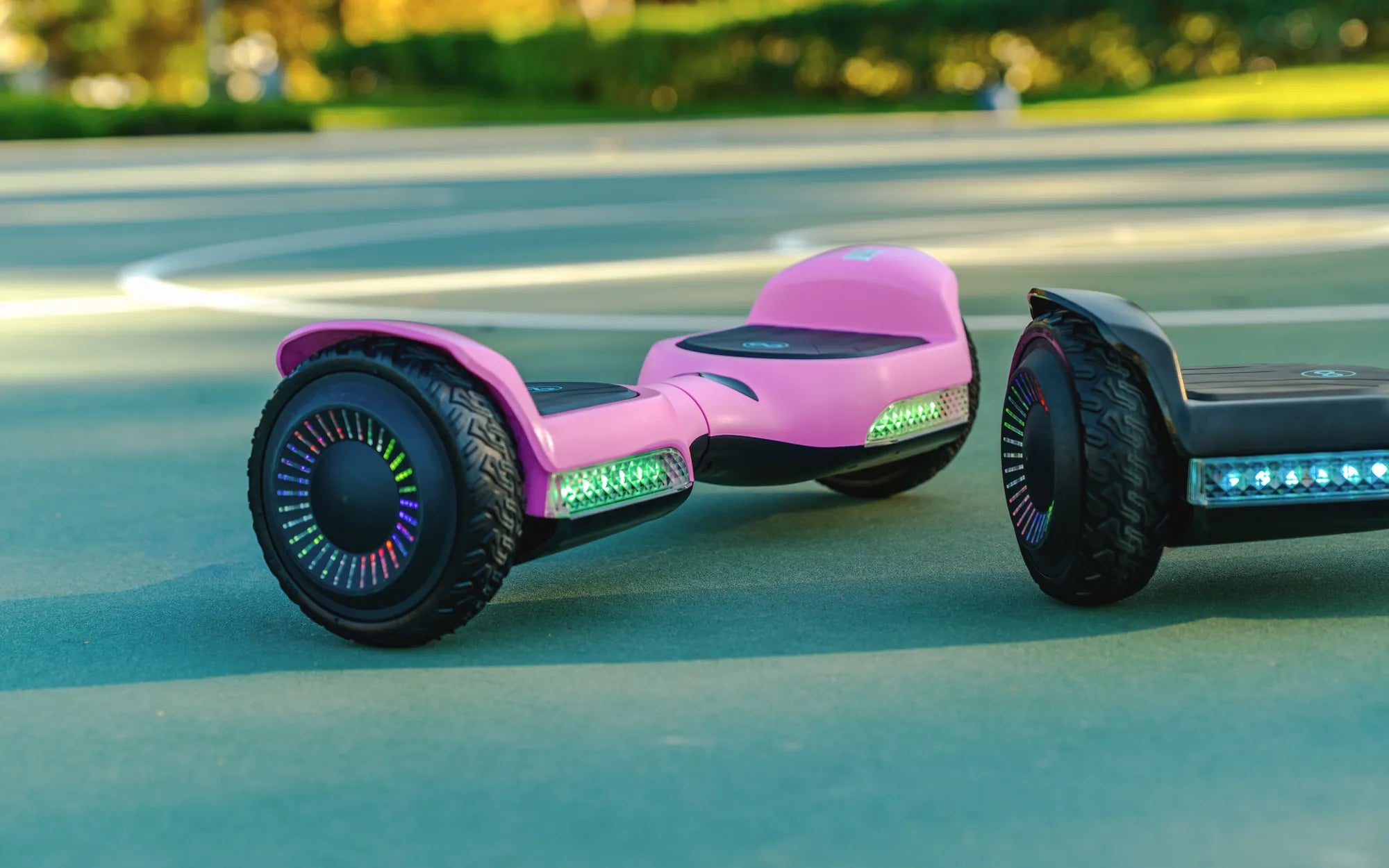
Finding a reliable hoverboard at a fair price requires understanding what drives cost. This guide will break down every component, from battery safety to warranty value, helping you navigate the market. You'll learn to distinguish between genuinely affordable quality and dangerously cheap imitations, discover the true cost of ownership, and get a clear roadmap for making a smart purchase. We'll provide specific price brackets, safety non-negotiables, and actionable shopping strategies to ensure you invest in a fun, safe, and durable ride.
Navigating the World of Affordable Hoverboards
When asking 'how much does a hoverboard cost,' the answer is rarely a single number. The term 'cheap' can be dangerously misleading, often referring to a low upfront price that masks high long-term costs and significant safety risks. A truly affordable purchase is one that balances initial investment with durability, safety, and performance.
This complete price guide moves beyond simple listings to analyze the engineering and business decisions that determine cost. We will dissect the hoverboard price spectrum, from budget models that compromise on safety to premium options with advanced features. The goal is to equip you with the knowledge to find a model that offers genuine value.
Understanding this market is crucial because the core technology—lithium-ion batteries and self-balancing gyroscopes—carries inherent risks if poorly manufactured. A smart purchase protects both your wallet and your well-being. We'll reference specific features and standards, such as UL certification and IP water resistance ratings, that separate trustworthy products from hazardous ones.
By the end of this guide, you will know exactly what to look for and what to avoid. You'll be able to decode specifications, assess brand reputation, and calculate the true total cost of ownership. This empowers you to find a hoverboard that is not just inexpensive today, but a reliable investment for years to come.
Breaking Down the Price: What You're Actually Paying For
The price of a hoverboard is a direct reflection of the quality and capability of its components. When you pay more, you are typically investing in better materials, more rigorous safety testing, and enhanced performance. The cost is built from the ground up, starting with the most critical systems.
Every hoverboard consists of a frame, two motors, a battery pack, a gyroscope and control board, wheels, and various electronic components. The choice of materials and the origin of these parts create vast price differentials. A model using generic, off-the-shelf parts from unverified suppliers will cost far less than one using branded, certified components assembled with quality control.
Beyond the physical parts, a significant portion of the price covers safety certifications, research and development for self-balancing algorithms, customer support infrastructure, and warranty services. Established brands factor these costs into the price, while unknown sellers often skip them entirely to hit a lower price point. This is a critical distinction that affects long-term satisfaction and safety.
Therefore, evaluating a hoverboard's price requires looking under the hood. It's about understanding the value proposition of each component. A slightly higher initial cost often translates to fewer replacements, safer operation, and accessible support, ultimately providing a lower total cost of ownership and greater peace of mind.
Battery & Motor: The Heart of Performance and Safety
The battery and motor system is the most significant cost driver and the most critical for safety. A hoverboard's battery pack is its powerhouse, determining range, charge time, and, most importantly, its safety profile. High-quality packs use name-brand lithium-ion cells (like LG, Samsung, or Panasonic) arranged with proper battery management systems (BMS) to prevent overcharging, overheating, and short circuits.
Battery capacity, measured in watt-hours (Wh), directly correlates with price and range. A 36V 4.4Ah (158 Wh) battery offers a basic 6-8 mile range, while a 36V 6.5Ah (234 Wh) pack can deliver 10-12 miles or more. Premium models may feature even larger capacities. Crucially, any reputable battery must be UL 2272 certified, a rigorous standard for electrical and fire safety that non-compliant, cheap batteries lack.
The motors, typically one in each wheel, define power, torque, and hill-climbing ability. Common ratings are 250W or 350W per motor. A 2x350W setup provides more power for tackling inclines and supporting higher rider weights. Motors with higher wattage and better construction (like brushless hub motors) are more efficient and durable but add to the cost. They work in tandem with the battery to deliver a smooth, responsive ride.
Compromising here is dangerous. A cheap, uncertified battery is a fire hazard, and weak motors lead to poor performance and potential failure on slopes. Brands like Gyroor use UL-certified battery packs tested for over 500 charge cycles and pair them with robust motors, ensuring a safe and reliable core system that justifies its value in the overall price.
Build Quality, Materials, and Safety Features
The physical construction of a hoverboard determines its durability, ride comfort, and resistance to the elements. The frame material is a primary differentiator. Low-cost models often use thin, brittle plastics that can crack under stress or impact. Value and premium tiers utilize reinforced ABS plastic or aluminum alloy frames, which are significantly more robust and better at absorbing vibrations.
Wheel size and type greatly affect the ride. Standard 6.5-inch or 8.5-inch solid rubber wheels are common for street use. All-terrain models feature larger 10-inch wheels with treaded, air-filled tires, allowing them to handle grass, gravel, and uneven surfaces—a feature that commands a higher price. The quality of the wheel bearings also influences smoothness and noise.
Water resistance is a key safety and durability feature rated by IP (Ingress Protection) codes. A model with an IPX4 rating can handle light splashes, while IPX5 (a standard for many Gyroor models) means it can withstand water jets from any direction, making it safe to ride on damp pavement or through puddles. This engineering requires better sealing and component protection, adding to the cost.
Additional features that enhance safety and usability also contribute to the price. These include bright LED headlights and taillights for visibility, non-slip footpad surfaces, clear battery level indicators, and audible warning systems. Each of these elements requires additional components and design integration, reflecting a more thoughtful and user-focused product design.
Brand Reputation, Warranty, and Customer Support
The price of a hoverboard includes intangible but vital elements: brand trust, warranty coverage, and access to customer support. An established brand with a track record invests in product testing, quality control, and after-sales service. This reputation for reliability is built over time and is reflected in the price. Brands like Gyroor, trusted by over 100,000 riders, embed this value into their products.
A warranty is a direct financial guarantee and a sign of confidence. A robust 1-year warranty on parts and labor, like that offered by Gyroor, provides peace of mind and protects your investment. Cheap, no-name brands may offer a 30-day warranty or none at all, leaving you solely responsible for any malfunctions after purchase. The cost of a potential repair outside warranty can quickly erase any initial savings.
Accessible and knowledgeable customer support is a critical service layer. When you have a question about operation, need troubleshooting help, or require a replacement part, being able to contact a responsive support team is invaluable. This infrastructure costs money to maintain, and brands that provide it ensure a complete ownership experience rather than a one-time transaction.
Choosing a reputable brand is, therefore, an investment in a relationship. It means buying into an ecosystem where safety updates, spare parts, and expert advice are available. This reduces long-term ownership risk and frustration, making the slightly higher upfront cost of a known brand a financially prudent decision for a durable, enjoyable product.
The Hoverboard Price Spectrum: From Budget to Premium
The hoverboard market segments into clear price tiers, each with defined characteristics, trade-offs, and target users. Understanding these brackets is essential for aligning your budget with your expectations for safety, performance, and longevity. The following table provides a clear comparison of what to expect across the spectrum.
| Price Tier | Typical Price Range | Key Characteristics | Safety & Certifications | Best For |
|---|---|---|---|---|
| Budget / High-Risk | $100 - $200 | Unknown brands, generic parts, minimal specs, poor packaging. | Often lacks UL 2272. High fire risk. No meaningful warranty. | Extreme caution advised. Not recommended for regular use. |
| Value / Recommended | $200 - $350 | Reputable brands, UL-certified batteries, IPX4/5 rating, 6-12 month warranty. | UL 2272 certified. Good water resistance. Reliable customer support. | First-time buyers, casual riders, teens. The sweet spot for safety & value. |
| Premium & Specialty | $350 - $600+ | Extended range (15+ mi), all-terrain tires, higher speeds, app connectivity, premium materials. | Top-tier safety features. Advanced BMS. Often higher IP ratings. | Enthusiasts, commuters, off-road use, tech-savvy riders wanting advanced features. |
The Budget Tier ($100 - $200): High Risk, Compromised Performance
Hoverboards in this range are almost exclusively found from unknown sellers on generic e-commerce platforms or liquidation sites. The low price is achieved by cutting every possible corner. These models typically use the cheapest lithium-ion cells available, often without any proper battery management system or safety certification, posing a significant fire hazard.
Performance is severely limited. Expect low maximum speeds (often under 6 mph), very short ranges (3-6 miles per charge), and an inability to climb even slight inclines. The motors are low-wattage and prone to overheating. Build quality is poor, with flimsy plastic shells, weak LED lights, and non-slip pads that wear out quickly.
There is virtually no after-sales support. Warranties are either non-existent or a hollow promise with no service network to back them up. If the unit fails—a common occurrence—you are left with an electronic paperweight. Replacement parts are not available, and customer service is unresponsive.
While the upfront cost is tempting, the total cost of ownership is often high due to rapid failure. More importantly, the safety risks are real and well-documented. For these reasons, hoverboards in this price range are not recommended for anyone, especially not for children. The potential danger far outweighs the minimal savings.
The Value Tier ($200 - $350): The Sweet Spot for Reliability
This is the most recommended price bracket for the vast majority of riders, especially first-time buyers and families. Here, you find hoverboards from established brands that prioritize safety and core functionality. The defining feature of this tier is the inclusion of UL 2272 certification for the entire electrical system, eliminating the primary fire risk associated with cheaper models.
You can expect solid performance specifications: a range of 8-12 miles, top speeds of 7-10 mph, and motors powerful enough to handle moderate hills and support standard rider weights. Build quality improves significantly, with reinforced frames, better wheel construction, and meaningful water resistance (IPX4 or IPX5).
This tier is where brand reputation becomes clear. Companies like Gyroor offer models in this range that include their UL-certified battery technology, IPX5 water-resistant designs, and a reliable 1-year warranty. This combination provides assurance that the product has been tested and that the company stands behind it with accessible customer support.
For most users seeking fun, safe transportation for neighborhoods, parks, and campuses, the value tier offers the optimal balance. You pay a fair price for proven safety, dependable performance, and the security of a warranty. It represents the true meaning of 'affordable'—a reasonable cost for a quality product that won't become a liability.
The Premium & Specialty Tier ($350+): Enhanced Performance & Features
Premium hoverboards cater to enthusiasts and specific use cases where standard models fall short. The increased investment here buys tangible enhancements in capability, technology, and durability. The most common upgrade is extended range, with batteries capable of 15 to 20 miles or more on a single charge, ideal for commuters or long recreational rides.
All-terrain capability is a major premium feature. These models boast larger, air-filled tires (often 10 inches) with deep treads, allowing them to traverse grass, dirt paths, gravel, and sand. The motors are more powerful to handle the increased resistance, and the frames are built to withstand more vibration and impact.
Technology integration is another hallmark. This includes Bluetooth connectivity for built-in speakers, companion smartphone apps for ride statistics, custom riding modes, firmware updates, and anti-theft features. Advanced lighting systems, such as customizable RGB LED underglow, are also common in this tier.
The build quality and materials are top-notch, often featuring aerospace-grade aluminum alloys, premium rubber compounds for footpads, and the highest possible water and dust resistance ratings. While not necessary for everyone, these hoverboards represent the pinnacle of personal electric transporter technology, offering an unparalleled ride experience for those willing to invest in it.
Beyond the Sticker Price: The True Cost of Ownership
The purchase price is only the first part of the financial equation. To understand the real investment in a hoverboard, you must factor in the necessary accessories, ongoing maintenance, and potential hidden costs of failure. A model with a low sticker price can become expensive quickly if it requires constant add-ons or breaks down without support.
Smart buyers calculate the total cost of ownership (TCO) before purchasing. This includes all expenses from the moment of purchase through the expected lifespan of the device. A higher-quality hoverboard may have a higher initial cost but a lower TCO due to its durability and included warranty coverage, while a cheap model's TCO can skyrocket with repairs and replacements.
This analysis also considers the value of your time and peace of mind. Spending hours troubleshooting a malfunctioning board or worrying about battery safety has a real, if intangible, cost. Investing in a reliable product from the start saves frustration and allows you to focus on enjoying the ride.
By planning for these additional costs upfront, you can budget accurately and avoid unpleasant surprises. This holistic view ensures that your definition of 'cheap' aligns with long-term value, not just a tempting number on a website. It transforms the buying decision from a simple price comparison to a strategic investment in a product ecosystem.
Essential Accessories and Safety Gear
No hoverboard purchase is complete without budgeting for essential safety equipment. This is non-negotiable, especially for new or younger riders. A quality helmet designed for skateboarding or multi-impact sports is the most critical item, typically costing between $40 and $100. Wrist guards, knee pads, and elbow pads are also highly recommended and can add another $30 to $60 to your initial outlay.
Practical accessories enhance the experience and protect your investment. A carrying case or strap ($20-$50) makes transportation much easier when the board is not in use. While a charger is included, some users invest in a faster or more portable secondary charger ($30-$60). For storage, a stand ($15-$30) keeps the board upright and prevents scratches.
Consider the environment where you'll ride. If you'll be out after dark, additional clip-on LED lights or reflective stickers ($10-$25) can significantly improve visibility to others. For riders using their hoverboard for short commutes, a small backpack or handlebar bag might be useful for carrying personal items.
When tallying the cost of a 'cheap' hoverboard, adding $100 to $200 for these essential and recommended items is realistic. This immediately changes the financial calculation and underscores why allocating more of your budget to the board itself—to get better safety features like lights and a robust build—can be more economical than buying a bare-bones model and adding everything externally.
Maintenance, Repairs, and Battery Replacement
Like any vehicle with moving parts, a hoverboard requires basic maintenance and will eventually need repairs. Factor in the cost and availability of replacement parts. The most common wear items are the tires and footpad grips. Solid rubber tires can last a long time but may need replacement after hundreds of miles, costing $20-$40 for a pair.
The lithium-ion battery is a consumable component with a finite lifespan, typically rated for 300 to 500 full charge cycles before its capacity significantly degrades. After 2-3 years of regular use, you may notice reduced range. Replacing the battery pack with a genuine, brand-specific unit is crucial for safety and usually costs between $80 and $150.
Other potential repairs include motor issues, gyroscope/control board failures, or charging port damage. With a reputable brand, these parts are available for purchase, and repair guides or services might be offered. With a generic brand, finding the correct part is often impossible, turning a simple repair into a reason to scrap the entire board.
This is where warranty coverage directly saves money. A 1-year warranty that covers parts and labor means any manufacturing defect within that period is repaired at no cost to you. This protection is a key part of the value proposition for brands in the $250+ range and should be factored into the total cost analysis of a cheaper, unwarranted model.
The Hidden Cost of Cheap Brands: Safety and Downtime
The most significant hidden cost of a substandard hoverboard is risk. An uncertified battery is a fire hazard that could lead to property damage, injury, and unimaginable personal loss. The financial and emotional toll of such an event dwarfs any savings from buying a cheap board. This is the ultimate 'cost' and why UL 2272 certification is the absolute baseline.
Frequent downtime is another major hidden expense. If your hoverboard fails after a few weeks or months, you are left without the product you paid for. The time spent trying to get a refund (often unsuccessful), researching a replacement, and waiting for shipping represents a loss. A reliable board from a good brand provides consistent service and fun.
The frustration and hassle of dealing with non-existent customer support have a real cost in time and stress. Sending emails into the void, waiting on hold for a non-responsive call center, or discovering a 'warranty' is just a PDF with no service backing it, turns a leisure purchase into a burdensome chore.
Finally, there is the opportunity cost of a bad purchase. The money spent on a failed cheap hoverboard is money that could have been put toward a quality model from the start. Often, consumers who buy a problematic budget board end up buying a second, better board shortly after, effectively paying twice. Investing correctly the first time is almost always the most economical path.
Smart Shopping Guide: How to Get the Best Hoverboard for Your Money
Armed with knowledge of price factors and true costs, you can now shop strategically. The goal is to maximize value by identifying the best combination of safety, performance, and support within your budget. This requires a methodical approach, focusing on verification and comparison rather than impulse buying based on price alone.
Start by defining your needs. Are you buying for a child or an adult? Will it be used primarily on smooth pavement or varied terrain? What is a realistic range for your typical rides? Answering these questions will narrow the field to models with appropriate specifications, preventing you from overpaying for unneeded features or buying an underpowered board.
Set a realistic budget that includes both the board and essential safety gear. If your total budget is $300, aim for a hoverboard in the $200-$250 range, reserving the remainder for a helmet and pads. This disciplined approach ensures you don't sacrifice safety for a slightly fancier model.
Finally, be patient and do your research. The best deals often come from authorized retailers during seasonal sales or when new models are released. Avoid the temptation of a 'too-good-to-be-true' price from an unknown source. Following a structured shopping process is the surest way to secure a hoverboard that delivers lasting satisfaction and value.
Prioritizing Safety Certifications (UL 2272)
Your first and most non-negotiable filter must be safety certification. In the United States and Canada, look for the UL 2272 mark. This certification, issued by Underwriters Laboratories, means the entire electrical system—battery, charger, and all circuitry—has passed rigorous tests for fire and electrical safety. Never, under any circumstances, purchase a hoverboard without this certification.
Do not accept vague claims like 'certified' or 'meets safety standards.' Verify the UL 2272 mark in the product photos, description, and on the physical product itself. Many cheap importers use deceptive language, but only the official UL mark is trustworthy. Reputable brands proudly display this certification as a key selling point.
This certification is so critical that it should override all other considerations, including price and features. A hoverboard with Bluetooth speakers and colorful lights but no UL certification is more dangerous than a basic, certified model. This is the foundation upon which all other shopping decisions are built.
Remember, UL 2272 became the industry standard after well-publicized safety incidents with early, uncertified models. It is the result of learned lessons. By insisting on this certification, you are leveraging that collective experience to protect yourself and your home. It is the single most important factor in determining if a hoverboard is genuinely 'cheap' or dangerously costly.
Where to Buy: Avoiding Counterfeits and Scams
Your choice of retailer is as important as your choice of product. Authorized channels guarantee you receive a genuine product with a valid manufacturer's warranty. The safest options are the brand's official website (e.g., gyroorboard.com) or their official storefront on major platforms like Amazon. These sellers source directly from the manufacturer.
Major reputable sporting goods stores, electronics retailers, and specialty mobility shops are also generally safe, as they have relationships with distributors and carry certified products. They also offer easier return processes if the unit has a defect out of the box.
Exercise extreme caution on third-party marketplace platforms. While Amazon itself is safe for items 'Shipped and Sold by Amazon,' be wary of third-party sellers with no history, prices far below market average, or brands you cannot verify. Similarly, generic e-commerce sites, social media marketplace ads, and pop-up online stores are high-risk venues for counterfeit, uncertified, or 'bait-and-switch' products.
If a deal seems too good to be true, it almost always is. Scammers often use stolen product images and fake reviews to sell inferior or dangerous goods. Paying a fair price through an authorized retailer is not just buying a product; it's buying assurance, authenticity, and access to support. This is a critical component of your purchase's value.
Reading Reviews and Comparing Specifications
Go beyond the average star rating. Dive into verified purchase reviews, especially the 3-star reviews, which often provide the most balanced pros and cons. Look for recurring themes: do multiple reviews mention excellent battery life, or do several complain about a faulty charger after a few months? Pay attention to comments about customer service interactions.
When comparing specifications, focus on the meaningful numbers. Battery capacity in Watt-hours (Wh) is a better indicator of potential range than vague 'mile' claims, which depend on rider weight and terrain. Motor wattage (e.g., 2x350W) indicates power. The IP rating (e.g., IPX5) tells you about water resistance. Weight limit ensures the board is suitable for the rider.
Compare the completeness of the product listing. A reputable brand provides detailed specs, clear photos of the certification labels, and information about the warranty. Vague or missing information is a major red flag. Also, check if the brand's website has support sections with user manuals, FAQS, and contact information—a sign of an established company.
Use tools like comparison charts or spreadsheets if you are evaluating several models. List the key specs, price, warranty length, and retailer for each. This objective side-by-side analysis will quickly highlight which model offers the best combination of features and assurances for your money, moving you from subjective impression to data-driven decision-making.
Frequently Asked Questions (FAQ)
Q1: What is the average price of a good, safe hoverboard?
A: For a new, UL 2272 certified hoverboard from a reputable brand with decent performance (8-12 mile range, 7-10 mph speed), the average price falls between $250 and $400. This is the 'value tier' where you find the optimal balance of safety, reliability, and features. Prices below this range often involve significant compromises in safety or component quality.
Q2: Are inexpensive hoverboards from online marketplaces worth it?
A: Generally, no. These models frequently lack essential UL safety certification, posing a fire risk. They are built with the cheapest possible components, leading to poor performance and a high likelihood of premature failure. With no reliable warranty or customer support, any initial savings are quickly lost if the product breaks, making them a poor financial and safety decision.
Q3: How much does it cost to replace a hoverboard battery?
A: A genuine, brand-specific replacement battery pack for a reputable model typically costs between $80 and $150. It is crucial to purchase the correct battery from the manufacturer or an authorized parts dealer to ensure compatibility and maintain safety standards. Using cheap, generic replacements can void warranties and create new hazards.
Q4: Do more expensive hoverboards go faster?
A: Not necessarily. Most consumer hoverboards, even premium ones, have their top speeds electronically limited to around 10-12 mph for safety and liability reasons. The extra cost in premium models usually goes toward extended range, all-terrain capability, better build materials, advanced features (like app connectivity), and superior water resistance, rather than pure speed.
Q5: What is the most important thing to look for when buying a hoverboard?
A: The single most important feature is the UL 2272 safety certification. This should be your non-negotiable first filter. After confirming certification, prioritize brand reputation and warranty (look for at least a 6-month to 1-year warranty), then match the specifications (motor power, battery capacity, weight limit) to your intended rider and use case.
Investing in Value, Not Just a Low Price
The journey to answer 'how much does a hoverboard cost' reveals that the smartest purchase is never about finding the absolute lowest number. It's about understanding value—the combination of safety, durability, performance, and support you receive for your money. A hoverboard is a personal transportation device, and its reliability directly impacts your enjoyment and safety.
The data is clear: the most prudent investment lies in the value tier, typically between $200 and $350. In this range, you secure UL-certified safety, respectable performance from name-brand components, water resistance for real-world conditions, and the backing of a company that offers a warranty. Brands like Gyroor exemplify this proposition, delivering trusted engineering to over 100,000 riders.
By factoring in the true cost of ownership—safety gear, potential maintenance, and the hidden expenses of failure—you see that a slightly higher upfront cost for a quality product is the most economical path. It prevents the cycle of frustration, replacement, and risk associated with cut-rate alternatives. Your money buys peace of mind and countless hours of fun, not just a product in a box.
Ready to find a hoverboard that combines safety, performance, and genuine value? Explore a range built on certified batteries, robust designs, and reliable customer support. Browse the full Gyroor collection at gyroorboard.com to find the perfect ride for your adventure.
How to Do Tricks on a Hoverboard: A Step-by-Step Guide for Beginners
Best Electric Scooter for Kids Age 8: A Parent's Ultimate Guide