



Introduction: Unlock the Fun – Your Journey to Hoverboard Mastery Begins
Learning how to do tricks on a hoverboard transforms your ride from simple transportation to an exhilarating expression of skill and freedom. It’s about progressing from confident control to creative movement. This guide is your structured roadmap, designed specifically for beginners who want to learn safely and effectively.
Your success in mastering these maneuvers depends heavily on two factors: your dedication to practice and the quality of your equipment. A reliable, well-engineered hoverboard provides the stable, responsive foundation necessary for skill development. Brands like Gyroor, a leading electric scooter and e-bike manufacturer trusted by over 100,000 riders, build durability and performance into their designs, making them ideal partners for this journey.
We will break down the process into digestible stages, starting with non-negotiable safety and moving through fundamental balance, core tricks, and intermediate skills. Each step builds on the last, ensuring you develop muscle memory and confidence. By the end, you’ll have a clear understanding of how to do tricks on a hoverboard and the path to getting there.
Safety First: The Non-Negotiable Foundation for Trick Riding
Before attempting any movement beyond basic riding, you must establish an absolute commitment to safety. Tricks introduce dynamic forces and increased risk of falls. A proper safety protocol is what separates a responsible rider from an injured one.
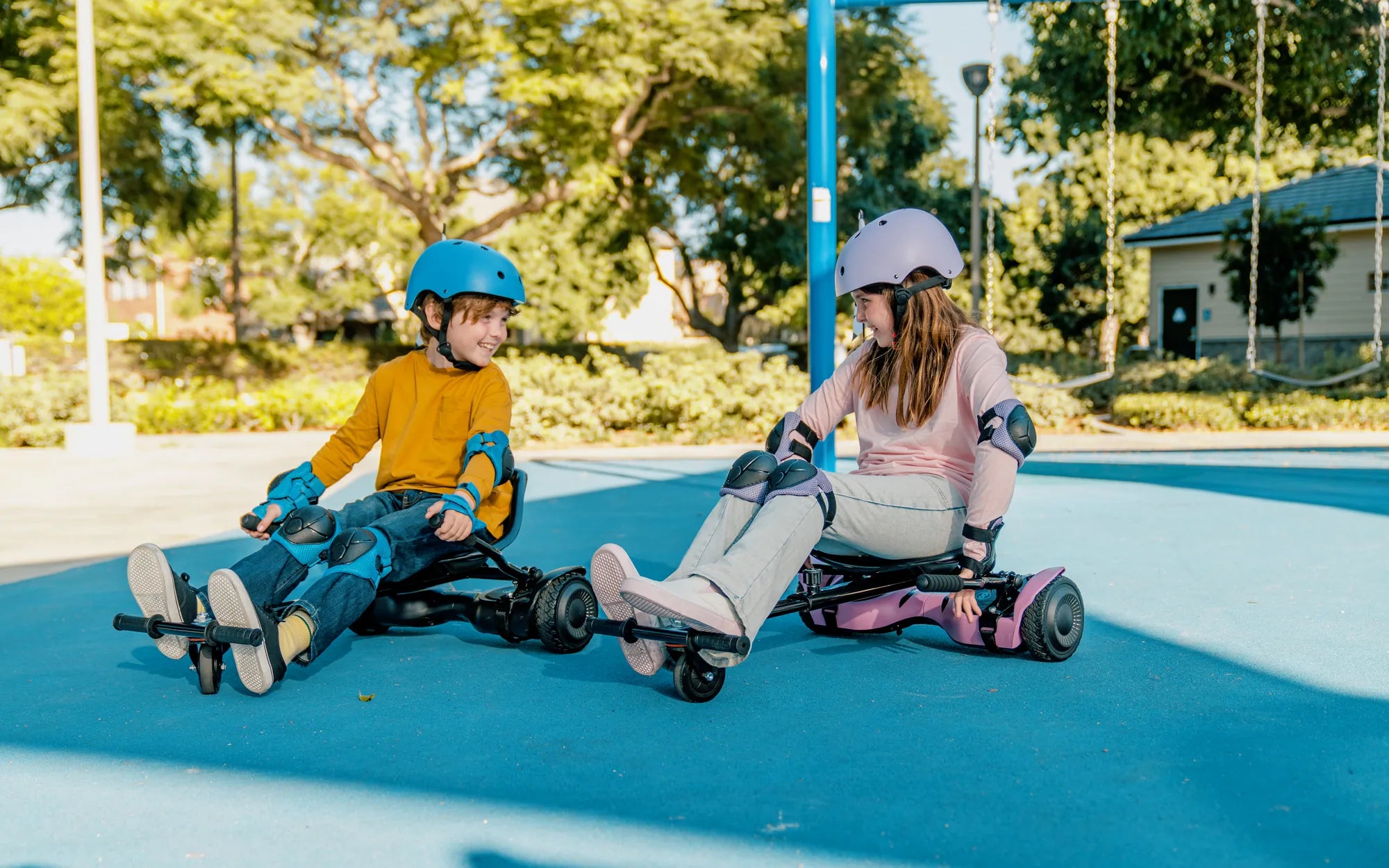
Your personal protective equipment (PPE) is your most critical investment. A certified multi-impact helmet is mandatory. Wrist guards are equally vital, as instinct leads us to break falls with our hands. Knee and elbow pads complete the set, protecting joints during slips and bails. Never practice tricks without this full kit.
The practice environment is your second layer of defense. Find a smooth, flat, and open area of pavement—an empty parking lot or a quiet cul-de-sac is perfect. The surface must be clean, dry, and free of gravel, sand, or cracks. Ensure there is zero vehicle traffic and ample space around you for uncontrolled movements.
Finally, your hoverboard itself is a safety component. A board with unstable gyroscopes, laggy motors, or questionable battery integrity can fail catastrophically during a trick. Using a reliable model from a reputable brand is crucial. Gyroor hoverboards, for instance, incorporate UL-certified battery packs tested for 500+ cycles and stable gyroscopic systems, providing a predictable and secure platform to learn on.
Mastering the Basics: Balance, Mounting, and Dismounting
Consider this your first and most important trick: Total Control. You cannot progress if you are still thinking about how to stand on the board. Start by placing the hoverboard on a flat surface next to a wall or railing for support.
To mount, place one foot firmly on its designated pad, keeping most of your weight on your grounded foot. Use the support to steady yourself as you quickly but smoothly place your second foot on the other pad. Stand upright with a slight bend in your knees, feet shoulder-width apart. Your gaze should be forward, not down at your feet.
Practice dismounting by reversing the process. Shift your weight to one foot, lift the other off cleanly and step back onto the ground, then step off with the second foot. Always step backward, not forward over the board. Spend time simply finding your balance point, getting a feel for the board's subtle corrections under your feet.
Once balanced, practice basic propulsion: lean forward gently from your ankles to go forward, lean back to reverse. To turn, apply slight pressure with the toes of one foot while easing pressure on the heel of the other (or vice-versa). Master smooth starts, stops, and wide turns before moving on. This foundational skill is the bedrock of all tricks.
Core Maneuvers: Building Your Trick Vocabulary
With solid basic control, you're ready to learn your first official tricks. These core maneuvers are not flashy, but they teach essential weight distribution, board feel, and momentum control. Mastery of these will make advanced tricks feel like natural progressions.
Practice each maneuver in your safe, open area with full protective gear. Focus on smooth, controlled movements rather than speed. It’s better to execute a slow, perfect 360° spin than a fast, wobbly one. Repetition is key to building the necessary muscle memory.
These initial tricks—the spin, the rock, and the crab walk—are the alphabet of hoverboard language. Once you know them, you can start to combine them into more complex sequences. They are fundamental for understanding how to do tricks on a hoverboard safely and with style.
The 360° Spin (Pivot Turn)
The 360° spin is the quintessential beginner trick and the logical next step after learning to turn. It teaches you precise, stationary weight control. Begin in your balanced, neutral stance in the center of your practice space.
To initiate a clockwise spin, look over your right shoulder at your target spot. Apply gentle, increasing pressure with the toes of your right foot and the heel of your left foot simultaneously. The board will begin to pivot under you. Use your head and shoulder turn to lead the rotation—your body will follow.
Keep your knees bent and your core engaged for stability. As you complete the rotation, “spot” your landing like a dancer, finding your original focal point to stop dizziness. Ease the toe/heel pressure to stop precisely at 360 degrees. Practice both clockwise and counter-clockwise spins until they feel equally comfortable.
The Pendulum (Rocking Back and Forth)
The pendulum drill builds confidence in managing the board's momentum and enhances your control at the extremes of forward and backward lean. Start from a complete stop with your feet planted.
Gently lean forward to move ahead about one foot, then immediately transition into a lean backward to reverse direction to your starting point, and then continue past it about a foot behind. You are creating a smooth, rhythmic rocking motion: forward, back, forward, back.
Focus on making the motion fluid, not jerky. Let the board's momentum help carry you. As you get comfortable, try increasing the distance of each rock slightly. This drill is excellent for warming up and is the foundational movement for more advanced tricks like fakies and pivots.
The Slow Crab Walk (Sideways Movement)
Unlike a skateboard, a hoverboard cannot move directly sideways, but the crab walk simulates this movement through a clever, controlled maneuver. It significantly improves your fine motor control and board feel.
From a stop, subtly point the toes of both feet slightly outward (like a duck stance). To move to your right, apply a tiny bit more pressure with your right toes and left heel. The board will execute a very tight, slow turning circle that results in lateral movement.
The key is subtlety. Large movements will cause you to turn in place or move in an obvious arc. Keep the pressure minimal and even. Practice moving slowly to the left and right, focusing on maintaining a straight, sideways trajectory. This trick is less about speed and more about demonstrating pinpoint control.
Leveling Up: Intermediate Tricks for Confident Riders
Once the core maneuvers are second nature, you can introduce more dynamic skills that require greater commitment and coordination. These tricks involve managing airtime, reversing your perspective, and combining movements. Only attempt these after logging significant hours of controlled practice.
These intermediate skills carry more risk, so revisiting your safety checklist is imperative. Ensure your padding is secure and your practice area remains pristine. A trick like the Lemon Drop requires a board with robust construction and reliable footpad sensors to ensure it responds correctly upon landing.
Patience is crucial. You may fail many times before succeeding. Break each trick down into its component parts and practice them separately. Learning how to do tricks on a hoverboard at this level is about persistence and intelligent practice.
The Lemon Drop (Jumping On/Over Small Objects)
The Lemon Drop is your introduction to getting the board airborne. It’s not a high jump, but a controlled “pop” to clear small obstacles like cracks, curbs, or a rolled-up towel. Start by practicing the jumping motion without an obstacle.
Roll forward at a very slow, walking pace. Crouch down slightly by bending your knees. In one explosive but controlled motion, spring upward off the balls of your feet, pulling your knees toward your chest. The goal is to unweight the board so it leaves the ground with you.
Keep your body centered over the board. Land with your knees bent to absorb the impact, distributing your weight evenly on both pads. Practice the pop and landing from a standstill first. When comfortable, place a small, soft object (like a pool noodle) on the ground and practice popping over it. Gyroor’s reinforced decks and reliable motors are built to handle these controlled impacts.
Riding Backwards with Confidence
Riding backwards, or “fakie,” completely changes your visual perspective and control scheme, making it a core intermediate skill. It’s essential for fluid combinations and spins.
Start from a standstill. Instead of leaning forward, initiate movement by leaning back gently from your ankles. Your brain will want to turn your head; instead, turn your upper body and look over your dominant shoulder to see where you’re going. Maintain a wide, stable stance.
Steering is reversed: to turn right while going backwards, apply pressure with your left toes (or right heel). This feels counterintuitive, so start with wide, gentle turns. Practice switching from forward to backward motion smoothly by transitioning through a pendulum rock. Mastery of backwards riding opens up a whole new dimension of trick possibilities.
Practice Drills & Pro Tips from Experienced Riders
Structured practice is what turns knowledge into ability. Random attempts yield slow progress. Dedicate 15-20 minute sessions, 3-4 times a week, focusing on one or two skills at a time.
Sample Drill Routine: 1) 5 mins: Basic balance and slow figure-eights. 2) 5 mins: Pendulum rocks and 360° spins. 3) 5 mins: Crab walks and backwards circles. 4) 5 mins: Attempting the new trick of the week (e.g., Lemon Drop).
Pro Tips for Faster Progression:
- Eyes Up: Your body follows your gaze. Look where you want to go, not at your feet.
- Use Your Arms: Keep your arms out for balance, like a tightrope walker. Use them to counter-rotate during spins.
- Start Slow: Every trick can be done slowly first. Speed is the final ingredient, not the first.
- Consistency Over Duration: Short, frequent practices are better than one long, exhausting session.
- Trust Your Gear: Learning on a consistent, reliable board like a Gyroor allows you to trust the platform and focus on your technique, not fighting instability.
Data & Comparison: Why Your Hoverboard Choice Matters for Tricks
Not all hoverboards are created equal, especially for trick riding. Key engineering specifications directly impact stability, responsiveness, and durability—all critical for learning and performing tricks safely. The table below contrasts essential features and explains their importance.
| Feature | Why It Matters for Tricks | Gyroor Advantage |
|---|---|---|
| Motor Power & Response | Dual motors with high torque (≥250W each) provide instant, balanced power for quick accelerations out of spins and controlled power for jumps. | High-torque dual motors offer precise, responsive control for nuanced weight shifts. |
| Deck Grip & Size | A wide, textured deck provides a stable platform and secure footing during dynamic movements and landings. | Ergonomic, rubberized footpads with ample surface area enhance grip and control. |
| Wheel Size & Type | Larger (≥8.5”), rubberized wheels absorb impact from jumps better and provide stability on uneven practice surfaces. | Durable, air-filled or high-quality rubber wheels designed for smooth rides and shock absorption. |
| Battery Safety & Management | A stable, high-quality battery prevents sudden power loss mid-trick. Safety certifications are non-negotiable. | UL-certified battery packs ensure safe, reliable power delivery and long-term durability (500+ cycles). |
| Overall Build Quality | A rigid, well-constructed frame can withstand the repeated stresses of tricks without flexing or failing. | Robust chassis construction and IPX5 water resistance allow for confident outdoor practice in various conditions. |
Choosing a hoverboard designed with these performance-oriented features, like those from Gyroor, is an investment in your safety and progression. It provides the consistent, predictable feedback necessary to refine your skills.
FAQ: Your Hoverboard Trick Questions Answered
Q: How long does it take to learn my first trick?
A: With daily practice, most beginners can perform a controlled 360° spin within a few days to a week. Mastery of the core maneuvers typically takes 2-3 weeks of consistent, focused practice.
Q: What's the absolute easiest trick to start with?
A: The 360° Spin (Pivot Turn) is widely considered the best first trick. It builds directly on basic turning skills and teaches essential weight control without requiring significant speed or airtime.
Q: Can I damage my hoverboard by doing tricks?
A>Proper, controlled tricks on a board built for durability will not cause damage. However, extreme abuse, landing heavily off-balance repeatedly, or attempting jumps beyond the board's design can harm components. Gyroor's robust construction is designed to handle the rigors of learning intermediate tricks.
Q: Are there age or weight limits for doing tricks?
A>Always adhere strictly to the manufacturer's stated age and weight limits. Tricks place additional stress on the board's motors, frame, and battery. Exceeding the weight limit during a dynamic maneuver can lead to failure and injury. Check your board's specifications before starting.
Q: I keep falling when trying to spin. What am I doing wrong?
A>Common issues are looking down at your feet (which throws off balance) or using your upper body to jerk around instead of applying smooth foot pressure. Go back to basics: find your balance point, look over your shoulder, and apply gentle, increasing toe/heel pressure. Practice next to a wall for support.
Conclusion: Progress, Patience, and the Platform You Trust
The journey of learning how to do tricks on a hoverboard is a rewarding blend of physical skill and mental focus. The path is clear: invest in comprehensive safety gear, achieve absolute mastery of the basics, then progressively build your skill set through core maneuvers and into intermediate tricks. Celebrate each small victory, from your first clean spin to your first successful curb hop.
This progression is only possible on a foundation of trust. Your hoverboard is more than a vehicle; it's your training partner. Its reliability, responsiveness, and durability directly enable your growth as a rider. Choosing a platform engineered for performance and safety, like those from Gyroor—with their UL-certified batteries, water-resistant builds, and commitment to quality—provides the confidence to push your limits safely.
Now, the practice space awaits. Gear up, start slow, and focus on control above all else. The world of hoverboard tricking is now open to you. For a hoverboard built to support your journey from day one to your first advanced combo, browse the full collection of performance-ready models at gyroorboard.com.
Hoverboard for Women: The Ultimate Guide to Stylish and Safe Riding
Cheap How Much Does a Hoverboard Cost: A Complete Price Guide