



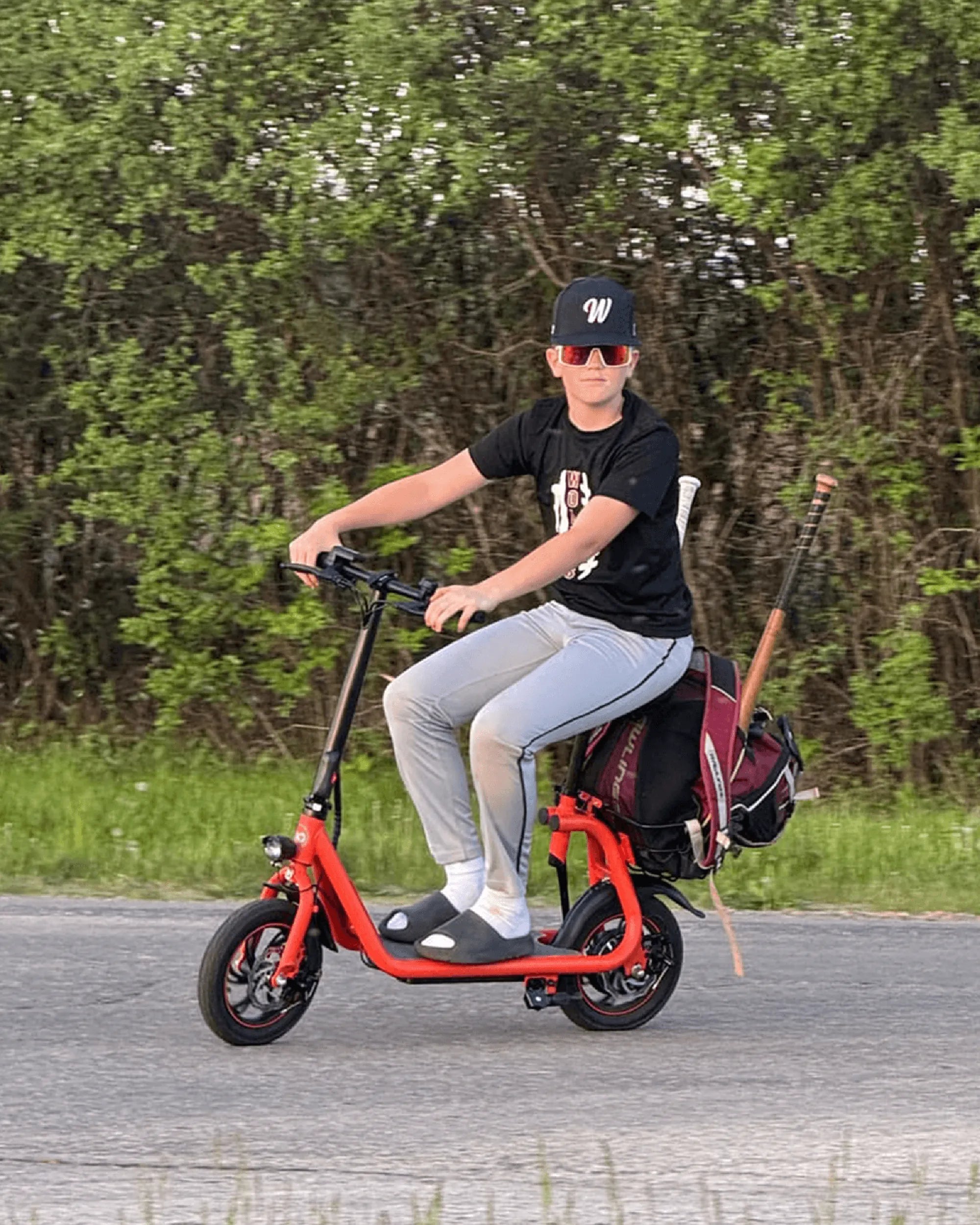
Introduction: Unlocking Hassle-Free Urban Mobility
Navigating city traffic and public transport can drain your time and energy. Electric scooters no license required have emerged as a powerful solution, offering a legal shortcut to efficient personal mobility. This category is defined by specific technical limits on motor power and speed, placing them in a legal class distinct from mopeds or motorcycles.
This guide provides a complete roadmap for anyone considering this mode of transport. You will learn the precise legal definitions, how to select a scooter built for safety and durability, and the rules of the road for responsible riding. Our goal is to equip you with everything needed to enjoy a convenient, eco-friendly commute without bureaucratic hurdles.
Understanding the "No License Required" Classification
The exemption from a driver's license is not arbitrary; it's based on clear technical specifications. In most jurisdictions across the United States and Europe, an electric scooter is classified as a "low-speed electric bicycle" or "personal mobility device" if its motor is under a certain wattage and its maximum speed is electronically limited.
This classification is crucial because it treats the vehicle more like a bicycle than a motor vehicle. The typical threshold is a motor with a nominal continuous output of 750 watts or less. The speed limit is often capped at 20 mph, though many local ordinances set it at 15 mph for sidewalk or bike lane use.
It is the combination of these factors—low power and limited speed—that creates the legal framework for license-free operation. However, riders must understand that age restrictions may still apply, with many regions requiring riders to be at least 16 years old.
Key Legal Parameters: Wattage, Speed, and Local Ordinances
The motor's wattage is its power rating. A 500W motor provides ample torque for urban hills while staying well within common legal limits. Speed limiters are built-in electronic controls that prevent the scooter from exceeding a set speed, ensuring compliance even if the motor is capable of more.
Local ordinances are the final, and most important, piece of the puzzle. State laws provide a framework, but cities and counties can impose stricter rules. These can dictate where you can ride (bike lanes vs. sidewalks), helmet requirements for all ages, and parking regulations.
Failing to check your local laws is the biggest mistake a new rider can make. A scooter that is legal at the state level might be prohibited on downtown sidewalks by a city ordinance. Always consult your local Department of Transportation or city government website before riding.
Why Choose a No-License Electric Scooter? Benefits Beyond Bureaucracy
The primary benefit is obvious: freedom from DMV lines, tests, and fees. But the advantages extend far beyond simple convenience. For the urban commuter, an electric scooter transforms the "first and last mile" problem—the distance from a transit stop to your final destination—into a quick, effortless glide.
Economically, the savings are substantial. Compare the cost of gas, insurance, parking fees, and vehicle maintenance to the few cents it costs to charge a scooter battery. Parking becomes stress-free, as a scooter can be legally secured to a bike rack or stored compactly indoors.
Environmentally, switching even short car trips to electric scooter travel reduces your carbon footprint and local emissions. It also decreases traffic congestion, making cities more livable for everyone. The benefit is a daily commute that is not only easier but also aligns with a more sustainable lifestyle.
Top Features to Look for in a Reliable No-License E-Scooter
Choosing a scooter based solely on its license-free status is a mistake. The market varies widely in quality, and key features determine safety, longevity, and real-world usability. A reliable scooter is an investment in daily dependability.
Prioritize proven brands with transparent specifications and good customer support. Look for clear information on motor wattage, battery capacity (in Watt-hours, Wh), and maximum load capacity. The build quality should feel solid, not flimsy, as it will endure daily vibrations and occasional bumps.
Safety First: UL-Certified Batteries and Reliable Braking Systems
The battery is the heart of your scooter and its most critical safety component. A UL 2272 certification is non-negotiable. This rigorous standard tests the battery pack for electrical, mechanical, and environmental safety, drastically reducing the risk of fire—a paramount concern.
Effective braking is equally vital. At common city speeds of 15-20 mph, you need responsive stopping power. A dual braking system, such as a front electronic brake combined with a rear disc or drum brake, offers redundancy and control. Regenerative braking can also extend range while aiding deceleration.
Built to Last: IPX5 Water Resistance and Durability
Urban commuting means encountering puddles, wet roads, and light rain. An IPX5 water-resistance rating means the scooter's electrical components are protected against water jets from any direction. This feature is essential for reliability and prevents costly water damage, ensuring your scooter is ready to ride in various conditions.
Durability also comes from frame construction. Aircraft-grade aluminum alloys offer a strong yet lightweight base. Check the warranty coverage for the frame, motor, and battery as an indicator of the manufacturer's confidence in their product's longevity.
Performance Within Limits: Motor Power, Range, and Ride Quality
Even within a 500W limit, motor torque matters. A high-torque motor will provide better acceleration and more confident hill-climbing ability. Always compare the manufacturer's claimed range with real-world rider reviews; factors like rider weight, hills, and temperature can cut the advertised range by 30-40%.
Ride quality is dictated by the suspension and tires. Pneumatic (air-filled) tires and a front or dual suspension system absorb road vibrations from cracks and uneven pavement, making the ride safer and more comfortable than solid tires on rigid forks.
Gyroor's Commitment to Safe, Hassle-Free Riding
As a leading brand trusted by over 100,000 riders, Gyroor engineers its electric scooters with the no-license commuter's core needs in mind. Every model in its lineup is designed to comply with common license-free classifications while not compromising on performance or safety.
This commitment is embodied in core features. Every Gyroor scooter uses a UL-certified battery pack, tested for over 500 charge cycles, addressing the foremost safety concern. An IPX5-rated water-resistant design ensures readiness for daily commutes, rain or shine.
Furthermore, Gyroor backs its products with a reliable 1-year comprehensive warranty and accessible customer support. This provides the peace of mind necessary for a truly hassle-free ownership experience, knowing the brand stands behind the quality and safety of your commute.
Comparing Commuter Scooter Types
Choosing the right model depends on your specific commute. Below is a comparison of common scooter types suited for different urban travel needs.
| Type / Use Case | Typical Motor | Ideal Range | Key Features | Best For |
|---|---|---|---|---|
| Ultra-Portable / Last-Mile | 250W - 350W | 10-15 miles | Lightweight (<30 lbs), folding, compact | Combining with bus/train, short urban errands |
| All-Rounder Commuter | 500W - 750W | 20-30 miles | Pneumatic tires, suspension, IPX5 rating, dual brakes | Full 3-10 mile commutes, variable terrain |
| Comfort-Focused | 500W+ | 25-40 miles | Large deck, wide handlebars, dual suspension, superior lighting | Longer daily rides, rider comfort priority |
Practical Rider's Guide: Rules, Etiquette, and Safety Tips
Responsible riding protects you and fosters positive relations with pedestrians and cyclists. Always wear a helmet, regardless of local adult helmet laws. It is the single most effective safety device. Consider additional gear like gloves, knee pads, and visible clothing or reflectors, especially at dusk or dawn.
Know your lane. Most cities prohibit sidewalk riding for anything but very low speeds; bike lanes are usually the designated space. Signal your turns using hand signals. Ride predictably, in a straight line, and avoid sudden swerves. Never ride under the influence of alcohol or drugs.
Parking etiquette is crucial. Never block sidewalks, ramps, or building entrances. Use a bike rack whenever possible and secure your scooter with a high-quality U-lock through the frame. Responsible parking prevents fines and ensures access for pedestrians.
Frequently Asked Questions (FAQ)
Do I need insurance for a no-license electric scooter?
Most regions do not legally require insurance for low-speed, license-free e-scooters. However, it is worth checking your homeowner's or renter's insurance policy to see if it covers personal electric vehicles for theft or liability. Some specialized insurers offer affordable micro-mobility policies for added peace of mind.
Can I ride on sidewalks or bike lanes?
This is entirely dictated by local law. As a general rule, bike lanes are almost always permissible and safer. Sidewalk riding is frequently restricted or banned in downtown areas to protect pedestrians. Always defer to your city's specific ordinances, which are usually available online.
What is the typical age requirement?
While a driver's license is not required, many jurisdictions impose a minimum age. This is commonly 16 years old, but some areas set it at 14 or 18. A handful of locations have no minimum age but require parental supervision for minors. Verify the age law in your specific city and state.
How do I maintain the battery for longevity?
Avoid fully draining the battery. Try to recharge when it reaches 20-30% charge. Store the scooter in a cool, dry place, and avoid leaving it at 100% charge for extended periods (weeks). If not using it for a long time, store the battery at about a 50-60% charge. Use only the manufacturer-provided charger.
What happens if I modify my scooter to go faster?
Modifying your scooter to defeat the speed limiter or increase motor power is illegal and dangerous. It voids the warranty and instantly reclassifies the vehicle, potentially making it illegal for use on bike paths or sidewalks. It also introduces unengineered stresses on the frame, brakes, and battery, creating significant safety risks.
Embrace Efficient Commuting Without the Red Tape
Electric scooters no license required represent a smart evolution in urban transportation. They offer a legitimate, practical, and enjoyable way to reclaim your time, save money, and reduce your environmental impact. The key to a hassle-free experience lies in informed selection and responsible operation.
By choosing a scooter with foundational safety features like a UL-certified battery and robust construction, and by taking the time to learn and follow local riding laws, you unlock true commuting freedom. This mode of travel is not a shortcut, but a smarter path forward for the modern urban dweller.
Ready to start your hassle-free commute? Explore a range of engineered, reliable, and safe options designed for the real world. Browse the full Gyroor collection at gyroorboard.com to find the perfect electric scooter for your journey.
Are Electric Scooters Bad for the Environment? The Truth Behind the Trend
Electric Scooters Open Now: The Future of Urban Mobility