



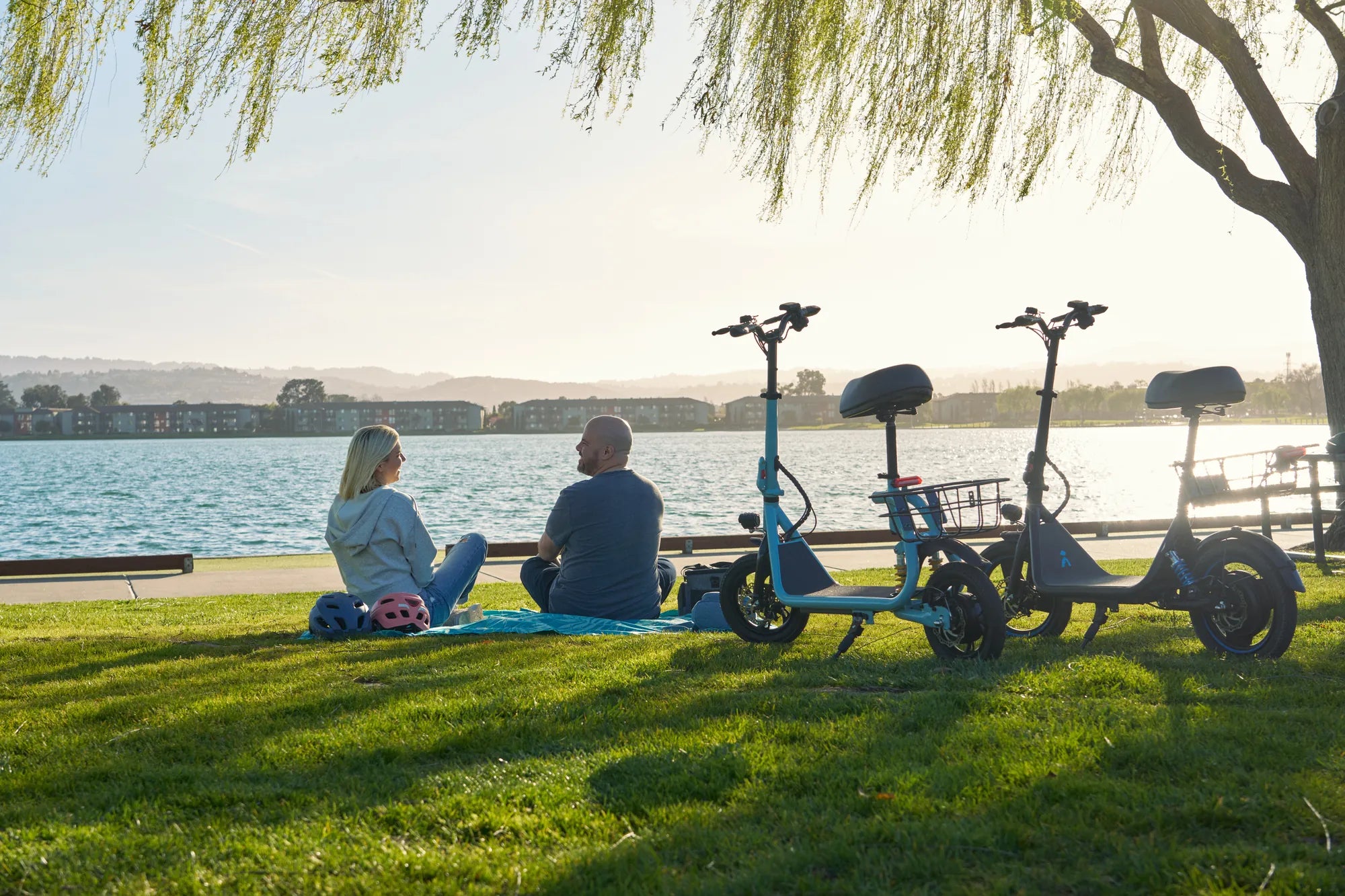
Redefining the Urban Journey
City streets are clogged, and traditional commutes are costly and slow. A new solution is rolling onto the scene, offering a blend of personal freedom and urban practicality: electric standing scooters. These compact vehicles are not just a passing fad but a core component of the micro-mobility revolution, directly addressing congestion, transportation costs, and environmental impact. This article will dissect why electric standing scooters are the future of urban mobility, examining their technological evolution, practical benefits, and the critical features that ensure a safe and reliable ride.
We will compare them data-drivenly against cars, public transit, and e-bikes. You'll also get a clear guide to laws, safety, and etiquette, ensuring you ride smartly and responsibly. As a leader in this space, brands like Gyroor, trusted by over 100,000 riders across North America and Europe, exemplify the innovation driving this shift with UL-certified safety and durable designs.
The Inevitable Rise of the E-Scooter
The proliferation of electric standing scooters is supported by hard data. Pre-pandemic forecasts were substantial, but the shift in urban habits accelerated adoption. Commuters sought socially-distanced, personal transport options, and cities fast-tracked infrastructure like micro-mobility lanes. This created a perfect storm for e-scooters to move from novelty to necessity.
Shared scooter fleets introduced millions to the concept, proving the demand for point-to-point, on-demand travel. This paved the way for personal ownership, where riders invest in a dedicated vehicle for daily use. The market growth reflects a deeper societal move towards sustainability and efficiency, rejecting the inefficiency of single-occupancy cars for shorter trips.
Why Cities Are Actively Embracing Micro-Mobility
Urban planners are incentivized to support e-scooters due to their tangible municipal benefits. The primary advantage is a direct reduction in traffic congestion. Each scooter rider is one less car on the road, easing peak-hour gridlock. This leads to a corresponding drop in local carbon emissions and noise pollution, contributing to cleaner air and quieter neighborhoods.
Perhaps the most significant solved problem is the "last-mile" gap. Public transit systems are effective for long hauls but often leave passengers a cumbersome distance from their final destination. An electric scooter seamlessly bridges this gap. Furthermore, e-scooters require a fraction of the space needed for car parking, freeing up valuable urban real estate for green spaces or community use.
Critical Features for a Safe, Reliable Commute
Choosing an e-scooter requires looking beyond speed and flashy looks. For a daily commute, reliability and safety are paramount. Key specifications determine whether a scooter can handle potholes, rain, hills, and sudden stops. Leading brands like Gyroor build their models around these core durability and safety principles, offering features like IPX5 water resistance and robust suspension as standard.
A commuter scooter is a tool, not a toy. Its construction must withstand daily wear and tear. Aluminum alloy frames provide a strong yet lightweight base. Good suspension (spring or hydraulic) absorbs shocks from uneven pavement, improving control and comfort. These elements combine to create a vehicle you can depend on mile after mile.
Battery Safety and Range: The Core Consideration
The battery is the heart of your scooter, and its safety cannot be compromised. Always prioritize models with UL-certified battery packs. This certification, used by Gyroor across its lineup, means the battery has passed rigorous tests for electrical, mechanical, and fire safety—a non-negotiable for peace of mind. These quality batteries also endure 500+ charge cycles while maintaining capacity.
Range is often misrepresented. Advertised range is based on ideal conditions: a light rider on flat, smooth pavement at low speed. Real-world range is typically 65-75% of that figure. Factors like rider weight, hills, frequent acceleration, and cold weather reduce it. For a reliable commute, choose a scooter with a battery capacity (watt-hours, Wh) that offers a real-world range exceeding your round-trip distance by at least 25%.
Build Quality and Weather Resistance
Urban terrain is unforgiving. A scooter must be built to last. The frame should be made of aviation-grade aluminum alloy, balancing strength and weight. The deck should have a grippy, textured surface for secure footing. Most importantly, check the water resistance rating. An IPX5 rating, as found on Gyroor commuter models, means the scooter can withstand water jets from any direction.
This makes it safe to ride in rain and through puddles, a crucial feature for daily utility. Avoid scooters with no IP rating, as moisture ingress can damage electronics and create safety hazards. Quality construction ensures your investment is protected against the elements and the rigors of daily use.
Performance: Motor Power, Speed, and Braking Systems
Motor power, measured in watts (W), dictates hill-climbing ability and acceleration. A 350W motor is sufficient for flat terrain, but a 500W or higher motor provides confident performance on moderate inclines. Top speed is often capped at 15-20 mph for safety and legal compliance. More important than top speed is torque, which determines how quickly you can get moving from a stop.
Braking is your most critical safety system. A combination of braking mechanisms is ideal. Electronic (regenerative) brakes help slow the scooter and recapture some energy, while a physical brake (disc or drum) provides strong, reliable stopping power in all conditions. Dual braking systems, often featuring a disc brake on the rear wheel, offer the best control and shortest stopping distances.
Electric Standing Scooters vs. Other Transport Modes
To understand the value proposition of electric standing scooters: the future of urban mobility, a direct comparison is essential. The following table breaks down key metrics against common alternatives for a typical 3-mile urban commute.
| Transport Mode | Avg. Door-to-Door Time (3 mi) | Estimated Cost per Trip* | Carbon Footprint (g CO2/mi) | Convenience & Flexibility |
|---|---|---|---|---|
| Electric Standing Scooter | 15-20 mins | $0.10 (electricity) | ~40 (grid-dependent) | High: On-demand, point-to-point, easy parking. |
| Personal Car | 20-35 mins (with traffic/parking) | $2.50 (fuel, maintenance, parking) | ~404 (average passenger vehicle) | Low: Traffic, parking costs & scarcity, high stress. |
| Ride-Sharing (e.g., Uber) | 15-25 mins | $8-$15 | ~220 (per passenger) | Medium: On-demand but expensive, surge pricing. |
| Public Transit (Bus/Subway) | 30-45 mins (with walking/waiting) | $2.50 (average fare) | ~200 (system average) | Medium-Low: Fixed routes/schedules, last-mile problem. |
| Traditional Bicycle | 20-25 mins | $0 | 0 | Medium: Healthy but requires effort, arrival sweaty. |
| E-Bike | 15-20 mins | $0.15 (electricity) | ~40 (grid-dependent) | High: Less portable, often requires bike rack. |
*Scooter & E-bike costs assume personal ownership, amortizing purchase price over 2 years of daily use. Car cost includes fuel, insurance, maintenance, and avg. parking.
The Total Cost of Ownership Analysis
The upfront cost of a quality e-scooter ($500-$1200) is quickly offset by savings. Compared to a monthly public transit pass ($70-$120), the scooter pays for itself in less than a year. Against ride-sharing, the savings are astronomical. The real contrast is with car ownership, where insurance, fuel, maintenance, and parking can exceed $8,000 annually.
E-scooter maintenance is minimal: tire inflation, brake adjustments, and occasional bolt checks. Electricity costs are negligible, often under $20 annually for daily charging. This low operational cost makes the electric standing scooter one of the most economically rational urban transport investments.
Time Efficiency in the Urban Core
For trips under 5 miles, e-scooters are often the fastest option. They bypass traffic jams, use bike lanes, and require no parking search—you can typically park within steps of your destination. A car may have a higher speed limit, but congestion and parking add significant, unpredictable delay.
Public transit involves walking to a stop, waiting, possible transfers, and walking again. An e-scooter provides a direct, uninterrupted journey. This time-saving efficiency translates directly into more personal time and reduced daily stress, a powerful benefit for any commuter.
Navigating Laws, Safety, and Etiquette
Responsible ridership is key to the long-term acceptance of e-scooters in cities. Laws vary significantly by municipality. Common regulations include a minimum rider age (often 16+), a ban on sidewalk riding (mandating use of bike lanes or streets), and speed limits in certain zones. Always check your local government's website for specific rules.
Helmet use is the single most effective safety action. Even if not legally required for adults, wearing a helmet drastically reduces the risk of head injury. Consider additional gear like reflective clothing for visibility, and gloves for protection in case of a fall. Your safety is in your hands.
Parking and Charging Etiquette
Poor parking is a major public nuisance. Never block sidewalks, wheelchair ramps, building entrances, or bus stops. Park upright in a designated bike/scooter parking area or against a bike rack without obstructing pedestrian flow. For charging, only use approved outlets and never run cables across public walkways, which is a tripping hazard.
Practice defensive riding. Assume cars and pedestrians do not see you. Use a bell or polite voice to alert others when passing. Signal your turns. Avoid using headphones at high volume. By being a courteous and predictable rider, you advocate for the entire micro-mobility community.
Maintenance and Care for Longevity
Regular maintenance ensures safety and extends your scooter's life. Perform a pre-ride check: inspect tires for wear and proper pressure, test brakes, ensure all bolts are tight, and check that lights are functional. Keep the scooter clean, especially the braking surfaces and deck.
For battery care, avoid letting it fully discharge. Store and charge the scooter in a dry, cool place. If storing for extended periods, leave the battery at a 50-60% charge. Follow the manufacturer's specific guidelines for charging cycles. For complex issues, rely on professional service, especially when covered by a strong warranty like Gyroor's 1-year comprehensive coverage.
FAQ: Your Electric Scooter Questions Answered
Q1: How far can I really go on a single charge?
A: Real-world range depends on weight, terrain, temperature, and riding style. A scooter advertised for 25 miles might achieve 16-19 miles in normal use. For a 5-mile commute, a scooter with a 15+ mile real-world range provides a comfortable safety margin.
Q2: Is it safe to ride in the rain?
A: With proper water resistance, yes. Scooters with an IPX5 rating or higher are designed to handle wet conditions. However, reduce speed, avoid deep puddles, and brake earlier and more gently. Always dry your scooter after a wet ride.
Q3: What happens if I need repairs?
A> This highlights the importance of buying from a reputable brand with a strong warranty and service network. Gyroor, for instance, offers a 1-year warranty covering major components. Many issues can be resolved with replacement parts shipped directly to you, while authorized service centers handle more complex repairs.
Q4: What is the typical weight limit for an e-scooter?
A: Most commuter models support riders between 220 and 265 pounds (100-120 kg). High-performance models may support up to 330 lbs. Always check the manufacturer's specified maximum load to ensure safety and avoid damaging the scooter.
Q5: Are they easy to carry and store?
A> Portability is a key advantage. A good commuter scoter folds down in seconds, with a latch securing the stem. Weight varies from 30 lbs for lightweight models to 45+ lbs for high-power ones. Consider weight if you have stairs. Folded, they fit neatly in a closet, under a desk, or in a car trunk.
Your Ticket to a Smarter, Freer Commute
The evidence is compelling: electric standing scooters are the future of urban mobility. They represent a convergence of practicality, economics, and sustainability that is uniquely suited to modern city life. They slash commute times, eliminate transport costs, and reduce your personal carbon footprint, all while providing a sense of autonomy and fun. The transformation of our cities is underway, with micro-mobility lanes and policies evolving to support this shift.
Embracing this future starts with choosing the right tool—a reliable, safe, and well-built scooter from a brand that stands behind its product. For over 100,000 riders, Gyroor has provided that foundation with UL-certified safety, durable IPX5 construction, and dependable performance. The urban journey is being redefined. It's time to join the movement and experience the freedom of a smarter commute.
Ready to transform your daily travel? Browse the full Gyroor collection of UL-certified, high-performance electric standing scooters at gyroorboard.com and find the perfect ride for your city.
Are Electric Scooters Legal in Illinois? What You Need to Know
Scooters Electric Scooters Best Scooters: Your Ultimate Guide