



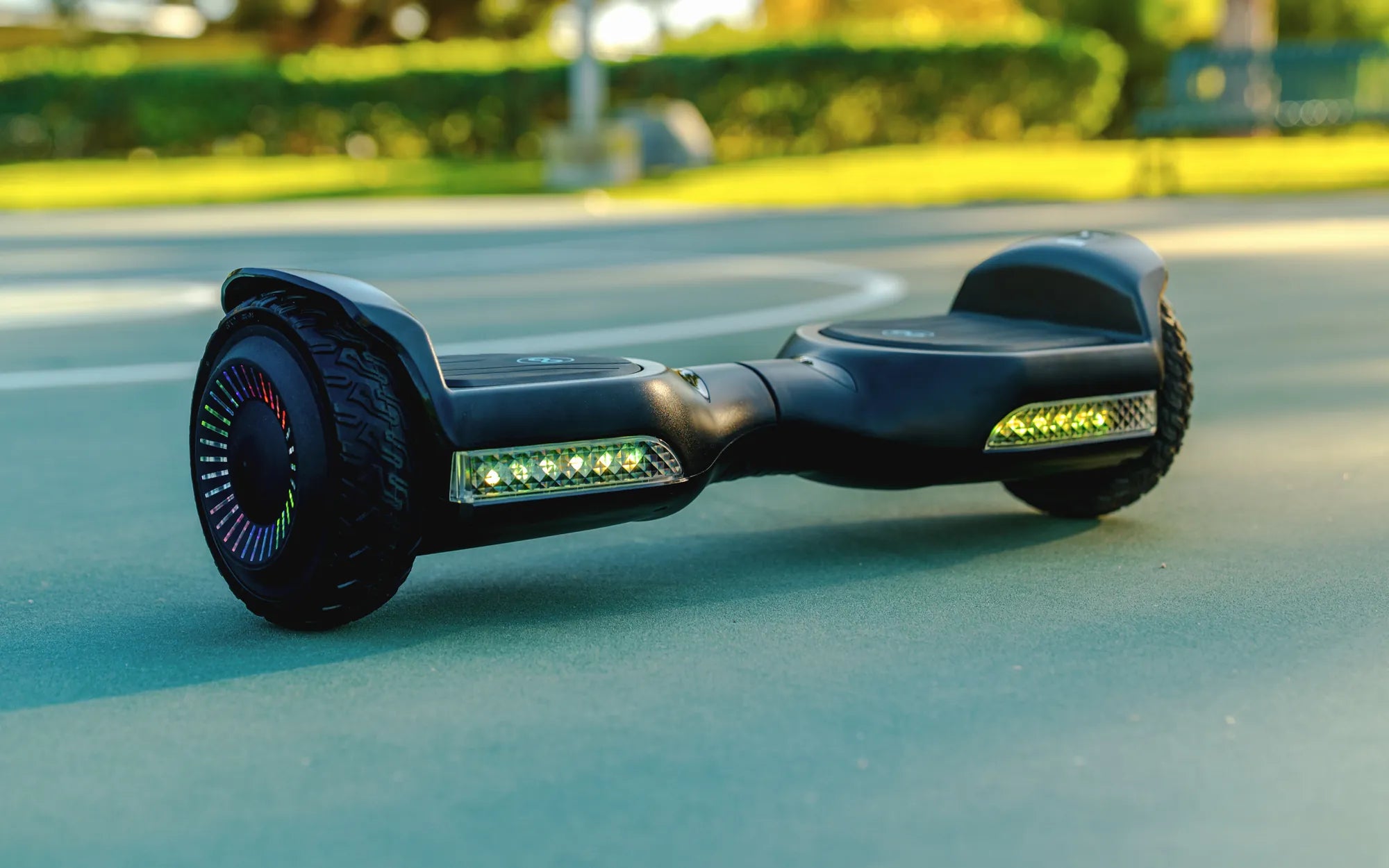
Introduction to Hoverboards: More Than Just a Sci-Fi Prop
The modern hoverboard, or self-balancing scooter, is a marvel of accessible engineering. It feels like magic, gliding forward as you lean, but its operation is grounded in precise physics and real-time computation. Understanding how does a hoverboard work: the science behind self-balancing scooters reveals a sophisticated dance between sensors, software, and motors. This article will dissect every component and principle, from the gyroscopic sensors acting as its inner ear to the powerful motors that serve as its muscles. You'll learn not just the mechanics, but also the critical safety and reliability features that distinguish quality models.
Despite its futuristic name, today's hoverboard doesn't actually hover. It's a two-wheeled, battery-powered platform that uses electronic self-balancing technology. This innovation has transformed it from a novelty into a legitimate micro-mobility option. The core challenge it solves is inherently unstable: keeping a person upright on a narrow axle. The solution is an elegant application of control theory, making the device responsive and intuitive to ride.
The popularity of these devices soared, but so did misconceptions about their safety and build quality. Early market issues highlighted the importance of robust engineering. Reputable brands like Gyroor, a leading electric scooter and e-bike brand trusted by over 100,000 riders, now prioritize UL-certified batteries and IP-rated water resistance. Knowing the science empowers you to choose a reliable product and ride with greater confidence and skill.
We will explore the device layer by layer. First, we'll inventory the physical and electronic components inside the shell. Then, we'll delve into the control algorithms that perform hundreds of calculations per second to keep you upright. Finally, we'll translate this into the rider experience, explaining exactly how your lean becomes motion. Let's begin by opening the deck and examining the hardware that makes it all possible.
The Core Components: What's Inside Your Hoverboard?
Every self-balancing scooter is built around a synergy of key parts. Think of it as a robotic system with a brain, senses, muscles, and a power source. Removing the outer plastic shell reveals a compact array of technology designed for one primary function: dynamic stabilization. The main chassis, typically made of robust aluminum or steel, houses all critical components and provides structural integrity to support the rider's weight.
The layout is symmetrical, with most components duplicated for each wheel. This symmetry is crucial for the independent control required for balancing and turning. At the heart of the frame, you'll find the battery pack, the sole power source for the entire system. Flanking it are two motor housings integrated into the wheels, and running the length of the deck is the main logic board, connected to sensors and pressure pads.
Understanding these parts demystifies the device. It's not a black box of magic but a carefully engineered product. The quality of each component—from the grade of lithium-ion cells in the battery to the precision of the gyroscopic sensors—directly impacts performance, safety, and longevity. Brands that invest in high-grade parts, like Gyroor with its UL-certified battery packs tested for 500+ charge cycles, ensure a more reliable and safer riding experience.
Let's break down each major subsystem, starting with the device's nervous system and brain.
The Brain: The Gyroscopic Sensor and Logic Board
The system's sense of balance comes from an Inertial Measurement Unit (IMU). This small chip contains a gyroscope and an accelerometer. The gyroscope measures angular velocity—how fast the deck is tilting forward, backward, or sideways. The accelerometer measures linear acceleration and tilt angle relative to gravity. Together, they act as the hoverboard's inner ear, constantly reporting its orientation in space.
This sensor data streams to the central processing unit (CPU) or logic board hundreds of times per second. This microprocessor is the true brain. It runs a complex balancing algorithm (which we'll explore in detail later) that interprets the raw sensor data. In milliseconds, it calculates exactly how much power to send to each wheel's motor to correct any tilt and maintain equilibrium. The speed of this processing loop is what makes the balancing feel instantaneous and smooth.
The logic board also manages other functions. It monitors battery voltage, regulates power distribution, reads input from the foot pads, controls LED lights, and enforces safety limits like speed governors. Its programming is the key to the device's personality—its responsiveness, stability, and smoothness of ride. A poorly calibrated board can make a hoverboard feel jittery or unstable, while a finely tuned one, like those in Gyroor models, offers a predictable and controlled feel.
The Muscle: Electric Motors and Batteries
Execution falls to the motors. Each wheel is driven by its own high-torque, brushless DC electric motor housed directly within the hub. This direct-drive design is efficient and provides immediate, precise control. When the logic board decides a wheel needs to spin, it sends a pulse of electrical current to the corresponding motor. The motor's torque is what physically moves the wheel to counteract a fall or propel the rider forward.
The power for these demanding motors comes from a rechargeable lithium-ion battery pack. Typically, these packs consist of multiple cells arranged in series to provide the necessary voltage (often 36V or 42V) and capacity (measured in Amp-hours, Ah). Battery quality is paramount. High-quality cells from reputable manufacturers offer better energy density, longer lifespan, and, critically, greater safety.
This is where certifications matter. A UL-certified battery pack, a standard feature for Gyroor, has undergone rigorous independent testing for electrical, mechanical, and environmental safety. It includes a Battery Management System (BMS) that protects against overcharging, over-discharging, short circuits, and temperature extremes. This BMS is a vital safeguard, ensuring the battery—the most energy-dense component—operates within its safe parameters throughout its life.
The Interface: Pressure Pads and LED Indicators
The rider communicates with the brain through the foot pads. These are not simple on/off switches but pressure-sensitive pads or switches located on the left and right sides of the deck. They detect the distribution of your weight and the pressure applied by your feet. When you stand on the board evenly, it interprets this as a command to balance in place.
To move, you don't push a joystick; you shift your center of mass. Leaning forward applies more pressure to the front of both pads, signaling the board to drive both wheels forward to "catch" you. The pads provide nuanced control—differential pressure between the left and right foot is how you initiate turns. The sensitivity and calibration of these pads greatly affect ride feel.
Visual feedback comes from LED indicator lights. These usually show power status, battery level, and sometimes riding mode. They can also signal errors (like an unbalanced platform or motor fault). Some models feature decorative rim lights for visibility at night. Understanding these indicators is part of basic hoverboard operation and maintenance, allowing riders to respond to low battery warnings or system alerts promptly.
The Magic of Self-Balancing: Physics and Control Theory in Action
The fundamental physics is simple: a hoverboard is an inverted pendulum. Imagine trying to balance a broomstick upright on your palm. To prevent it from falling, you must constantly move your hand under its center of mass. The hoverboard's wheels are your hands, and its logic board is your brain, making those corrective movements automatically and with superhuman speed.
When you step onto a powered-on hoverboard, the sensors detect the deck's angle. If it's not perfectly level (which it almost never is with a rider on it), the logic board instantly calculates which way and how fast the wheels need to spin to bring the deck back under your feet. This creates a dynamic equilibrium. You are perpetually in a controlled state of “almost falling,” and the motors perpetually correct for it, resulting in stable upright posture.
This process is not a series of jerky corrections but a seamless, continuous loop. The sophistication lies in the software algorithm that determines *how much* correction to apply. A crude system would overcorrect, causing dangerous wobbles or oscillations. The advanced solution used in modern self-balancing scooters is a PID controller, a staple of engineering control systems from drones to industrial robots.
The PID Control Loop: Constant Micro-Corrections
PID stands for Proportional, Integral, Derivative. It's a feedback loop algorithm that calculates the optimal motor response based on sensor error (the difference between the desired level angle and the actual measured tilt). Each part of the PID handles a different aspect of the correction for a smooth and stable ride.
The Proportional (P) term is the primary driver. It applies motor power directly proportional to the angle of tilt. A small lean gets a small correction; a larger lean gets a stronger, faster correction. Think of it as the immediate reaction. If this were the only term, the board might oscillate around the balance point, like a car suspension bouncing after a bump.
The Derivative (D) term acts as a damping force. It considers the *rate* of change of the tilt angle. If the board is tilting back toward level quickly, the D term reduces the motor power to prevent overshooting the balance point. It smooths out the motion, eliminating wobbles and ensuring the board settles smoothly into equilibrium. It's the algorithm's anticipation.
The Integral (I) term accounts for persistent, small errors that might accumulate over time, such as a slight imbalance in the hardware or a constant lean from the rider. It sums these tiny errors and applies a slow, steady correction to eliminate any long-term drift. Together, these three terms work in concert hundreds of times per second, creating the intuitive, stable, and responsive feel of a well-made hoverboard.
How to Ride: Translating Body Movement into Motion
With the science of balance established, the method of propulsion becomes clear. Riding a hoverboard is an exercise in trust and subtlety. You don't steer it; you *intend* a direction, and the machine executes. The process leverages the same PID control loop but now with intentional rider input introduced through the pressure pads.
Mounting is the first test. Step on quickly and confidently, placing one foot and then the other on the pads, keeping your feet parallel and near the wheels. The board will likely wiggle as it finds balance—this is normal. Stand upright, look forward, and relax your knees. The board is now actively balancing you. Stiffening up fights the system, while a relaxed posture allows the micro-corrections to work efficiently.
The key principle is that the board always tries to get its deck (and, by extension, your center of mass) back to a level position over the wheels. Motion is a byproduct of it chasing this equilibrium. When you want to move, you deliberately upset this balance in your desired direction of travel. The board's relentless effort to re-stabilize you becomes your propulsion.
Moving Forward and Backward
To go forward, shift your weight slightly onto your toes. This applies more pressure to the front halves of the foot pads. The gyroscope detects the deck tilting forward. The logic board interprets this as a forward fall and commands both motors to spin forward at equal speed. The wheels move forward to place themselves back under your shifted center of mass.
The more you lean, the greater the perceived tilt, and the faster the motors spin to correct it, resulting in faster forward motion. To slow down or stop, simply bring your weight back to center. The board senses it is now leveling out and reduces motor speed until it stops, holding you in place. To go backward, the process is reversed: lean onto your heels, and the motors spin backward to catch you.
Speed is controlled by the degree of lean. A gentle forward tilt yields a slow, cruising speed. A more aggressive lean commands a faster speed, up to the device's software-limited maximum (typically 7-12 mph). All reputable models have this governor for safety. The entire process feels natural because it mirrors how we maintain balance while walking—we lean forward to start moving and lean back to stop.
Turning and Spinning
Turning is achieved through differential motor speed, a concept borrowed from tank tracks. To turn right, you apply more pressure with your right foot (or push your left foot forward slightly). This tells the logic board that the left side of the deck is tilting forward more than the right.
The board responds by speeding up the left motor relative to the right motor. The left wheel travels a greater distance than the right wheel, causing the entire platform to arc to the right. The sharper the differential in foot pressure, the tighter the turn. For a very tight turn or a pivot, you can even cause one wheel to move forward while the other moves backward, resulting in a zero-radius spin.
This independent wheel control is why hoverboards are so maneuverable. Mastering turns involves fine-tuning the pressure in your feet and ankles. It's a skill that develops quickly with practice. The responsiveness of the turn is a direct result of the motor torque and the sensitivity calibration of the pressure pads and PID loop.
Safety and Reliability: Engineering for Real-World Use
The science of operation is inseparable from the science of safe operation. The high energy density of lithium batteries and the physical demands of balancing a rider necessitate robust engineering safeguards. The early history of hoverboards was marred by safety incidents, primarily linked to substandard, uncertified batteries and poor electrical design. Today, reputable manufacturers implement multiple layers of protection.
Safety begins with component selection and certification. Using cells from reputable battery manufacturers and having the final battery pack assembly tested and certified by a nationally recognized testing laboratory (NRTL) like UL or ETL is non-negotiable. This certification tests for overcharge, short circuit, crush, impact, and abnormal operation, ensuring the pack will fail safely if compromised.
Durability is another key factor. A hoverboard is a personal transportation device used outdoors. It must withstand vibrations, minor impacts, and exposure to elements like dust and water. Engineering for this environment involves more than just robust plastics; it requires sealing critical electronics against ingress. This is where IP (Ingress Protection) ratings become important, defining a device's resistance to solids and liquids.
The Importance of Quality Components: UL-Certification and IP Ratings
UL certification for the battery pack is the single most important safety feature. A UL mark indicates the battery has passed stringent tests for electrical, fire, and mechanical hazards. For example, Gyroor uses UL-certified battery packs tested for over 500 charge cycles, ensuring long-term reliability and significantly reducing fire risk. This certification should be verifiable, not just a claim.
An IP rating consists of two digits (e.g., IPX5). The first digit rates protection against solid particles (6 is dust-tight). The second digit rates protection against liquids. A rating of IPX5 means the device is protected against water jets from any direction. For a hoverboard, this means it can safely ride through puddles and in light rain without immediate damage to internal components. This engineering consideration directly extends the product's lifespan and usability.
These are not just marketing specs but engineering commitments. They dictate design choices like gasket seals, coated circuit boards, and waterproof connectors. When comparing models, prioritizing verifiable UL certification and a meaningful IP rating (IPX4 or higher) is choosing a product built for real-world use with safety as a cornerstone.
Built-in Safeguards: Overcharge Protection and Speed Governors
Beyond the battery BMS, the logic board enforces additional software-based safety features. Overcharge protection in the charger itself and on the board prevents the battery from accepting current once it reaches 100% capacity, preventing dangerous voltage spikes and cell degradation. Similarly, over-discharge protection cuts power when the battery is too low, preserving cell health.
Speed governors are crucial for stability. Self-balancing scooters become inherently less stable at high speeds. The software limits the maximum motor RPM, capping the top speed. Some models offer multiple riding modes (e.g., beginner, normal, advanced) with different speed limits and acceleration curves. A beginner mode might limit speed to 6 mph and make acceleration more gradual, aiding the learning process.
Other common safeguards include tilt-back warnings (the deck physically tilts up when reaching max speed to encourage leaning back), temperature sensors that reduce power if motors overheat, and imbalance detection that prevents operation if the board isn't on a level surface at startup. These features work silently in the background, creating a safety net that allows the rider to focus on enjoyment.
Performance Comparison: Key Specifications Across Models
Understanding the science helps you interpret product specifications. Not all hoverboards are created equal. Performance, range, and suitability vary based on motor power, battery capacity, and wheel size. The table below compares common configurations and their ideal use cases, highlighting how specifications translate to real-world performance.
| Model Type / Spec Focus | Typical Motor Power (per wheel) | Typical Battery & Range | Wheel Size | Best For | Key Considerations |
|---|---|---|---|---|---|
| Standard / Urban Commute | 250W - 350W | 36V/4.4Ah, 10-12 miles | 6.5" - 8.5" | Smooth pavement, short trips, riders under 180 lbs. | Balance of speed, range, and portability. Look for IP54+ rating. |
| Off-Road / All-Terrain | 400W - 500W+ | 42V/8.8Ah+, 15-20 miles | 10" inflatable tires | Grass, dirt trails, gravel, uneven surfaces. | Higher torque, air-filled tires for suspension, robust frame. Requires more power. |
| Performance / Speed | 350W - 450W | 36V/4.4Ah - 42V/6.5Ah, 10-15 miles | 8.5" - 10" solid | Riders seeking higher top speed (up to 12 mph) on pavement. | Check local speed regulations. Stability at speed is critical. |
| Youth / Beginner | 200W - 250W | 24V/4.4Ah, 6-8 miles | 4.5" - 6.5" | Younger or lighter riders, learning, indoor/outdoor play. | Lower speed limits, lighter weight. Safety gear is essential. |
This comparison shows that the question of how does a hoverboard work is complemented by "for what purpose?" Higher wattage motors provide the torque needed for off-road inclines and heavier riders. Larger battery capacity (Ah) directly translates to longer range. Wheel size affects ride comfort and terrain capability: smaller solid wheels are for smooth surfaces, while large, inflatable tires act as shock absorbers for rough terrain.
Brands like Gyroor offer models across these categories, ensuring there is a fit for different rider needs, all built on a foundation of UL-certified safety and reliable performance. When selecting a board, cross-reference your weight, typical terrain, and desired range with these specs for the best experience.
Hoverboard FAQs: Answering Common Rider Questions
New and prospective owners often have practical questions about operation and ownership. Here are detailed answers based on the underlying technology and engineering principles discussed throughout this article.
1. How long does the battery last on a single charge, and how long does it take to charge?
Range on a single charge varies widely based on battery capacity, rider weight, terrain, speed, and temperature. A standard model with a 36V/4.4Ah battery typically offers 10-12 miles for a 160 lb rider on flat pavement. Larger 8.8Ah batteries can extend this to 15-20 miles. Riding uphill, on grass, or at top speed continuously will reduce range. Charging time is proportional to capacity. A full charge for a standard battery usually takes 2-4 hours with the included charger. Always use the manufacturer-provided charger to avoid damage.
2. What is the maximum weight and speed limit, and why are they important?
Most adult hoverboards have a maximum weight limit between 220 and 265 lbs. This limit is set by the structural strength of the frame and the torque output of the motors. Exceeding it can overstress components, reduce battery life, cause overheating, and make the board unstable. The typical speed limit is 10-12 mph, governed by software for stability. At higher speeds, the self-balancing system has less time to react to disturbances, increasing the risk of a dangerous speed wobble or fall. Adhering to both limits is crucial for safety and warranty validity.
3. Can I ride a hoverboard in the rain or through puddles?
This depends entirely on the IP rating. A board with an IPX4 rating can handle light splashes, while an IPX5 rating can withstand water jets from any direction, making it safe for riding in rain and through puddles. However, no consumer hoverboard is fully submersible. Even with a good rating, you should avoid deep standing water and always dry the board after wet use. Check your specific model's manual. Gyroor's IPX5 water-resistant designs, for example, are engineered to handle wet conditions that would damage non-rated boards.
4. How do I maintain my hoverboard for optimal performance and longevity?
Regular maintenance is simple but vital. Battery Care: Avoid draining it to 0%. Recharge after use and store with a 50-80% charge if not used for extended periods. Use only the official charger. Tires: For inflatable tires, check pressure monthly. Under-inflated tires increase rolling resistance, killing range and straining motors. Cleaning: Wipe down with a damp cloth; avoid high-pressure hoses. Storage: Keep in a cool, dry place away from direct sunlight or extreme temperatures. Inspection: Periodically check for loose screws, worn foot pads, or unusual noises. A comprehensive 1-year warranty, like Gyroor's, provides peace of mind against manufacturing defects.
5. Is it difficult to learn how to ride?
The learning curve is surprisingly short for most people, thanks to the intuitive balance science. Adults often become comfortable within 15-30 minutes of practice. The key is to start in a safe, open area (like an empty parking lot or flat lawn) with a support (a wall or friend) for mounting. Wear safety gear—at minimum a helmet and wrist guards. Focus on standing upright and making tiny weight shifts. The brain and muscles adapt quickly to the self-balancing feedback loop. Confidence and relaxation are more important than brute strength.
The Elegant Engineering of Personal Transport
The journey from a futuristic concept to a park-path commonplace is a story of applied physics and clever engineering. Understanding how does a hoverboard work: the science behind self-balancing scooters reveals a device that is neither simple nor magical, but brilliantly engineered. It seamlessly integrates gyroscopic sensing, real-time PID control algorithms, and high-torque motors to create an extension of the rider's own sense of balance.
This knowledge shifts the perspective from seeing it as a toy to appreciating it as a legitimate micro-mobility device. It highlights why component quality—from UL-certified batteries to water-resistant seals—is not a luxury but a necessity for safety and durability. The difference between a jarring, unreliable ride and a smooth, confident glide lies in the calibration of the software and the grade of the hardware.
Brands that prioritize this engineering integrity, like Gyroor with its commitment to certified batteries, robust warranties, and performance-tuned models, offer products that deliver on the promise of fun and functional personal transport. Whether for a short commute, recreational cruising, or off-road exploration, the modern self-balancing scooter is a testament to how sophisticated technology can become accessible, intuitive, and empowering.
Ready to experience the science of self-balancing for yourself? Explore a range of models built with safety and performance as core principles. Browse the full Gyroor collection, featuring UL-certified batteries, IPX5 water-resistant designs, and a reliable 1-year warranty, at gyroorboard.com.
Electric E Scooter for Kids: The Ultimate Guide to Fun and Safety
Electric E Scooter for Kids: The Ultimate Guide to Fun and Safety