



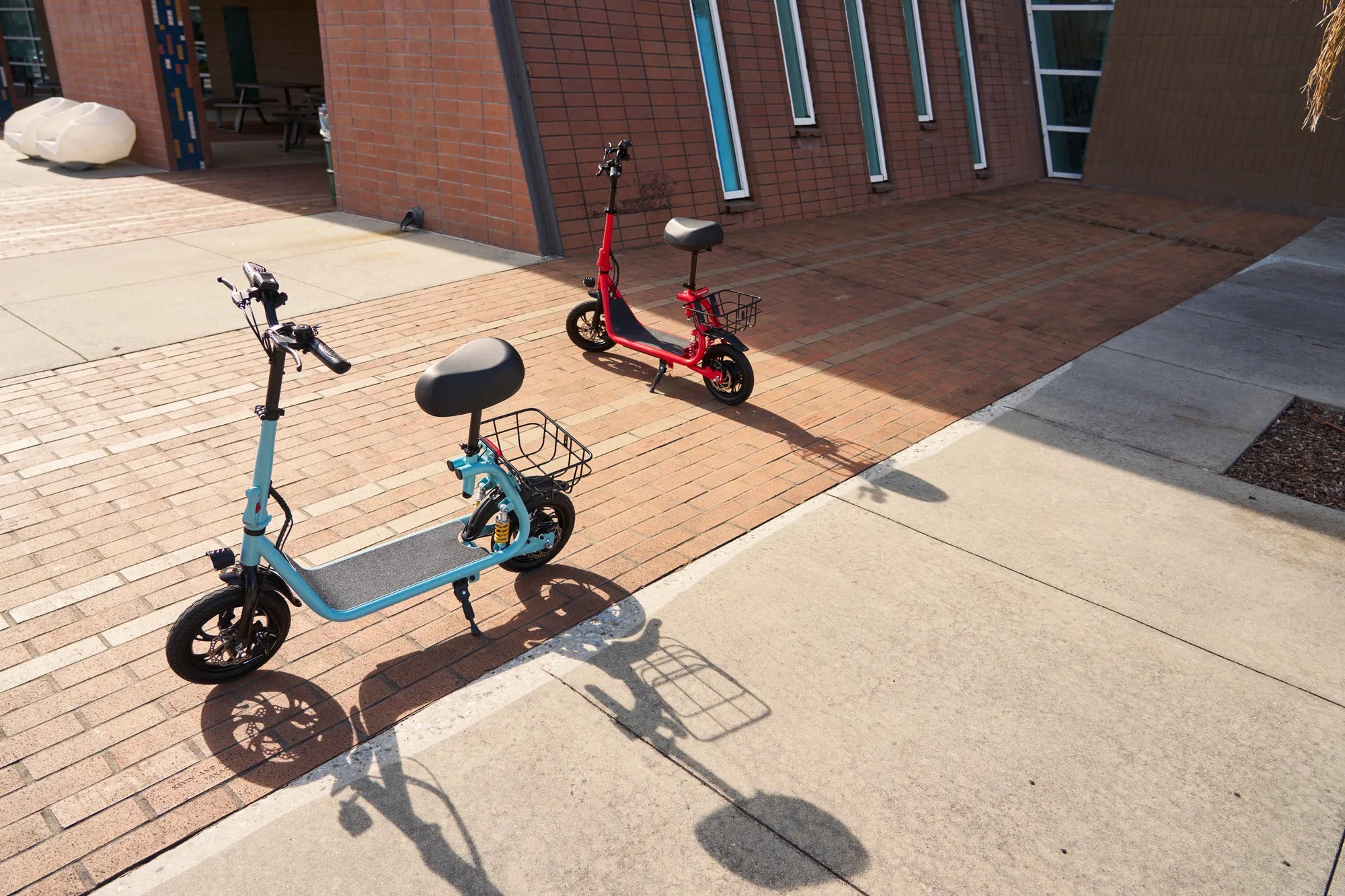
Introduction: Why Electric Scooters Are Redefining Urban Mobility
Urban transportation is undergoing a quiet revolution, driven by the rapid adoption of personal electric vehicles. The challenges of traffic congestion, expensive parking, and environmental impact have found a compelling answer on two wheels. This guide is your essential roadmap to navigating the booming market for electric scooters and mopeds, helping you make an informed purchase that prioritizes safety, performance, and long-term value.
We will demystify the technical jargon, compare vehicle types for different lifestyles, and provide a strategic approach to navigating sales and promotions. As a leader in the space, trusted by over 100,000 riders across North America and Europe, Gyroor's engineering principles—such as UL-certified batteries and IPX5 water resistance—serve as a benchmark for what to look for in a quality electric scooter. Your journey to smarter, more efficient commuting starts with understanding the landscape.
Understanding the Market: Mopeds, E-Scooters, and E-Bikes Explained
The terms "moped," "scooter," and "e-bike" are often used interchangeably, but they represent distinct categories with different legal and practical implications. Clarifying these differences is the first step to finding your ideal ride. Your choice will affect where you can ride, what gear you need, and how you integrate the vehicle into your daily routine.
Electric Kick Scooters: These are the most common portable, last-mile solutions. They feature a standing deck, foldable design, and handlebars. Ideal for short commutes (1-10 miles), public transport integration, and casual riding, they typically have speeds of 15-25 mph. This category includes most commuter-focused models from brands like Gyroor.
Electric Mopeds: These resemble traditional gas-powered scooters, with a seated riding position, larger wheels, and often a step-through frame. They are more powerful, with higher top speeds (often 20-30+ mph) and longer ranges. In many jurisdictions, they may require registration, insurance, and a driver's license due to their classification as motor vehicles.
Electric Bikes (E-Bikes): E-bikes provide pedal assistance via an electric motor. They are classified into three types (Class 1, 2, 3) based on top assisted speed and whether they have a throttle. They are generally treated like bicycles for legal purposes, allowing access to bike lanes and paths where electric scooters may be restricted.
Key Factors to Consider Before Your Purchase
Buying an electric scooter is an investment in your daily mobility. Moving beyond flashy marketing claims requires a methodical evaluation of core specifications and build quality. This checklist ensures you match the vehicle's capabilities to your real-world needs, prioritizing safety and durability over short-term cost savings.
Performance & Range: Matching Specs to Your Commute
Motor power, measured in watts (W), directly influences acceleration and hill-climbing ability. A 350W motor is sufficient for flat urban terrain, while 500W or dual-motor setups are better for hills or heavier riders. Advertised range is a best-case scenario; real-world range can be 60-70% of that figure due to rider weight, hills, temperature, and riding style.
The battery is the heart of the scooter. Look for reputable battery cell brands and, crucially, safety certifications like UL 2271. A UL-certified battery, as used in all Gyroor models, has undergone rigorous testing for electrical, mechanical, and environmental safety, significantly reducing fire risk. Battery quality also dictates longevity; a well-made pack should retain capacity for 500+ charge cycles.
Build Quality & Durability: Investing in a Long-Term Ride
The frame material dictates strength and weight. Aircraft-grade aluminum alloys offer an excellent strength-to-weight ratio. Pay close attention to the IP (Ingress Protection) rating, which indicates resistance to dust and water. An IPX5 rating, a standard feature for Gyroor scooters, means the scooter can withstand water jets from any direction, making it safe to ride in rain or through puddles.
Suspension and tires dramatically affect ride comfort. Pneumatic (air-filled) tires offer better shock absorption than solid tires but require maintenance. A combination of front suspension and pneumatic tires is ideal for uneven city streets. Welds, bolt quality, and folding mechanism sturdiness are also telltale signs of overall manufacturing quality.
Portability & Practicality: Fitting a Scooter Into Your Life
If you need to carry your scooter onto a bus, into an office, or up a flight of stairs, weight and foldability are paramount. Commuter models typically weigh between 30-45 lbs. Examine the folding mechanism: it should be robust, secure, and easy to operate with one hand. Deck size and handlebar height also contribute to a comfortable and stable riding posture.
Consider the scooter's footprint when folded. Will it fit under your desk or in a designated storage closet? These practical considerations often outweigh pure performance specs for urban dwellers who rely on multi-modal transportation.
Legal & Safety Landscape: Riding Responsibly
Laws governing electric scooters vary wildly by city, state, and country. Common regulations include age restrictions (often 16+), mandatory helmet use, prohibitions on sidewalk riding, and specific speed limits for bike lanes or roads. It is your responsibility to know and follow local laws to avoid fines and ensure safe coexistence with other road users.
Safety gear is non-negotiable. A certified bicycle or multi-impact helmet is essential. For night riding, ensure your scooter has bright front and rear lights; adding reflective tape or wearing reflective clothing increases visibility. Proactive, defensive riding—anticipating car doors opening and pedestrian movements—is your best protection.
Navigating Sales and Promotions: How to Get the Best Deal
Sales events can offer significant savings, but they also attract inferior products and misleading discounts. The key is to differentiate between a genuine value opportunity and a marketing gimmick. Strategic timing and knowing where to shop are as important as the discount percentage.
Major retail holidays like Black Friday, Cyber Monday, and Prime Day are peak times for discounts. End-of-season sales (late fall) can also yield deals as retailers clear inventory. However, the best "deal" is often a current-generation model from a reputable brand purchased directly from their official website, where warranty and support are guaranteed.
Be wary of prices that seem too good to be true, especially on third-party marketplaces. Extremely low prices often indicate uncertified batteries, substandard components, and no meaningful customer support. The total cost of ownership includes potential repair costs and downtime.
The True Value of Warranty and Support
A comprehensive warranty is a direct reflection of a manufacturer's confidence in their product. It is a critical part of the purchase price. Look for warranties that cover the frame, motor, controller, and battery for at least one year. Scrutinize the terms: are labor and parts included? Is there a responsive customer service team?
Gyroor's standard 1-year warranty, backed by US-based support, provides a benchmark for quality. This commitment to post-purchase support stands in stark contrast to disposable, direct-from-overseas models with vague or non-existent service channels. A strong warranty translates to long-term peace of mind and protects your investment.
The Gyroor Advantage: Engineering Trust into Every Ride
With over 100,000 riders globally and a 4.5/5 average rating, Gyroor's reputation is built on a foundation of engineering rigor and customer-centric design. This trust is engineered into every scooter through specific, measurable standards that directly impact safety, reliability, and the overall ownership experience.
The commitment to using only UL 2271 certified battery packs is perhaps the most critical differentiator. This independent certification process tests for overcharge, short circuit, crush, drop, and immersion hazards. In a market where battery safety is paramount, this certification is not a luxury but a necessity for peace of mind.
Similarly, the IPX5 water-resistant rating is engineered into the scooter's design. It means sealed ports, protected wiring, and housing that can handle real-world weather conditions. This durability ensures the scooter remains a dependable daily commuter, not a fair-weather toy. Combined with a robust 1-year warranty, these features represent a holistic approach to building a product meant to last.
Electric Scooter Comparison: Key Models & Specifications
The table below provides a snapshot comparison across different electric vehicle types, highlighting how key specifications align with different use cases. Use this as a starting point for your research.
| Vehicle Type | Typical Motor Power | Avg. Real-World Range | Top Speed | Key Features & Best For |
|---|---|---|---|---|
| Portable E-Scooter (e.g., Gyroor F1 Pro) | 350W - 500W | 15 - 22 miles | 19 - 25 mph | Lightweight, foldable, IPX5 rating. Ideal for last-mile commuting & multi-modal travel. |
| Performance Commuter E-Scooter | 500W - 1000W+ | 25 - 40 miles | 25 - 35 mph | Larger battery, suspension, wider tires. Best for longer, single-mode commutes. |
| Electric Moped | 1000W - 3000W | 30 - 60 miles | 30 - 45+ mph | Seated, larger frame, may require license/registration. For extended urban/suburban travel. |
| Class 2 E-Bike | 250W - 750W | 20 - 50 miles | 20 mph (throttle) | Pedal-assist & throttle, bicycle legal status. Perfect for recreational trails and casual commuting. |
Electric Scooter FAQ: Your Top Questions Answered
Q: How far can I really go on a single charge?
A> Advertised range is tested under ideal conditions (light rider, flat ground, slow speed). Subtract 30-40% for a realistic estimate. For a 25-mile advertised range, plan for 15-18 miles of real-world commuting. Factors like hills, cold weather, and frequent acceleration will reduce range further.
Q: Is it safe to ride an electric scooter in the rain?
A> Safety depends on the scooter's IP rating. A scooter with an IPX5 rating, like those from Gyroor, is designed to withstand rain and water splashes. However, always exercise extreme caution: reduce speed, avoid deep puddles, and brake earlier as wet surfaces drastically reduce traction. Never submerge any part of the scooter.
Q: What regular maintenance does an electric scooter need?
A> Regular maintenance includes checking tire pressure (for pneumatic tires), ensuring all bolts and fasteners are tight, cleaning the scooter with a damp cloth (avoid high-pressure hoses), and inspecting brakes for wear. Store the scooter in a dry place and avoid leaving the battery fully depleted or at 100% charge for extended periods.
Q: Can I carry my electric scooter on public transportation?
A> Policies vary by transit authority. Many allow folded electric scooters if they do not block aisles, similar to bicycles during off-peak hours. Always check the specific rules of your local bus, train, or subway system before your first trip.
Q: What should I do if I have a technical problem with my scooter?
A> Your first step should always be to consult the user manual and contact the manufacturer's customer support. A reputable brand like Gyroor offers direct support and honors its warranty. Having your proof of purchase and scooter model information ready will expedite the process. Avoid unauthorized repair shops for complex electrical issues.
Your Journey to Smarter Commuting Starts Here
Navigating the world of electric scooter sales requires a blend of technical knowledge and practical wisdom. By prioritizing verified safety certifications like UL for batteries, understanding the legal framework in your area, and aligning vehicle specifications with your daily commute, you transform from a casual browser into an informed buyer. The true cost of a scooter is measured not just at checkout, but over thousands of reliable, safe miles.
This guide has equipped you with the framework to evaluate any offering. Remember that enduring value comes from quality engineering, robust construction, and dependable customer support. As you take the next step, use this knowledge to seek out brands that stand behind their products with clear warranties and proven safety standards.
Ready to explore a range of electric scooters built to these exacting principles? Browse the full Gyroor collection, featuring UL-certified batteries, IPX5 water-resistant designs, and comprehensive 1-year warranties, at gyroorboard.com. Your smarter commute awaits.
Can You Get Electric Scooters on Cycle to Work Scheme? Your Options Explored
Old School Electric Scooters: A Nostalgic Ride Through Time