



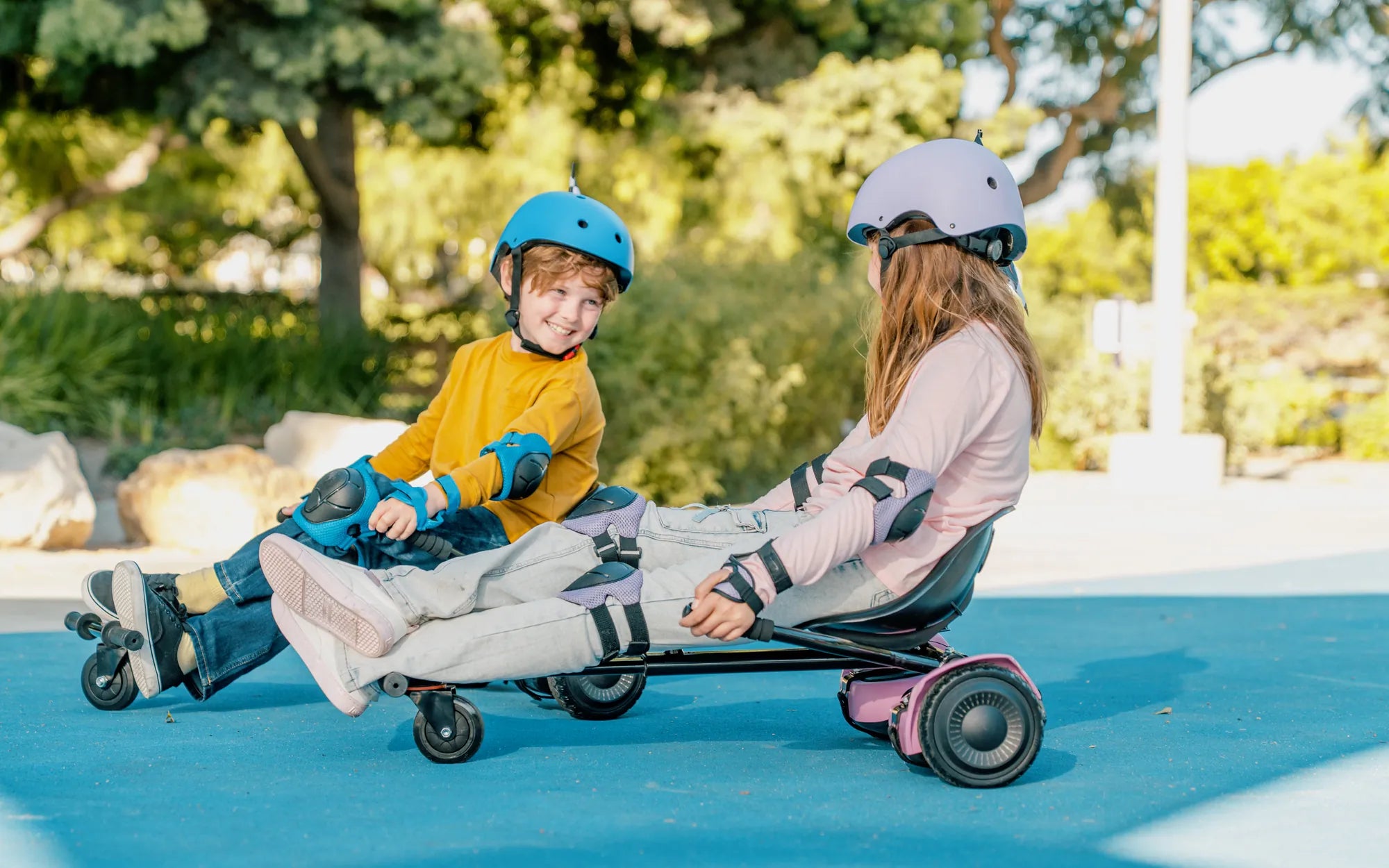
Choosing a rechargeable scooter for kids represents a significant step in a child's journey toward independent, active play. This guide will equip you with the knowledge to select a model that prioritizes safety without sacrificing fun, understand the technical specifications that matter, and implement the riding practices that ensure every outing is a secure adventure. We'll navigate the key considerations from motor power and battery life to non-negotiable safety certifications and age-appropriate features.
Why Choose a Rechargeable Scooter for Your Child?
Modern rechargeable kids' scooters offer distinct advantages over traditional kick scooters or toy-grade electric models. The primary benefit is operational economy and environmental consciousness. Eliminating the constant purchase and disposal of single-use batteries results in long-term cost savings and reduces hazardous waste.
Rechargeable lithium-ion battery packs, common in quality models, provide consistent voltage output. This means the scooter maintains a steady power level until the battery is nearly depleted, unlike devices with alkaline batteries that gradually lose power. Children enjoy longer, more predictable play sessions—often 45 minutes to over an hour on a single charge—without performance drop-off.
Furthermore, these scooters introduce children to sustainable technology in a tangible way. The simple act of plugging in their scooter teaches responsibility and the basics of energy management. For parents, the convenience of a single charging cable, often with a 3-5 hour recharge time, far outweighs the hassle of stocking and replacing numerous batteries.
Key Safety Features Every Parent Must Look For
Safety is the paramount concern when selecting any powered vehicle for a child. A reputable rechargeable scooter for kids is engineered with multiple layers of protection, from its power source to its control systems. These features are not optional extras but fundamental components of a responsible design.
Parents should prioritize models that integrate speed limiters, reliable braking systems, and stable construction. The deck should be wide and textured to prevent slipping, and the overall frame must have a low center of gravity to enhance stability, especially during turns and stops. Bright LED headlights and taillights are essential for visibility during dusk rides.
UL-Certified Batteries: The Gold Standard for Peace of Mind
The battery is the heart of the scooter and its most critical safety component. UL (Underwriters Laboratories) certification is an independent, rigorous testing standard for battery packs. It evaluates the battery for risks like overheating, short-circuiting, and thermal runaway under various stress conditions.
A UL-certified battery, a standard feature in brands like Gyroor, undergoes testing for over 500 charge cycles to ensure long-term reliability. This certification is a clear indicator that the manufacturer prioritizes safety over cost-cutting, providing parents with essential peace of mind regarding fire and electrical hazards.
Speed Settings and Parental Controls
Adjustable speed settings are crucial for matching the scooter's performance to a child's skill level. Beginner modes often cap speed at 3-4 mph (5-6.5 km/h), allowing young riders to build confidence in a controlled environment. As skills improve, parents can unlock higher speeds, typically up to 10-12 mph (16-19 km/h) for older kids.
Parental controls can be physical (a key switch or a coded button sequence) or digital via a companion app. These controls prevent children from altering speed settings without supervision. This feature ensures the scooter grows with the child while always remaining under parental governance.
Stable Construction and Reliable Braking
A stable scooter starts with a robust frame, often made from aerospace-grade aluminum alloy, which combines strength with manageable weight. The wheelbase—the distance between the front and rear axles—should be sufficiently long to prevent easy tipping. Larger, air-filled or rubberized wheels (typically 6-8 inches) offer better shock absorption and stability on uneven surfaces than small, hard plastic wheels.
Braking systems are equally vital. Most quality scooters employ a dual-braking system: an electronic brake controlled by a lever on the handlebar, which cuts power to the motor and applies regenerative or friction braking, and a rear fender or disc brake for additional stopping power. This redundancy ensures a safe, predictable stop every time.
Finding the Perfect Fit: Age, Weight, and Terrain
Selecting the correct scooter model is a function of your child's age, weight, and where they will primarily ride. Mismatching these factors can lead to a frustrating experience or, worse, a safety risk. Manufacturers provide clear age and weight limits that must be strictly adhered to for optimal performance and scooter longevity.
The intended terrain directly influences the required motor power and wheel type. Smooth sidewalks and driveway use have different requirements than packed dirt paths or gentle grassy slopes. Understanding these needs upfront guides you toward a scooter that will be a source of joy, not disappointment.
Age and Weight Recommendations Decoded
Manufacturer guidelines are based on the scooter's structural integrity, motor torque, and brake capacity. Exceeding the maximum weight limit strains the motor, reduces battery life, and can compromise the frame and braking performance. The following table provides a general framework for matching a child to a scooter category:
| Age Group | Recommended Max Weight | Typical Motor Power | Key Features Focus |
|---|---|---|---|
| 3-6 years | 44-66 lbs (20-30 kg) | 80W - 120W | Low speed (≤5 mph), wide deck, simple controls |
| 6-9 years | 66-120 lbs (30-55 kg) | 120W - 150W | Adjustable speed (5-9 mph), enhanced stability |
| 9-12 years | 120-160 lbs (55-73 kg) | 150W - 200W | Higher speed (up to 12 mph), longer range, more torque |
Motor Power and Battery Life: What to Expect
Motor wattage (W) indicates power output. A higher wattage motor provides more torque, which translates to better acceleration and an improved ability to climb gentle inclines. For most children's needs, a motor between 120W and 150W offers a perfect balance of pep and controllability.
Battery capacity, measured in watt-hours (Wh) or ampere-hours (Ah), dictates range. A typical child's scooter with a 36V, 4Ah battery may offer a real-world range of 6-10 miles (10-16 km) per charge, depending on rider weight, terrain, and speed. Recharge times generally fall between 3 and 5 hours. It's important to manage expectations: range claims are based on ideal conditions, and actual use will vary.
The Gyroor Advantage: Engineered for Real-World Durability
As a leader in personal electric mobility, Gyroor designs its kids' scooters with the understanding that they will be subjected to rigorous use. The brand's philosophy centers on combining certified safety with rugged durability, ensuring the scooter is a long-term investment in fun. With over 100,000 riders trusting Gyroor products across North America and Europe, their focus on parent-approved design is evident in every detail.
From the selection of materials to the integration of smart features, Gyroor models are built to withstand the bumps, scrapes, and occasional puddle that define childhood adventure. This commitment extends beyond the initial purchase, backed by accessible customer support and clear warranty terms.
IPX5 Water Resistance: Ready for Adventure
A key feature that sets durable scooters apart is a legitimate water-resistance rating. Gyroor incorporates an IPX5 rating into its designs. This means the scooter's electrical components are protected against low-pressure water jets from any direction.
In practical terms, an IPX5-rated rechargeable scooter for kids can safely navigate wet pavement, ride through puddles, and withstand light rain or accidental splashes. This protection prevents water ingress that could short-circuit the motor or battery, significantly enhancing the scooter's longevity and reliability for everyday play.
The 1-Year Comprehensive Warranty and Support
Gyroor backs its products with a 1-year warranty covering the battery, motor, and frame against manufacturing defects. This warranty reflects confidence in the quality of their components, particularly the UL-certified battery packs. For parents, it transforms the purchase from a gamble into a secure investment.
Should any issues arise, accessible U.S.-based customer support provides troubleshooting assistance and facilitates the process for any covered repairs or part replacements. This support network is a critical differentiator, ensuring you're never left alone to resolve a technical problem.
Essential Riding Tips and Mandatory Safety Gear
Even the safest scooter requires responsible use. Establishing good habits from the first ride is essential for preventing accidents. This begins with the absolute requirement for proper safety gear and extends to choosing appropriate riding locations and enforcing clear rules.
Adult supervision is non-negotiable for younger children and highly recommended for all beginners. Supervision isn't just about watching; it's about actively teaching control, awareness, and respect for the scooter's power.
The Non-Negotiable Safety Kit: Helmet, Pads, and Shoes
Every ride must start with gear. A properly fitted CPSC, ASTM, or CE-certified bicycle helmet is mandatory. It should sit level on the head, with the strap snug under the chin. Knee and elbow pads protect against the most common falls, and sturdy, closed-toe shoes (never sandals or flip-flops) are essential for proper foot placement and protection.
Consider adding high-visibility clothing or reflective stickers to the scooter and helmet for low-light conditions. This kit should be as routine as buckling a seatbelt.
Supervised Fun: Establishing Rules and Riding Zones
Designate safe, traffic-free zones for practice and play. Empty parking lots, smooth park paths, and quiet cul-de-sacs are ideal. Explicitly forbid riding on public roads, near pools, or on steep hills. Teach fundamental rules: always look both ways before crossing driveways, keep both hands on the handlebars, and be aware of pedestrians, pets, and obstacles.
Start with the slowest speed setting in a wide-open area. Practice starting, stopping, and gentle turning before progressing. Regularly review these rules and inspect the scooter for loose parts or worn tires before riding.
Maintenance and Care for Long-Lasting Performance
Regular, simple maintenance ensures your rechargeable scooter for kids remains safe and functional for years. A brief pre-ride check takes only a minute but can prevent accidents. This routine should include inspecting tires for proper inflation and wear, checking that all bolts (especially on the handlebars and folding mechanisms) are tight, and testing the brakes for responsiveness.
After riding on wet or dirty surfaces, wipe down the scooter with a damp cloth to remove debris. Avoid using a high-pressure hose, as forced water can breach seals not designed for that type of exposure. Store the scooter in a dry, temperate place, away from direct sunlight or extreme cold, which can degrade the battery.
Battery Care Best Practices
Proper battery care maximizes its lifespan. Avoid completely draining the battery to 0% regularly; try to recharge when it reaches 20-30%. Similarly, don't leave the scooter plugged in continuously for days after it's fully charged. For long-term storage (over a month), charge the battery to about 60% and store it in a cool, dry place.
Always use the manufacturer-provided charger. Third-party chargers may not have the correct voltage or safety cut-offs, posing a risk to the battery and creating a potential fire hazard.
Frequently Asked Questions (FAQs)
Q: At what age is a rechargeable scooter appropriate?
A: Most manufacturers recommend a starting age of 3-4 years, but readiness depends more on the child's coordination, ability to follow instructions, and maturity. Always choose a model with a speed limiter for beginners.
Q: How long does the battery last on a single charge?
A: For most kids' models, expect 45 minutes to 1.5 hours of continuous riding, translating to 6-10 miles. Actual range depends on speed, rider weight, terrain, and temperature.
Q: Is assembly difficult?
A>Most scooters arrive 90% assembled. Typically, you only need to attach the handlebar to the stem and secure it with provided tools—a process that takes 5-10 minutes. Always follow the included instructions.
Q: Can it be used on grass or gravel?
A>While some models with larger, air-filled tires can handle packed dirt or very short, dry grass, most are designed for smooth, hard surfaces like pavement and sidewalks. Gravel, sand, and loose surfaces are unsafe as they cause loss of traction and control.
Q: What is the maintenance routine?
A>Minimal maintenance is required. Perform a pre-ride check for loose parts and brake function. Keep tires properly inflated. Wipe down the scooter after dirty rides. Charge the battery with the provided charger and avoid extreme temperatures.
Investing in Confidence and Outdoor Adventure
A well-chosen rechargeable scooter for kids from a trusted brand is more than a toy; it's a tool for development and joy. It fosters outdoor activity, improves balance and coordination, and grants a thrilling sense of independence. By prioritizing UL-certified safety, durable construction like IPX5 water resistance, and pairing the scooter with consistent safety practices, parents can confidently say yes to this modern form of play.
The right scooter becomes a catalyst for family adventures, a reward for responsibility, and a source of countless smiles. It represents an investment not just in a product, but in creating active, memorable childhood experiences where fun and safety ride together.
Ready to explore models that combine certified safety with rugged fun for your child? Browse the full Gyroor collection, featuring UL-certified batteries, IPX5 water-resistant designs, and a reliable 1-year warranty, at gyroorboard.com.
Best Hoverboard for 8 Year Old: A Safe, Smart Parent's Guide
Hoverboard Separate Feet: Master Balance, Agility & Control