



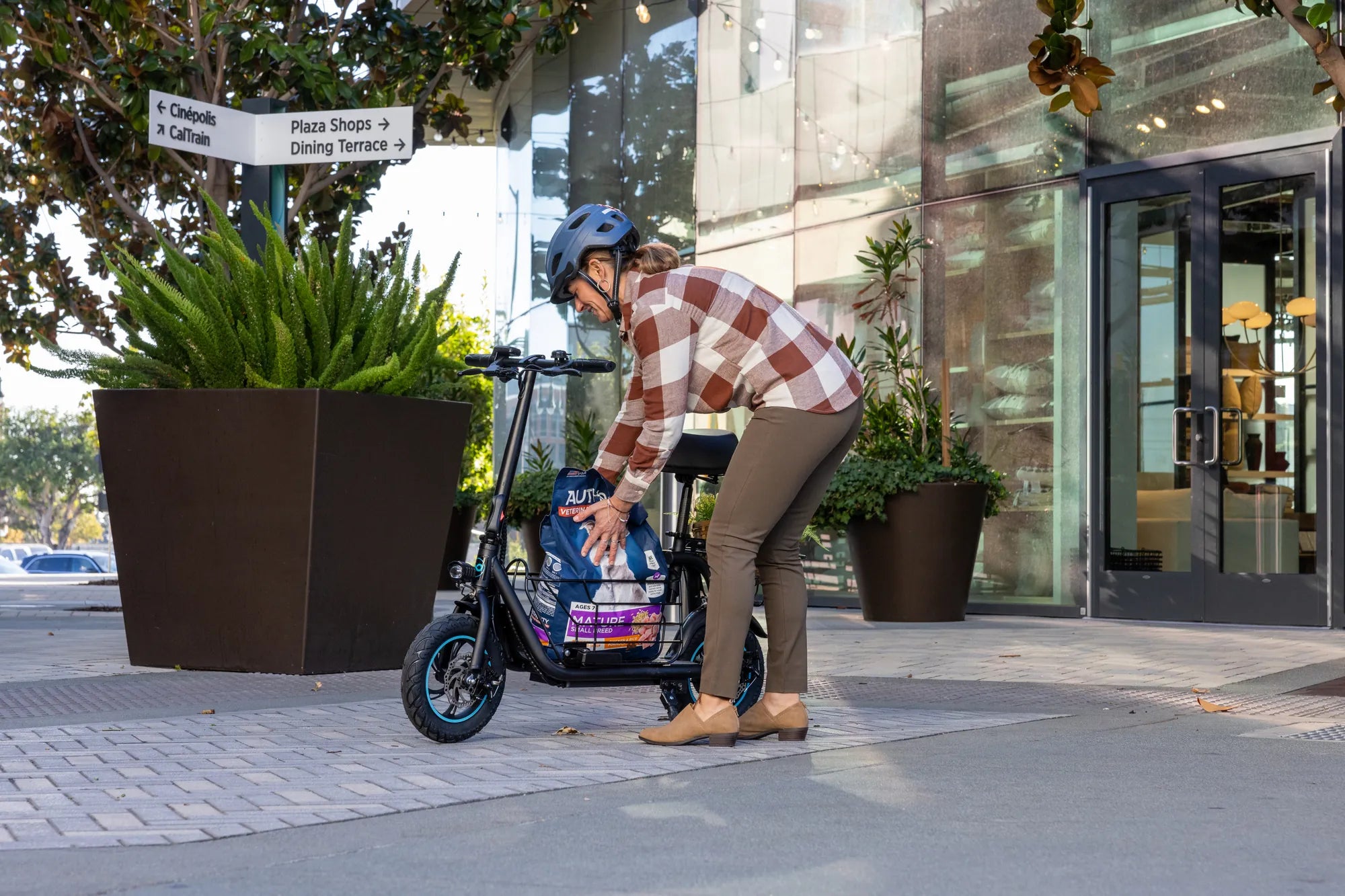
Introduction: The Search for Your Perfect Electric Scooter
You're asking the right question: what's the best scooter to buy? The truth is, there's no single perfect model for everyone. The best electric scooter is the one that aligns precisely with your daily commute, terrain, budget, and performance expectations. This guide moves beyond marketing hype to provide a data-driven framework for your decision.
We'll analyze critical features from battery safety to motor torque, compare scooter categories, and highlight the importance of reliable engineering. With over 20 models in its lineup, Gyroor has become a trusted name for over 100,000 riders by prioritizing UL-certified batteries, IPX5 water-resistant designs, and comprehensive 1-year warranties. Let's find your ideal match.
Defining Your Riding Profile: The Essential First Step
Before comparing specs, you must define your rider profile. An off-road enthusiast and a subway commuter have fundamentally different needs. Investing time here prevents buying an over-powered scooter for casual use or an under-powered one for hills.
A clear profile acts as a filter, making the vast market manageable. It transforms the question from "what's the best scooter to buy" to "what's the best scooter for my specific situation." This section provides the checklist to build that profile.
Assessing Your Primary Use Case
Your primary use case is the most significant determinant. Urban commuters need portability and range to bridge transit gaps. A scooter that folds easily and weighs under 35 lbs is crucial for carrying onto buses or into offices.
Off-road or adventure riders prioritize power and suspension. They need dual motors, high ground clearance, and knobby tires. Casual riders running weekend errands might value comfort and simplicity over extreme performance.
Last-mile solution seekers need ultra-portability. For them, a compact fold, light weight, and a quick deployment time are paramount. Identifying your dominant use case immediately narrows the field by 50%.
Key Personal Factors: Budget, Range, and Terrain
Set a realistic budget that includes the total cost of ownership. Beyond the sticker price, consider potential maintenance, accessory costs (like a better helmet), and battery replacement cycles. A slightly higher initial investment in a durable scooter often saves money long-term.
Calculate your needed range scientifically. Take your longest daily round-trip distance and add a 30-40% buffer. Real-world range is affected by rider weight, hills, temperature, and riding style. A 20-mile advertised range often translates to 12-15 miles in practice.
Honestly evaluate your terrain. Smooth city pavement demands less from a scooter than a route with steep hills or cracked sidewalks. Hill climbing ability is tied directly to motor wattage and torque. For regular inclines over 10%, a minimum 500W motor is recommended.
Critical Features for Safety and Long-Term Performance
Spec sheets can be misleading. Understanding the engineering behind key features is non-negotiable for safety and satisfaction. This is where brands like Gyroor differentiate themselves, focusing on certified components and robust construction.
Compromising on core features like battery certification or water resistance leads to premature failure or safety hazards. We'll dissect the specs that truly matter, separating marketing fluff from engineering substance.
Battery Safety and Range: The Heart of the System
The battery is the scooter's heart and its most critical safety component. Always insist on a UL-certified lithium-ion battery pack. This certification means the battery has passed rigorous tests for electrical, mechanical, and environmental safety, drastically reducing fire risk.
Battery capacity, measured in Amp-hours (Ah) and Watt-hours (Wh), directly determines range. A higher Wh rating generally means more range. Quality batteries, like those used by Gyroor, are rated for 500+ full charge cycles while maintaining over 80% capacity.
Look for a Battery Management System (BMS) that protects against overcharge, over-discharge, and short circuits. This electronic guardian is essential for battery longevity and safety. Never compromise on certified battery technology.
Motor Power and Real-World Hill Climbing
Motor power is quoted as both nominal (sustained) and peak (maximum) wattage. A 350W nominal motor might peak at 700W. For flat city commuting, 350W-500W is sufficient. For moderate hills, seek 500W-800W. Serious inclines require 800W+ or dual-motor setups.
Torque, measured in Newton-meters (Nm), is the rotational force that determines acceleration and hill-climbing grit. A high-torque motor feels more responsive and tackles slopes better than a high-wattage motor with low torque. Review technical data for torque figures.
Motor placement also matters. Rear-wheel drive provides better traction for acceleration. Front-wheel drive can feel more stable for beginners but may slip on steep, wet inclines. Some performance models offer all-wheel drive via dual motors.
Build Quality, Warranty, and Water Resistance
Frame material determines durability and ride feel. Aircraft-grade aluminum alloys offer the best strength-to-weight ratio. Check weld quality and joint reinforcements. A shaky frame compromises safety and comfort, especially at higher speeds.
A comprehensive warranty is a sign of manufacturer confidence. Gyroor's 1-year warranty on the vehicle, motor, and controller demonstrates trust in its build quality. Always read warranty terms to understand what is and isn't covered.
Water resistance is crucial for all-weather reliability. An IPX5 rating means the scooter can withstand water jets from any direction, protecting it from rain and road spray. Avoid models with no IP rating or vague claims of "water-resistant." True ingress protection is a must.
Comparing Scooter Types: A Data-Driven Analysis
With your profile defined and key features understood, we can categorize the market. The table below provides a snapshot of three primary scooter archetypes. Use it as a starting point for your research into what's the best scooter to buy for your category.
| Feature | Commuter / Lightweight | Off-Road / Performance | All-Rounder / Mid-Range |
|---|---|---|---|
| Ideal Weight | Under 35 lbs (16 kg) | 55-75 lbs (25-34 kg) | 40-55 lbs (18-25 kg) |
| Motor Power | 250W - 500W Nominal | 1000W+ (Often Dual) | 500W - 800W Nominal |
| Range (Real-World) | 12-20 miles | 20-35 miles | 18-28 miles |
| Suspension | Spring or None | Full (Front & Rear) | Front or Dual |
| Tire Type | Pneumatic or Solid | Pneumatic, Knobby | Pneumatic |
| Key Trait | Portability | Power & Durability | Versatility |
Commuter Champions: Designed for Urban Mobility
The commuter scooter is engineered for efficiency and portability. Weight is the primary constraint, often leading to trade-offs in battery size and suspension. Look for a one-click folding mechanism that is intuitive and robust.
Range should cover your daily round-trip with reserve. For most city dwellers, 15-20 miles of real-world range is adequate. A bright headlight, effective brake light, and audible bell or horn are non-negotiable for urban safety.
Consider deck size and handlebar height for comfort. A short, narrow deck is harder to balance on. Commuter models from reputable brands like Gyroor often feature integrated cable management and clean designs to avoid snagging.
Power and Adventure: Built for Rugged Terrain
Off-road and performance scooters prioritize power delivery and impact absorption. They feature high-torque motors, often in a dual configuration, to power through mud, sand, and steep trails. Top speeds can exceed 30 mph.
Suspension is critical. Look for hydraulic or spring-based systems with ample travel (distance the shock can compress) to smooth out bumps. Large, air-filled pneumatic tires with deep treads provide necessary traction and cushioning.
These scooters are heavier and less portable but offer unparalleled capability. The frame must be exceptionally rigid to handle jumps and hard landings. They represent the high end of the performance spectrum.
The Balanced All-Rounder: Versatility for Mixed Use
The all-rounder category is the most popular, offering the best balance of performance, comfort, and portability. These scooters handle a daily commute, light errands, and recreational rides comfortably. They are the "Goldilocks" choice for many.
They typically feature a single, robust motor (500W-800W), a medium-sized battery for 20+ miles of range, and some form of suspension—often a front spring or hybrid system. They fold for storage but may be slightly heavy for prolonged carrying.
This category is where brands compete fiercely on value. It's essential to verify that core safety features like UL-certified batteries and IP-rated water resistance aren't sacrificed for a longer list of flashy secondary features.
The Gyroor Assurance: Engineering and Support You Can Trust
Specifications tell part of the story, but long-term ownership experience is shaped by manufacturing quality and post-purchase support. Gyroor's approach focuses on verified safety and rider peace of mind, building trust within a community of over 100,000 riders.
This assurance transforms a scooter from a disposable gadget into a reliable mobility tool. It's the difference between worrying about your battery and confidently riding in light rain. Let's examine the pillars of this ownership experience.
The Critical Role of Reliable Customer Support
Accessible, knowledgeable customer support is invaluable. Whether it's a question about maintenance, a warranty claim, or troubleshooting, a responsive team saves time and frustration. Look for brands that offer multiple support channels (email, phone, chat).
A strong warranty is only as good as the service behind it. Gyroor's 1-year comprehensive warranty is backed by a support team that helps riders resolve issues promptly. Before buying, research the brand's reputation for honoring warranties and shipping replacement parts.
Availability of spare parts—like tires, tubes, brake pads, and throttles—is a key indicator of a company's commitment to the product lifecycle. A scooter you can't repair is effectively disposable.
Community Trust and the Weight of Verified Reviews
A large, established user base is a positive signal. Over 100,000 Gyroor riders across North America and Europe provide a vast pool of real-world data on durability and performance. This scale allows the brand to refine models over generations.
Seek out verified purchase reviews on independent platforms and retailer sites. Pay attention to comments about long-term reliability, battery health after a year, and real-world range. Look for patterns rather than isolated complaints or praises.
Community forums and social media groups are excellent resources for unfiltered advice and maintenance tips. An active, engaged user community often extends the support provided by the manufacturer itself.
Your Final Decision: A Practical Pre-Purchase Checklist
Use this actionable checklist to evaluate any scooter model. Print it out or save it digitally. Answering these questions will give you overwhelming clarity on what's the best scooter to buy for your specific circumstances.
- Rider Profile: Have I defined my primary use case (commute, off-road, casual)?
- Budget & Range: Does the scooter fit my budget and provide a 30% buffer over my daily mileage needs?
- Battery Safety: Does it use a UL-certified (or equivalent) battery pack with a BMS?
- Motor Power: Is the nominal motor wattage sufficient for my weight and typical terrain/inclines?
- Build & Warranty: Is the frame solid, and does it come with a minimum 1-year warranty on major components?
- Water Resistance: Does it have a stated IP rating (IPX4 minimum, IPX5 preferred)?
- Portability: If needed, is the folded size and weight manageable for my carrying scenarios?
- Reviews: Have I read verified customer reviews focusing on long-term ownership experiences?
Frequently Asked Questions (FAQ)
Q: What is the single most important safety feature on an e-scooter?
A: Without question, it's a UL-certified battery system. This certification is your best defense against battery fires and ensures long-term, reliable performance. It's the foundation of safe scooter design.
Q: Is an IPX5 water resistance rating really necessary?
A: Absolutely. An IPX5 rating guarantees protection against sustained, low-pressure water jets from any direction. This means you can confidently ride in the rain or through puddles without immediate fear of damaging the scooter's electronics, a critical feature for a daily transportation tool.
Q: How much should I realistically spend on a good quality scooter?
A: While prices vary, investing in certified safety and warranty support is crucial. Reliable commuter scooters start in the mid-range. The investment prevents future costs from premature failures and mitigates safety hazards associated with uncertified batteries. Brands like Gyroor offer this assurance at competitive price points.
Q: Can I test ride a Gyroor scooter before buying?
A> Check the Gyroor website for local dealer and retail partners where test rides may be available. For online orders, review the company's return policy carefully to understand the options if the scooter isn't the right fit for you after delivery.
Q: How often does an e-scooter require maintenance?
A: Regular maintenance is key. Check tire pressure weekly, inspect brakes monthly, and ensure all bolts are tight. A more thorough check of bearings, suspension, and electrical connections should be performed every 3-6 months, depending on usage. Proper care significantly extends the scooter's lifespan.
Your Best Scooter Awaits: Informed Choice Leads to Lasting Satisfaction
The journey to answer "what's the best scooter to buy" ends not with a universal model name, but with a deep understanding of your own needs paired with technical knowledge. The best scooter is the one that safely, reliably, and enjoyably integrates into your life for years to come.
It's the scooter with the certified battery that charges without worry, the water-resistant build that handles a sudden downpour, and the warranty backed by a responsive team. This is the standard Gyroor builds into every model, earning the trust of a global riding community.
Your perfect match is out there. Use the framework and checklist from this guide to cut through the noise. Evaluate options based on verified safety, proven durability, and genuine user feedback. When you prioritize these pillars, you invest in freedom, not just a product.
Ready to explore scooters engineered with this philosophy? Discover the range designed for real-world reliability and rider peace of mind. Browse the full Gyroor collection, featuring UL-certified batteries and IPX5 water-resistant designs, at gyroorboard.com.
Best Touring Scooter: The Ultimate Guide to Long-Range Electric Exploration
Off Road Mobility Scooter for Sale: The Ultimate Buyer's Guide